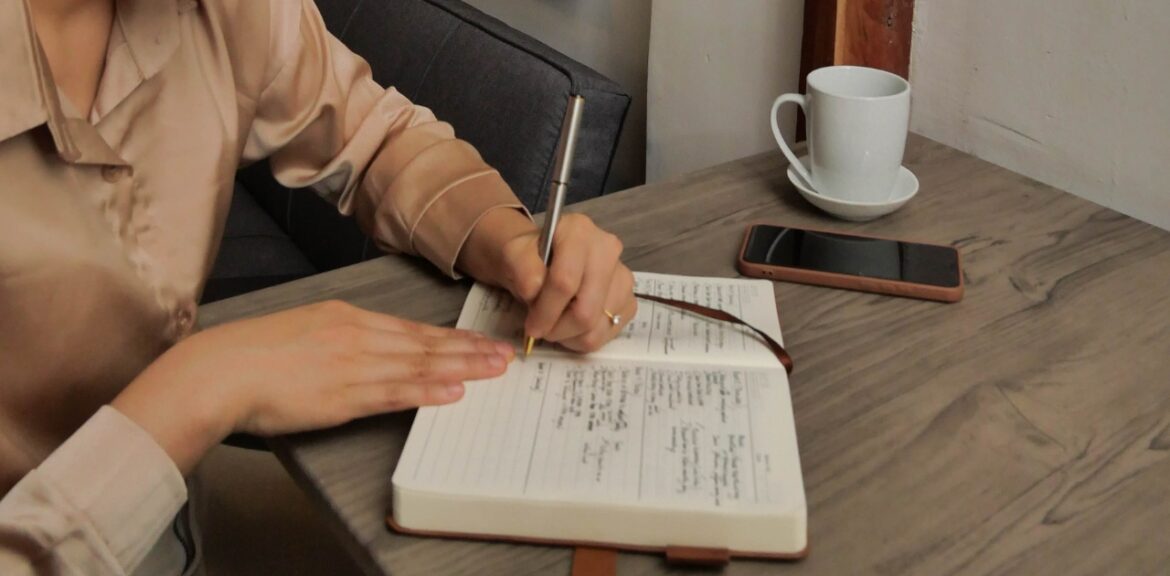
Growing up, I followed the playbook handed to me by my parents and others around me without question. Finish your studies by getting a college degree, land a stable job, maybe pursue a master’s degree, consider government work for the benefits, and just live your life by those standards until you retire then, and only after those, you may enjoy your life. It was somehow a simple formula and for a long time, I didn’t think to question it.
That changed when I was in my mid-20s. The COVID-19 pandemic hit and the world slowed down. So did I. What started as an unsettling pause eventually became something I didn’t expect which is a chance to reflect. In hindsight, the pandemic was a blessing in disguise because it allowed me to sit with questions I had never let myself ask before.
It was during that pause that I started thinking seriously about what creating an intentional life actually means. It’s not the version other people had mapped out for me, but what it genuinely looks like for someone like me, who is built a little differently than the mold I was handed.
What intentional living actually means
Before anything else, let me define what intentional living actually means. As for me, living an intentional life means making a conscious and deliberate practice of your daily actions and habits that’s aligned with your core values.
It’s conscious because you are aware of what is happening in your life instead of just moving through each day on autopilot mode and doing the same things repeatedly without ever asking why.
It’s a deliberate practice because your actions are structured with purpose that’s designed to reflect what you actually value rather than what was handed to you.
To figure out what that looked like for me, I started by asking myself four questions:
- What are the core values that I genuinely uphold and want my life to reflect?
- How can I live intentionally with these core values as my guide?
- What are the different areas of my life (Such as work, health, relationships, home, and others) and how can I apply my values to each one?
- What do I need to add, change, or let go of to actually live by these values?
Why creating an intentional life is harder for Millennials
1. Culture


Philippine culture has always been rooted in community, especially within families. That’s not entirely a bad thing because community matters. It’s unique quality for us Filipinos to have a culture that values togetherness over individualism.
However, the problem is that tight-knit dynamics doesn’t always mean supportive. Without clear boundaries, family members and neighbors can easily slip into telling you what to do with your life which leaves little room for you to decide for yourself.
When I told my mother about my career shift, she was disappointed. Yet, I knew what was good for me, so I pursued it anyway with my own resources. Over time, she saw that I was thriving far more than I had been before. That’s exactly why doing the inner work that I mentioned earlier matters. Knowing your values gives you the ground to stand on when others try to tell you who to be.
2. Comparison trap
This also relates to our families and to the communities we live in. You have that uncle or aunt at the family reunion, your friend from high school, and the neighbor who always seems to know your business.
Almost everyone has an opinion on how your life should look, what milestones you should have hit by now, and whether your choices make sense to them. Living an intentional life means learning to tune that noise out and measuring your progress against your own values and not on someone else’s checklist.
3. Social media

It’s easy to scroll on Facebook and Instagram, then suddenly feel like you’re falling behind like you should be doing things that have nothing to do with your actual values or situation.
You see the curated photos and highlight reels, the hustle content, and the peer pressure that are dressed up as inspiration. It pulls you away from living intentionally and toward performing a version of life that looks good, but feels hollow deep inside.
4. Golden handcuffs
For many millennials who have already entered the workforce, walking away from a situation that no longer serves you is terrifying when your income is tied to it.
It’s not always just about the salary. Most of the time, it’s the bonus that’s coming in a few months, the benefits you receive, or the incentives you’ve accumulated that disappear the moment you step out of that door. So, you stay not because you’re happy, but because leaving feels like throwing away something you’ve already worked for. You keep telling yourself you’ll wait to resign after the bonus. Then, another reason comes up to delay it further.
We all have different circumstances. It’s important to weigh the pros and cons honestly before making any move toward aligning your life with your values. It’s not easy and it requires real courage.
Yet, the question I kept coming back to was this: would I be happy a year from now that I’m still in this same situation? Would I regret it five or ten years from now that I never changed course and tried pursuing the path I actually wanted?
5. Socio-economic factors
Socioeconomic factors play a huge role especially in the Philippines. When your income only covers basic needs, your decisions are driven by immediate survival rather than long-term personal values.
You don’t get to ask yourself what truly fulfills you when the more pressing question is how to keep the lights on or put food on the table. Similarly, unlike in other countries where social safety nets offer some cushion, the burden of survival here often falls entirely on the individual or the family unit such as healthcare, housing, or being the breadwinner for parents or siblings.
Acknowledging this doesn’t mean that those with fewer resources can’t live intentionally at all, but it does mean that the conversation has to be honest about the fact that not everyone is starting from the same place. If you are in a position where you have enough stability to even ask yourself what you truly want, that in itself is something worth recognizing.
How I live intentionally and what it actually looks like
One of the first things I had to get clear on was the difference between work-life balance and work-life integration, because they are not the same thing.
Work-life balance implies a strict separation. Work stays on one side and life stays on the other. You’re constantly trying to keep them equal or balance.
On the other hand, work-life integration is about weaving both together in a way that works for your actual life rather than forcing a divide that doesn’t always make sense in practice. For me, integration made more sense than balance. That’s why it became one of my core values.
Next, being an INFJ, I’ve always known I thrive in environments where I can collaborate, but still have the independence to work on my own terms. Remote work gave me that. After over three years of doing it, I can’t picture myself back in a traditional office setup at this point. It suits how I’m wired and that alignment alone has made a significant difference in how I show up every day.
Beyond work, living intentionally for me means protecting time for the things that actually matter. Spending time with my family at home. Taking care of myself physically and when I say self-care, I don’t mean the aesthetic version that’s sold to us all over social media. Self-care for me is exercising, nourishing my body well, and treating my overall health as something worth investing in. It also means making time for the things where I’m genuinely thriving such as writing on this blog, co-running a photography and videography business, and designing my days as intentionally as I can through journaling. These are not things I had the clarity or the space for before I started asking myself the hard questions about how I wanted to live.
Living intentionally also meant healing my relationship with food and my body. For a long time, I was hard on myself in ways I didn’t fully recognize until I stopped and looked at the damage. Eating intuitively and listening to what my body actually needs rather than what diet culture or social media tells me I should do has been one of the most significant shifts in how I live.
If this is something you’re navigating too, I’ve written more honestly about it with the links below.
Related Articles:
- I Missed The Body I Used To Have: Grieving The Thin Ideal and Breaking Free From It.
- Orthorexia Eating Disorder: My Story and Recovery
- How My Weight Gain Gave Me My Life Back
Similarly, living intentionally also meant being honest about the communities and spaces I was part of. For instance, at the end of 2021, I left a group that no longer aligned with my values. A big part of that had to do with how differently we saw things, particularly around religion. I was raised Catholic from the very beginning. I attend the same Catholic school from preschool all the way through graduate school, so the faith was woven into almost every part of my formation. I didn’t really leave the Church and I still identify myself as a Catholic, but over time, my relationship with religion has shifted. I’ve been exploring spirituality in a broader sense where one believes in a Creator but isn’t anchored to any specific religion. This leans closer to deism. It’s a personal and ongoing journey. It’s not something I talk about as I live in a Catholic environment and usually, I get raised eyebrows by the religious individuals around me. That’s why staying in spaces that conflicted with where I was spiritually growing wasn’t honest and honesty with yourself is at the core of what intentional living actually requires.
However, one of the biggest things I’ve had to unlearn is the pressure to always be doing something. Toxic productivity is real and social media pushes it in ways that aren’t always obvious such as the day-in-my-life videos, the morning routines, and the constant output of people who seem to never stop. For a long time I absorbed that without realizing it and started measuring my worth by how much I was getting done. Learning to rest without guilt and to slow down without feeling like I was falling behind has been just as much a part of how to live an intentional life as anything else on this list.
Intentional living is a journey and not a destination
Creating an intentional life doesn’t happen overnight and it doesn’t look the same for everyone. It’s not a Pinterest board, a perfectly structured morning routine, or a life that looks good on social media. It’s messy, but then becomes more personal and meaningful.
Yes. It’s ordinary, boring, and unglamorous in worldly standards. Yet, it’s personal and meaningful as your life is a long-term project that you have to curate.
Intentional living doesn’t have a minimum requirement. It’s not reserved for people with the perfect setup or a certain income. If all you can do right now is pause for five minutes and ask yourself one honest question about what you actually want, that counts. That is already a form of living with intention. Start where you are, with what you have, and let it grow from there.
You don’t need to have it all figured out to begin living more intentionally. You just need to be willing to ask yourself what aligns with your core values and then be brave enough to take it seriously.



Leave a Reply