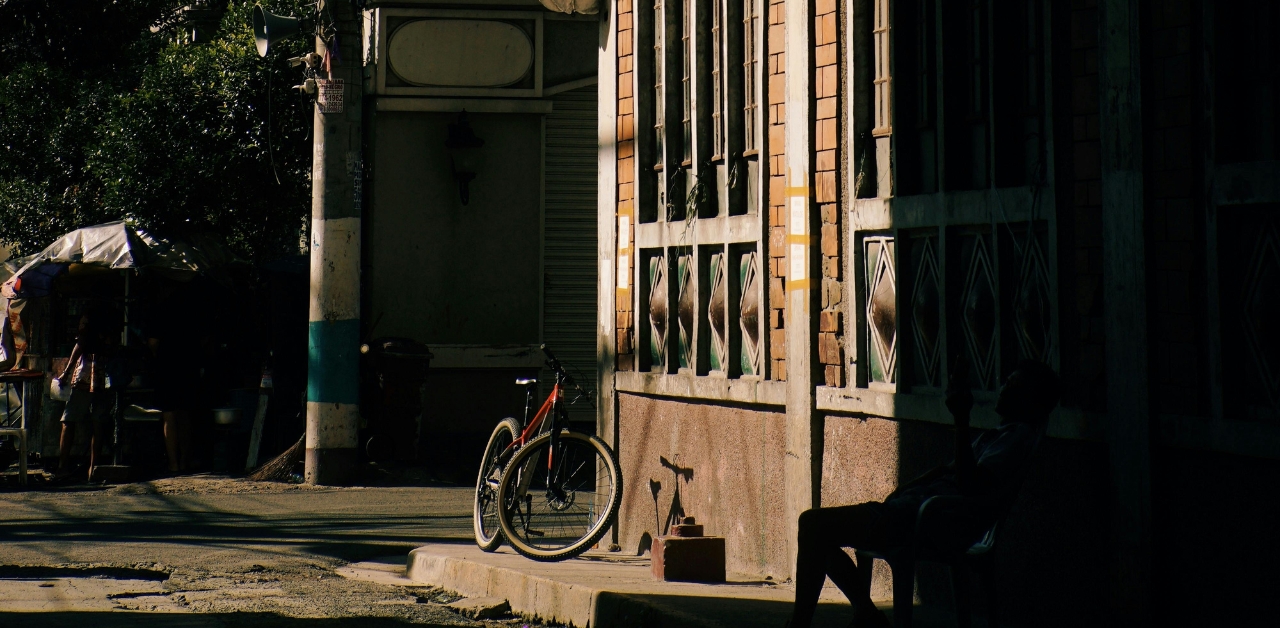
Photo by Alexis Ricardo Alaurin
Is the minimalism you see on Instagram or Pinterest sustainable in a Filipino home?
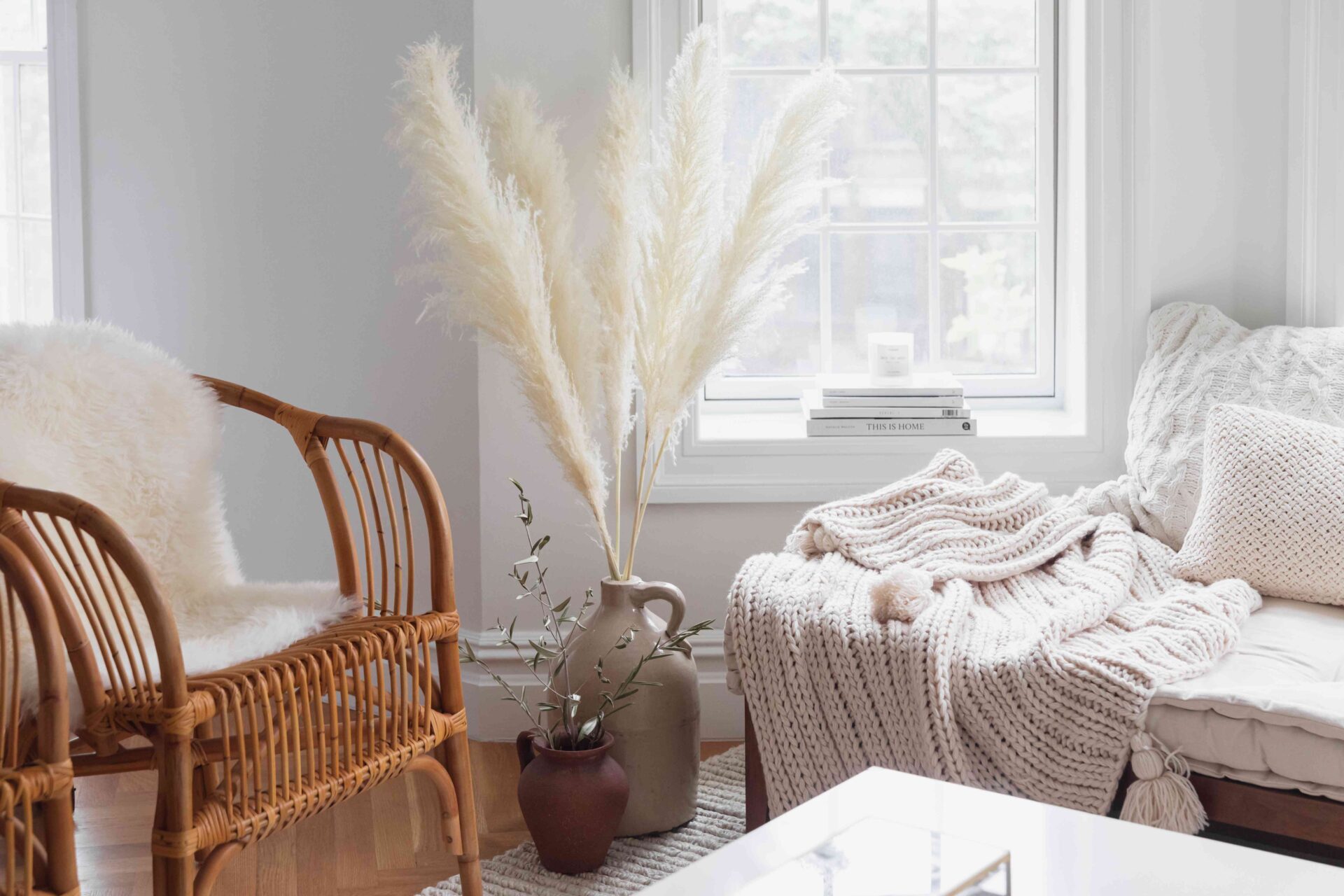
If you scroll through those platforms, you see beige walls, white towels, and a single ceramic vase holding one eucalyptus stem or a bunch of pampas grass. Sure, it’s beautiful and aesthetic, as we say.

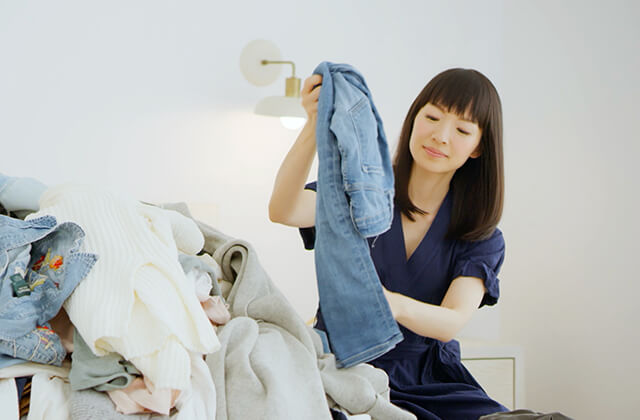
Yet even Marie Kondo, the renowned Japanese organizing consultant, gave up on her own KonMari Method. After three kids, she admitted she had lost what she’s been advocating for. The folding rituals slipped and the organized drawers gave in to the chaos. If the tidying expert herself can’t sustain the version of minimalism she invented, what hope do we have, especially in a country where 77 percent of people still believe being rich means looking rich?
In my own home, the contradictions are more noticeable.
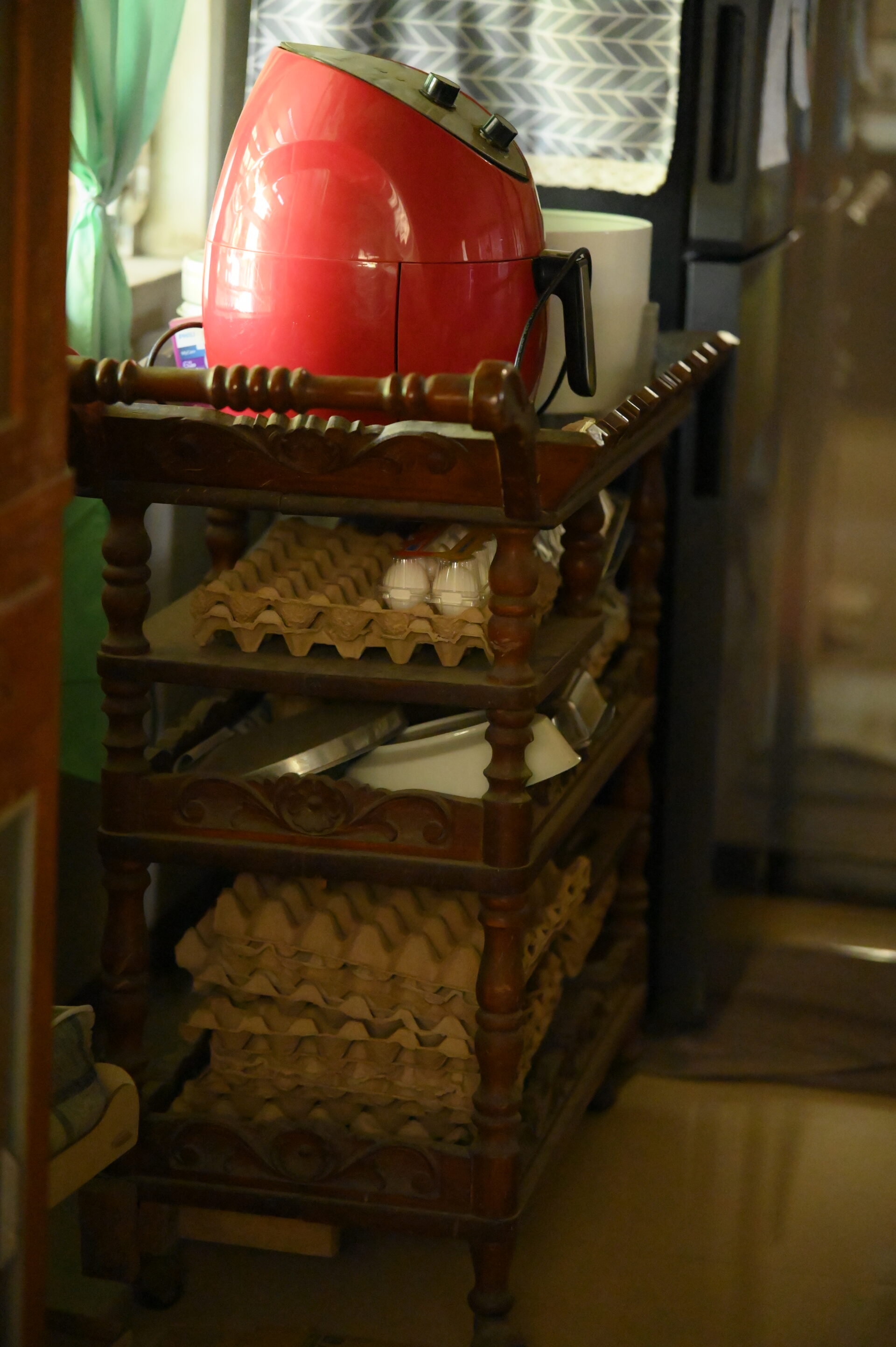
There’s the antique trolley cart from my late grandmother. One of the trolley’s four wheels are long gone and it’s now demoted to a kitchen stand for stacked appliances and several cardboard egg trays my mother keeps for reasons no one can explain.
My mother also has a full collection of spoons, forks, plates, and cups she’s been keeping in case there are visitors, even though we haven’t held a fiesta since 2019.
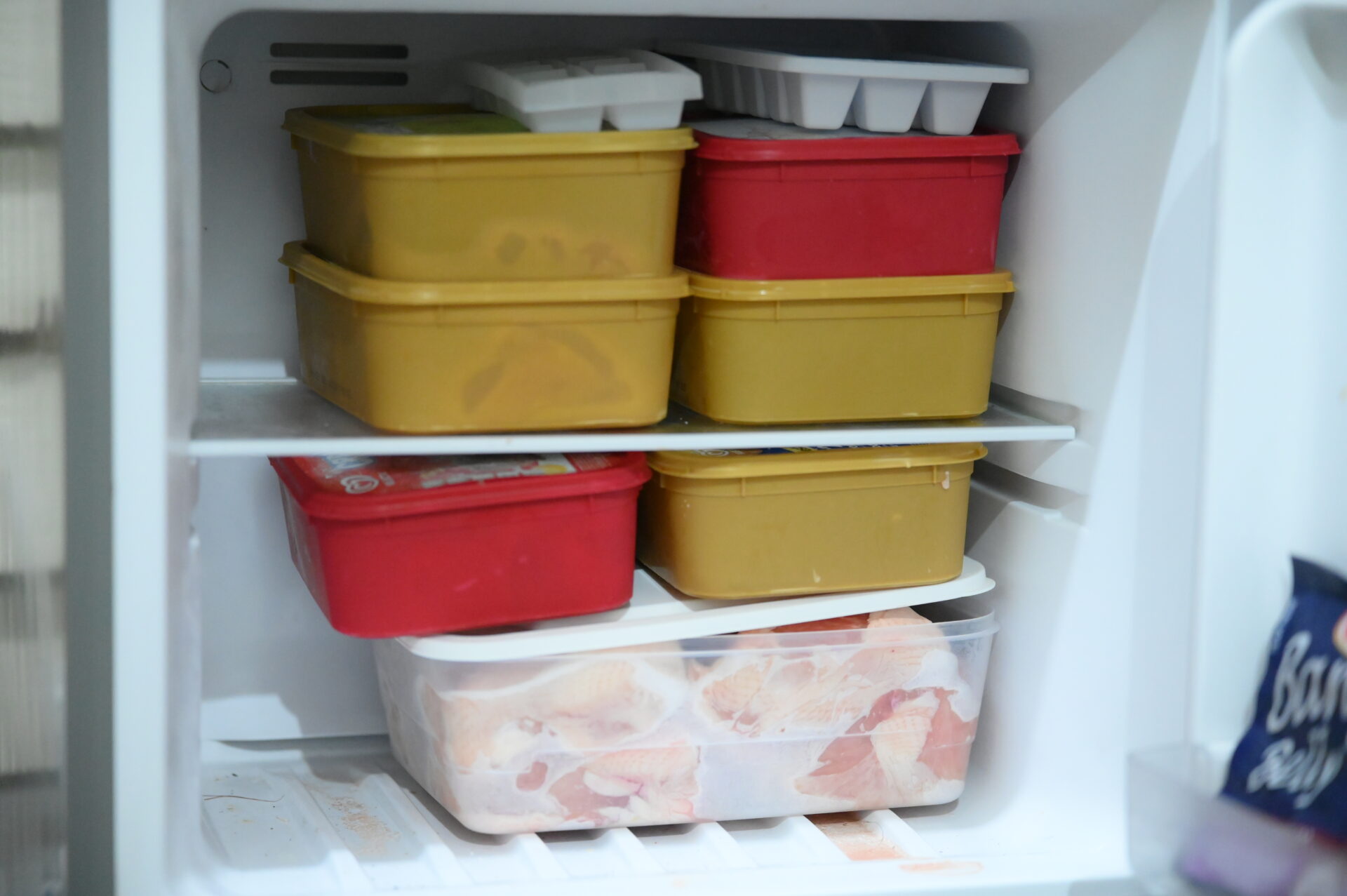
The freezer is stacked with ice cream tubs we’ve been using as meat storage.
Two huge long hard wood chairs sit awkwardly on the terrace which is impossible to relocate because my late father bought them at a hefty price and my mother says it would be a waste to move them now.
The souvenir items from old occasions stay exactly where they are, because keeping them is part of collecting memories.
The outside of our house is painted in colors no minimalist guru would feature because it’s certainly not the safe brown or white the aesthetic prefers.
Then, there are my father’s personal belongings, which my mother won’t part with. He passed away almost 5 years ago and the things he paid for with his own money stay exactly where he left them, because to my mom, that money is value enough.
Because of this, does minimalism actually work in the Philippines?
The Filipino home is built differently
If you trace the contradictions in my house back, none of them are random. Each one points to a deeper aspect where the imported version of minimalism never had to think about.
A Filipino home is built around memory. The things that majority of the Filipnos own here aren’t just things, but they’re how we keep people.
Take for the instance about the trolley cart from my grandmother. It’s not just a cart but my grandmother in an object form.
The chairs in our terrace are not only just chairs, but also my late father continuing to choose what’s in the room, even after he can’t.
In this country, families are separated by overseas work, urban migration, and distance, that’s why objects somehow do the work of holding together every family member. As the article from Manila Bulletin said which is very nostalgic for me, keeping something isn’t clutter when it’s the closest thing to a person you can still touch.
Similarly, a Filipino home is built around visibility. The 77 percent number from Dentsu earlier tells a reality. In our country where there is a large economic inequality, having things on display is a kind of armor. You stack the china cabinet, frame the college diplomas, and keep the containers from the imported snacks. The balikbayan box is a love language and a status report at the same time. In this culture, an empty white wall is not read as intentional, but it’s read as broke.
At the same time, a Filipino home is built around “just in case.” The “just in case” mentality is not a flaw, but is a survival skill in a country where natural calamities are a routine and replacement is expensive.
The plates my mother keeps are for the visitors who eventually do show up, even if no fiesta has happened since 2019. The egg trays might one day be useful, even if no one knows for what. The ice cream tubs holds meat that needs to last days or weeks between trips to the market. Most Filipino homes are not Pinterest boards inspo because they can’t afford to be. They have to function under pressure that white-walled or monochrome apartments in temperate climates have never been tested by.
So, when minimalism tells you to keep only what sparks joy or having less is more, a Filipino home has a follow-up question: Joy for whom? Useful in what scenario? Replaceable at what cost? The imported version doesn’t have answers.
How did I become a minimalist?
I didn’t become a minimalist overnight. I just didn’t have the word for what I was already doing which I just called simplicity.
When I joined the workforce in 2016, I usually maintain one or two shoulder bags or hand bags for work, bought things only when something was used up or broken, and resisted the lifestyle inflation I was watching unfold around me working in the bank.
My colleagues looked good and portrayed a certain lifestyle on the outside, but underneath, a lot of it was funded by debt. I have a Finance degree, so I had an idea what being drowned in debt did to people. That’s why I’ve always strived to live within my means. I didn’t even own a credit card for the first four years of my career. Even now, I own the same cellphone since February 2019, the same wallet since pre-pandemic, and the same shoulder bag since my last office job in 2022.
I still call myself a semi-minimalist for those years, though, because there were times I couldn’t hold the line. The FOMO (Fear of missing out) was real and I joined the bandwagon. I traveled when everyone else traveled and flexed the pictures on Facebook and Instagram, where I was a heavy user until sometime 2021 to 2022.
In my mind that time, I was doing what everyone else did and that this was what society marked as success. I never funded any of it on debt though, but I followed the script anyway. Looking back, that script was never the marker of success it pretended to be.
Then, the pandemic changed the speed of things. People around the world were downsizing and simplifying. I started watching content from creators like Malama Life, Courtney Carver, and A to Zen Life. I realized the thing I’d been doing my whole life finally had a name which is minimalism. It was already within me and I just hadn’t met the word yet.
I also turned 25 around that time, which is apparently when the frontal lobe finishes developing. Whatever it was, biology, the pause of the world, or both, something in me matured.
I started getting clearer on what mattered. Also, I met my husband during this time, then still my boyfriend, and he is really the epitome of a minimalist person than I am. I started seeing how exhausting it was to have so much stuff in my bedroom, in our house, and in my life. I hated the constant cleaning and decluttering, that’s why I just wanted to simplify.
The real shift happened at the end of 2022. I was recovering from an eating disorder I had carried for fifteen years, my body had changed, and most of the regular clothes and office clothes I had accumulated no longer fit. I had also started working remotely and had no plans to return on-site work in the near future, so I let those items go. I donated two sacks of clothes to my brother-in-law, who has a thrift store. I knew the brand labels I had bought would do well there.
Standing there afterward, looking at the empty closet, I felt the cost. Those two sacks were money I had spent for more than half a decade and money that wasn’t coming back. I slightly had regrets because of that, but I also told myself it was better to realize this now than decades from now.
That’s when I decided to have minimalism as a personal lifestyle and a practice.
In January 2023, I started working remotely. I decided to take the practice into the rest of the house. My goal was simple which is to make our home look cleaner. However, that’s where my mother and I started fighting.
I’d place some items in the garbage sack which is something that had been collecting dust and mold for years or decades. She’d take it out and put it back. She’d tell me I wasn’t respecting the hard-earned money that my she and my father had spent on it. I’d tell her she hadn’t touched it in years. Neither of us was wrong, but neither of us could see the other yet.
I got exhausted. Eventually, I moved out during the last quarter of 2023. At the same time, I got married in 2024 and decided to have a minimalist wedding. I’ve written about these in my other blog post which I’ll link below.
The fights ended because I left, not because my mother and I resolved anything.
Related Articles:
- Moving Out of My Parents’ House at 28 (Here’s What I Learned)
- Our DIY Intimate Church Wedding in the Philippines (Expense List + Actual Breakdown)
- Our DIY Intimate Wedding in the Philippines | Process, Tips, and Why It’s A Good Idea
When I started to understand
Time passed and my husband and I decided to moved back into the family home when I turned 30, after a year and a half of renting a studio apartment together. The why of that move is its own essay I’ll write in the future.
The relevant part for this one is what I decided when I came back. I wasn’t going to fight the clutter in the house anymore. Whatever clutter remained, whatever my mother kept, was going to be hers. I would simply live alongside it because peace was worth more than my principle.
Lately, I started researching whether minimalism even applies in the Philippines. The more I read, the more I realized my mother hadn’t been the problem all along.
In hindsight, I see what I couldn’t see then. My mother wasn’t being unreasonable. She was holding on the way her culture had taught her to hold on. Minimalism the way I was practicing it was never going to fit a home that had been built on different rules.
The thing I had read as clutter was doing work I hadn’t been trained to recognize.
The plates and cups my mom kept weren’t sitting in the cabinet for nothing. They were waiting for the visitors who would eventually come, the family who would eventually gather, and the fiesta that hadn’t happened yet but might be in the future. Her keeping was a practical investment in a future I had already written off.
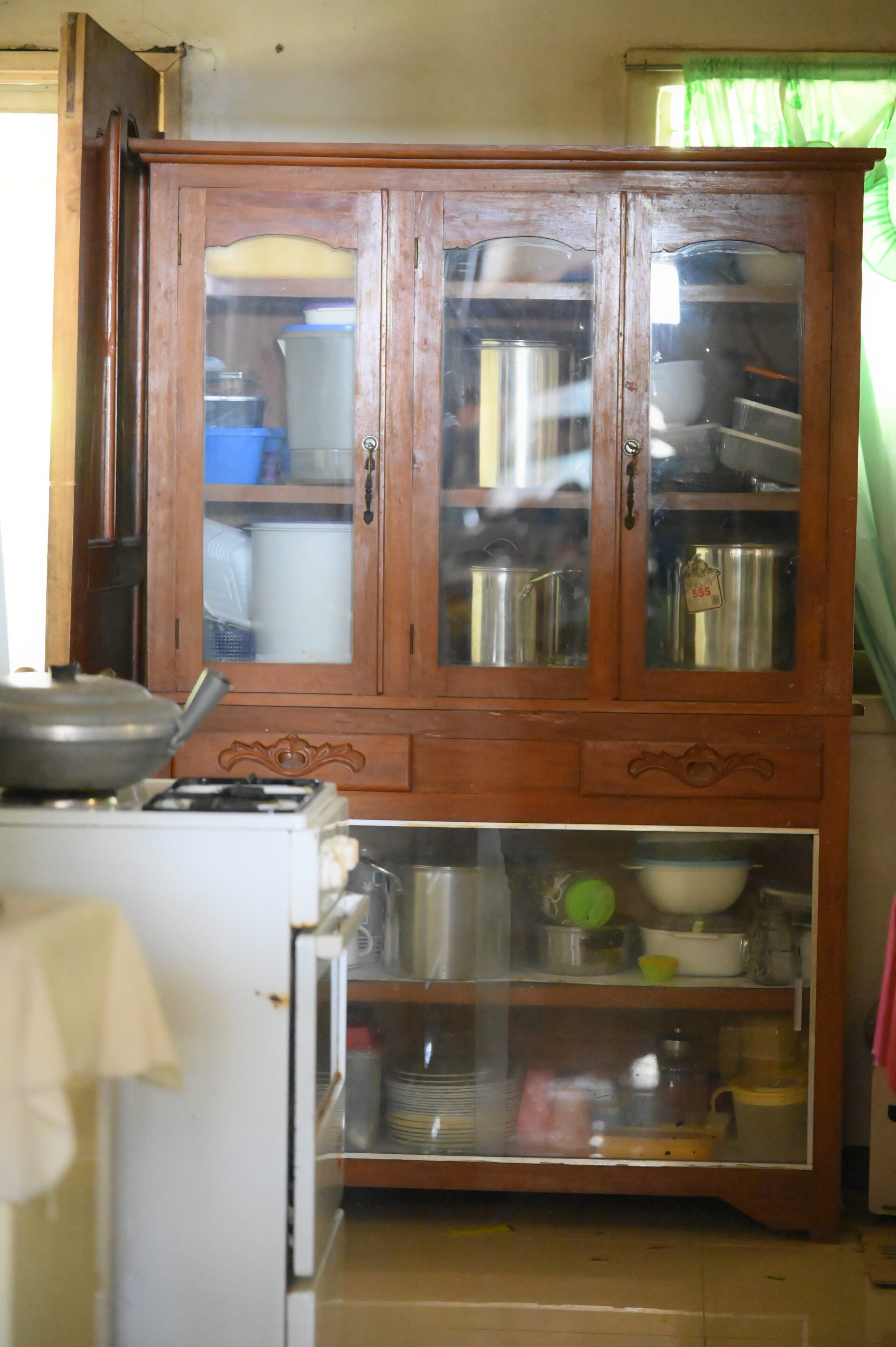
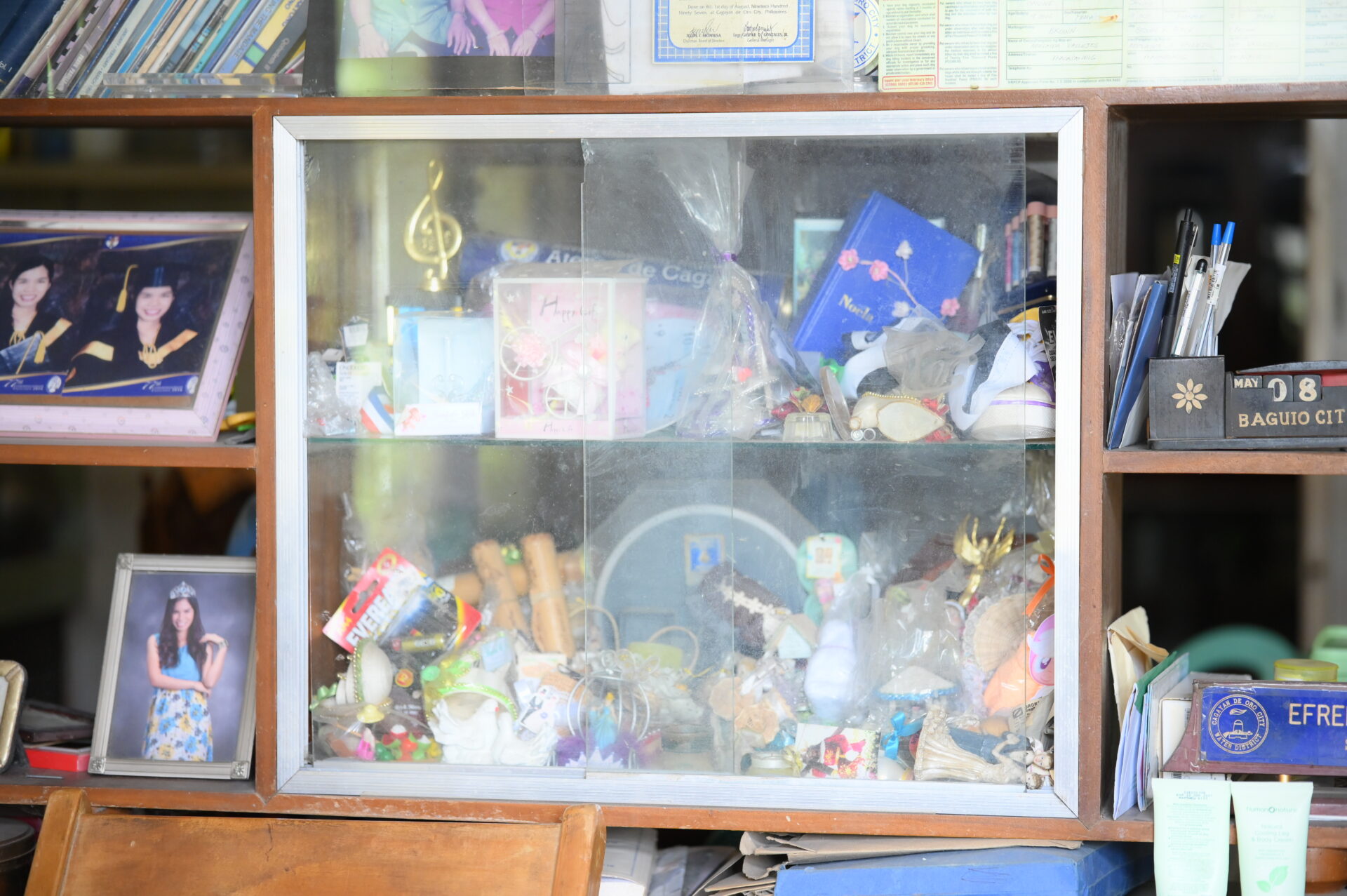
None of the china cabinet, the framed diplomas, and the imported snack containers were decor. My mom didn’t grow up rich. She and my father worked their way into a good life, not fully rich but real. The things on display were proof that the work had mattered. In a country that has never let her relax about money, having visible signs of “we made it” wasn’t vanity, but a relief.
Similarly, my late father’s belongings, the chairs on the terrace, and the things he had paid for with his own money weren’t holdouts against decluttering. They were how my mother kept him in the room. Throwing them out wasn’t tidying, but a loss on top of a loss.
What I had called my minimalism is my own kind of imported lifestyle. I was applying the aspects of standard monochrome apartments to a home built on memory, on visibility, and on “just in case.” That’s why it wasn’t working and we we were fighting.
That didn’t mean minimalism couldn’t work for me. It meant the version I had borrowed wasn’t the right version.
What works in a Filipino home
The version of minimalism that works in this country isn’t an aesthetic. The Manila Bulletin article called it practical minimalism.
There’s nothing wrong with the routines Marie Kondo, The Minimalists, Joshua Becker, or Courtney Carver have given us like the folding methods, the no-buy months, or the question of whether something earns its place in your life. Those tools work. Yet, the problem isn’t the tools, but how some treat them as black and white rules where you have to convert your whole house to. We can take what’s applicable, leave what isn’t, and stop being extensive consumers in a society that wants us to be exactly that.
It’s not about having our house looking empty. In fact, our house will never look empty. What’s different is that I’m clearer about what’s applicable in my life and I’ve stopped trying to apply my standards to anybody else’s.
As for my case, my husband and I have our own space in the house, our own things in it, and our own way of organizing them. I’m a highly sensitive person (HSP), so clutter looks a lot to me. I get stimulated by it the way other people get stimulated by loud rooms. The rest of the house can be a museum, but ours is a space where we can breathe in it.
Practical minimalism comes down to a few rules I keep returning to.
I buy what I need, not what I want to be seen having. The office clothes I donated in 2022 taught me how expensive it is to dress for a version of yourself you’re already moving past. When I’m tempted now by something that’s really for the algorithm or for a future me I’m not actually becoming, I sit with it for a days and weeks Most of the time, the want quietly dies.
I keep what serves me and I let other people keep what serves them. My mother’s museum of memory is hers. My drawers are mine. The line is clean and so is the peace between us.
I let go without grief. The regret of holding on is heavier than the regret of letting go. Two sacks of clothes were two sacks of clothes. The lesson was bigger than the loss.
I refuse to confuse minimalism with judgment. Holding on isn’t always hoarding, but sometimes it’s love and grief. Sometimes, it’s a generation reminding itself that they made it.
I don’t have statistics, but in my opinion, this is generational. My generation grew up wanting to go all in on minimalism. We watched videos and read the books, while our parents didn’t grow up wanting that. They grew up wanting things, they earned them, and they aren’t about to be shamed out of them by a way of life that their children have discovered. Both of us are right. We’re just at different chapters of the same story.
So yes, minimalism works in the Philippines, but somehow not the version Instagram and Pinterest tried to sell us. It’s the version we wrote ourselves, in a house that’s never empty and is never going to be.



Leave a Reply