
Photo by Sam Lion
There is a number that does not get talked about enough. As of March 2026, 52% of Filipino families or roughly 14.5 million households, consider themselves poor. This number has barely moved despite years of government assurances that the Philippine economy is growing.
Part of the reason is that the official poverty line is built on numbers that do not reflect real life. According to the PSA, a five-member family can be considered not poor if their monthly income is at least Php13,873, which the agency itself admits is insufficient to meet minimum food needs. The bar is so low that it stops being a meaningful measure and starts being a political convenience.
Dig a little deeper and it gets worse. As of April 2026, the national average minimum wage sits at PHP 510 a day. This is barely half of IBON Foundation’s estimated family living wage of Php1,312 a day that a family of five needs to live decently. That gap is not a technicality. It means a minimum wage worker showing up every day by doing everything right, but still can’t meet the basic needs of their household. Employment in the Philippines does not guarantee stability. It guarantees survival. Sometimes, it’s not even that.
Now, open your social media feed. You see someone just posted from a rooftop bar. Another person is on their third trip this year. Then, there is a haul video, an unboxing, or a dinner that costs more than a week’s grocery budget. It does not look anything like a country where more than half of families consider themselves poor. This contrast is jarring and it is exactly where the conversation about luxury poverty needs to start.
Luxury poverty lives in that gap between the image and the reality. It is a pattern where the lifestyle someone projects outpaces the financial ground they are actually standing on. The spending and debt exists, but the savings account is empty. It looks like abundance, but it is the opposite.
This post is about understanding how luxury poverty happens, why it is easy to fall into, what it actually costs, and what can you do if you’re living in it.
What is luxury poverty?

Luxury poverty describes a situation where people appear financially secure because they spend on luxuries. Yet, behind the scenes, they struggle financially like saving for the future or building any kind of financial cushion or wealth. The spending is visible, but the debt is not. That gap is where luxury poverty lives.
It is not a new idea, but it has a much bigger stage now. Social media platforms have become places where wealth is equated with worth. Algorithms push content that looks aspirational, which usually means luxury lifestyles, designer items, expensive trips, and expensive gadgets. Over time, this creates a distorted sense of what is normal. What you see on your feed is not a cross-section of reality. It is a highlight reel that’s heavily edited and curated.
There is even a term for what this does to how people see money which is money dysmorphia. It is a disconnect between how you feel about your finances and what your actual numbers reflect. People tend to believe that whatever they see on social media represents the real world. That belief shapes decisions. Eventually, those decisions, made repeatedly and funded by credit, add up to luxury poverty.
Some people take on debt with the intention of showing off on social media. It’s not because they are careless, but it’s because the pressure to look like they are living well has become hard to ignore. The platforms reward it and the culture normalizes it, but the financial damage stays hidden, at least for a while.
I’m not about judging how anyone spends their money. It is about naming a pattern that is becoming more common and more costly. It is worth understanding before it does real damage to us.
What luxury poverty looks like in real life

Luxury poverty looks like someone who has a full life and someone who has things figured out. This is what makes it easy to miss, even when you are the one living it.
The most common version is the frequent traveler with no emergency fund. You see the trips and photos on Instagram. Yet, ask what happens if they lose their job next month and the answer is debt. The travel is not funded by financial freedom. It is funded by the next paycheck, a credit card, or a loan they are still paying off from the last trip.
Then, there is the person whose closet is full of branded items where each one is bought on installment. On paper, it feels manageable because the monthly payment is small. However, small amounts across several number of purchases become a financial leak that runs month after month. The items are owned, but the debt behind them is too.

Similarly, there is the person who eats out regularly at trendy restaurants, shows up to every barkada event, and never says no to a group trip. From the outside, they’re happy and present. Yet, on the inside, they are stretching a salary that was already thin, sometimes borrowing to keep up, because saying no feels worse than going broke.
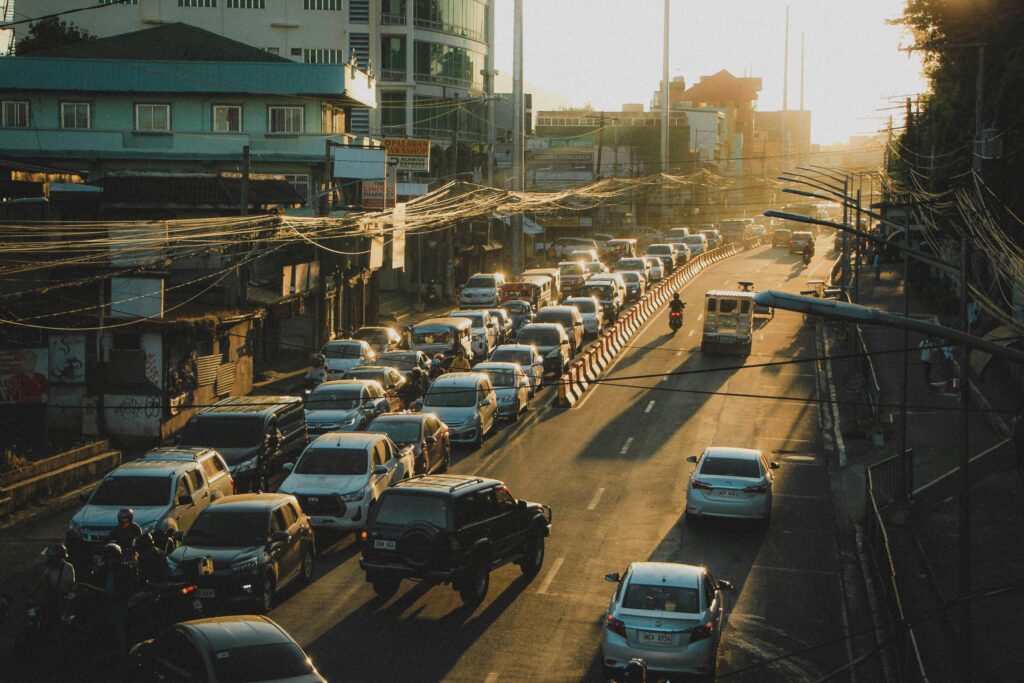
Another familiar one is the financed car which is a discussion in another blog post. This one is a controversial topic in the Philippine context because owning a car is not always a luxury choice. Public transportation is unreliable in cities everywhere in the country. Even within it, commuting can cost people comfort and hours of their day. Infrastructure is poor and roads are bad. For many, a car is the only practical way to get from point A to point B. The problem is not the car itself, but the financing aspect that the income can’t actually support, then watching it drain the budget month after month while the roads it runs on stay the same. The monthly payment looks doable until maintenance, insurance, fuel, and parking are added in. Suddenly, a large portion of the monthly income is going just for a vehicle.
None of these people look poor. That is the point. The rising cost of living only gets worse when expensive purchases showcased on social media push people toward spending on premium goods and experiences that they can’t sustain. The lifestyle is there, but the foundation holding it up is not.
Why people fall into the luxury poverty trap
Luxury poverty does not happen because people are stupid with money (Though sometimes, they are). It happens because several forces push in the same direction at the same time. Most people are not taught to recognize them.
The most obvious one is social media. A 2024 study by LendingTree found that more than six in ten Gen Zs feel pressured to spend in order to keep up with others. When we see friends, colleagues, influencers, or people we follow, enjoying expensive experiences or showing off purchases, it can trigger a feeling of inadequacy or FOMO (Fear of Missing Out). This often leads to spending on things we do not need just to feel like we are part of something.

Then, there is the Filipino cultural layer, which makes this harder to resist. Cultural values like pakikisama (The desire to keep relationships smooth) and utang na loob (The sense of obligation toward people who have helped you), shape Filipino spending. These values often lead people to prioritize social gatherings and financial support for family and friends, sometimes at the cost of their own savings and stability. Saying no to a group dinner, skipping a reunion, or not sending money when someone asks can feel like a character failure. So, people say yes even when the budget says otherwise.
Easy access to credit and BNPL (Buy now, pay later schemes) make all of this easier to act on. The growing availability of BNPL across e-commerce platforms (Like Shopee, Lazada, Shein, and the others) makes it easy for consumers to fold installment payments into their spending habits. As of 2024, 82% of Filipinos have heard of BNPL. Of those, 63%, they said they had at least one BNPL transaction in the past year. The monthly amount looks small, but small amounts across multiple purchases stack up fast. That’s when the debt builds in the background while the inflated lifestyle stays visible.

Underneath all of this is a lack of financial literacy. Most Filipinos were not taught how money actually works, how to build an emergency fund, how debt compounds, how the time value of money works, or what a healthy financial foundation even looks like. So, when the pressure comes (And it always comes), people default to spending because nobody showed them a better response. That is not a personal failure, but a gap that the system never filled.
The real cost of looking rich
Luxury poverty doesn’t feel expensive at first. The monthly installments are small. The credit limit has not been hit. The salary comes in and covers the minimum payments. It feels manageable, until it is not.
The most immediate cost is the debt itself. When a large portion of income goes toward debt payments, it leaves little room for saving, investing, or wealth building. Over time, a lack of savings and investments limits financial security and narrows your options later in life. Every peso going towards interest on a credit card or a BNPL balance is a peso that is not building anything. It is just keeping the inflated lifestyle running.
The second cost is having no buffer. Without an emergency fund, unexpected expenses like medical bills, repairs, and emergencies often lead to more debt. This is where luxury poverty gets dangerous. A single bad month, a job loss, a health emergency, or a family crisis can unravel everything. People who look financially stable from the outside can be one unexpected expense away from serious trouble. The lifestyle hides this, but the bank account doesn’t.

The third cost is what never gets built. Debt is one of the biggest obstacles to building wealth because it takes money that could’ve been saved or invested. Every year spent servicing consumer debt is a year not spent building a fund, growing savings, or working towards financial freedom. The opportunity cost is invisible on a daily basis, but it adds up over years.
Then, there is the mental and emotional cost. Nearly seven out of ten Filipinos report experiencing at least mild forms of anxiety, depression, or stress, placing the country among those with the highest stress levels globally. Not all of that is financial, but money is a significant driver. For those who say money has a negative impact on their mental health, 47 percent cite debt as the cause. Living with the gap between how you appear and how you actually are is exhausting. The anxiety of keeping up while falling behind follows you everywhere.
Finally, when debt goes unchecked long enough, the damage can be devastating. A recent KMJS (Kapuso Mo, Jessica Soho) podcast episode featured a group of public school teachers who shared that after loan deductions, nothing is left in their monthly salary. As one teacher put it, they go to the ATM and there is zero balance. How can they eat and survive daily? These are not people who are living lavishly. These are workers who borrowed to get by and got trapped by compounding interest and predatory lending. It is a different situation from luxury poverty, but it shows how debt that is not dealt with does not stay still.
Luxury poverty costs more than money. It costs you time, options, peace of mind, and years that could have gone towards something real.
How to determine if you’re in the luxury poverty trap

Luxury poverty is easy to miss because it does not feel like poverty. It feels like a normal life. That is why it helps to stop and ask some honest questions, not to judge yourself, but to get a clear picture of where you actually stand.
Start with the basics. At the end of each month, is there anything left or does the money run out before the next paycheck comes in? If you are consistently spending everything you earn or borrowing to fill the gap, that is worth paying attention to regardless of what your lifestyle looks like from the outside.
Think about how you feel when money comes up, not how you look, but how you actually feel. Do you get anxious when you think about your bank balance? Do you avoid checking your accounts? Do you feel a low-level dread that you keep pushing aside because everyday feels fine? That discomfort is telling you something.
Look at what drives your spending. When you bought the last item, was it because you needed it or wanted it genuinely, or was it because someone else had it, because it would look good, or because saying no felt uncomfortable? There is no shame in the answer, but knowing the honest answer matters.
Ask yourself if you could survive without income for three to six months right now, not borrowing your way through it, not asking a family, but actually covering your needs from savings. If the answer is no (And most people’s answer is no), that is a concrete measure of how thin the financial foundation actually is regardless of how full the lifestyle appears.
Finally, look at whether your spending is moving you towards the life you actually want or just maintaining an image of it. There is a difference between enjoying your money and spending it to manage how others see you. One builds something while the other just keeps the performance going.
None of these questions are meant to make you feel bad. They are meant to cut through the noise and show you what is real. The first step out of any trap is knowing where you stand in it.
The bottom line

Luxury poverty is not a personal failure, but it is what happens when the pressure to perform a certain life is louder than any honest conversation about money. Social media did not create the problem, but it made it much easier to fall into and much harder to see clearly.
Remember that what you see on someone else’s feed is not their full financial picture. It is the part they chose to show such as the trip, the outfit, the dinner, and the new thing. None of it tells you whether they have savings, whether they are drowning in debt, or whether they went home that night and stared at their bank balance in silence. You are comparing your reality to someone else’s highlight reel and that is not a fair comparison.
Your progress does not need to match anyone else’s timeline, to look a certain way, or to be visible to other people to be real. Paying off a debt behind the scenes is progress. Building a small emergency fund is progress. Choosing not to spend money you do not have, even when everyone around you seems to be spending freely, is progress. None of these are Instagram-worthy, but it leads you towards financial stability.
Looking after yourself financially is one of the best things you can do for your future, not because money is everything, but because financial stability gives you options, rest, and the ability to make choices from a place of security rather than pressure. Yes, learning about financial literacy is boring. Yet, that is worth more than any lifestyle that looks good from the outside, but costs you everything on the inside.
The goal is not to look rich, but to be financially stable and free. Money is a tool that should work for you and not something you perform for other people. Thus, being secure starts with being honest about where you are right now and not where your feed says you should be.





Leave a Reply