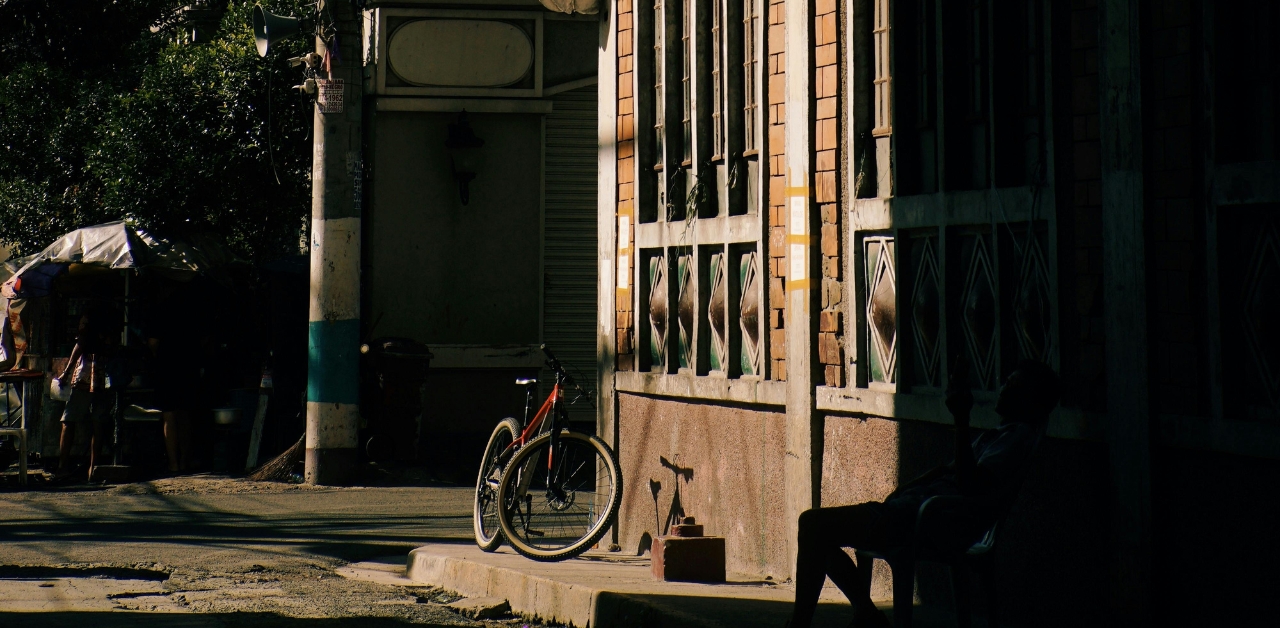
Photo by Marcial Comeron
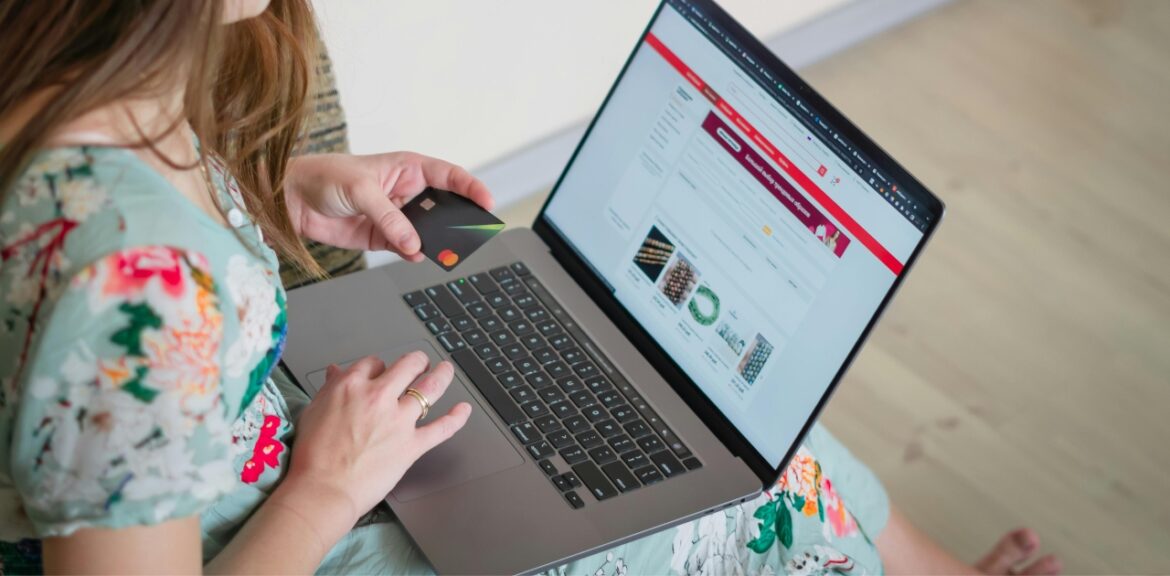
We live in a time where getting what you want takes a few scrolls and taps on your phone. You see something on your feed and on Shopee, you click, and it’s at your door in a few days. As someone who works from home, I’ll be the first to say that this kind of convenience has been useful. Ordering items without leaving my desk, having groceries delivered when something runs out of my pantry since you don’t like going out, or getting a meal sent over when life gets busy and cooking isn’t an option. It has saved me more time and it’s something that I’m grateful.
Yet, convenience has a cost that doesn’t show up at checkout. It shows up with more packaging, plastic mailers, bubble wraps, single use plastics, and cartons.
The consequences of consumerism aren’t always obvious in the moment. They pile up slowly, in our bins, in our oceans, in our bank accounts, and in the back of our minds. Once you start noticing them, they’re hard to unsee.
This post isn’t about quitting any forms or shopping or food delivery. It isn’t about guilt-tripping anyone into living out of a single backpack or romanticizing the kind of minimalism that turns poverty into a lifestyle choice.
It’s just time to ask these few questions: what is overconsumption really costing us? Are some of the things we keep buying actually worth what we give up for them?
What is consumerism?
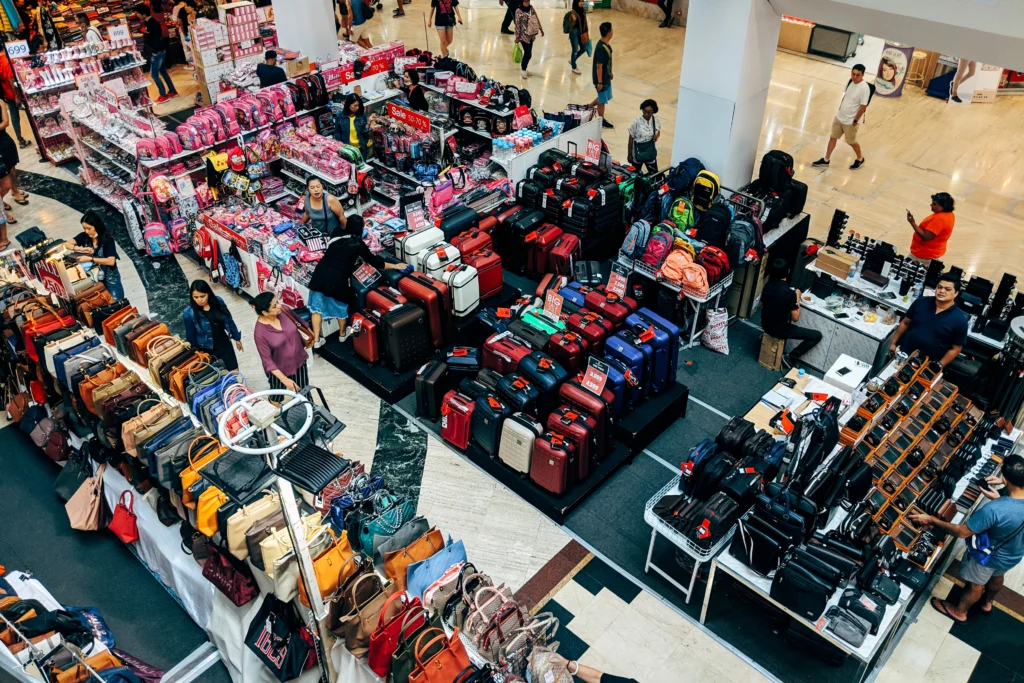
So, what exactly are we talking about when we say consumerism? It isn’t just shopping, how often you order online, or how many deliveries arrive at your gate in a week. Consumerism is bigger than that. It’s the belief that buying more is always better, owning more makes you more, and the economy depends on all of us wanting things.
Investopedia describes consumerism as the idea that increasing consumption of goods and services is always a desirable goal, both for individuals and for economies. This sounds good until you realize what that means in practice. It’s a system that works best when we are never satisfied. It’s a market that needs us to keep spending and online platforms are designed deliberately to make sure we do.
The Swiss energy company, MET Group, describes consumerism as a loop comprising of production, distribution, consumption, and repeat. The convenience we rely on today, the one-tap orders, the two-day deliveries, the food at our door when the day runs long, fits exactly inside that said loop and it has been built for it. The easier it gets to consume, the faster the loop spins.
This isn’t a new conversation since way back in 2005, Global Issues.org was already writing about how consumerism harms the environment, widens inequality, and slowly changes how we measure our own worth. Twenty years later, nothing in that piece reads as outdated. It just reads as more urgent.
What consumerism is doing to your wallet?
The financial cost of consumerism is in the numbers. A 2025 report by a Singapore-based fintech firm, Roshi, found that the average Filipino credit card holder carries debt of around Php99,400 (or round off to Php100,000) against an average monthly income of roughly PHP 23,400. That results to a debt-to-income ratio of 425%, the worst in Southeast Asia, and what the firm classified as critical risk or in severe financial stress. Debt-to-income ratio determines your ability to comfortably manage and repay loans.
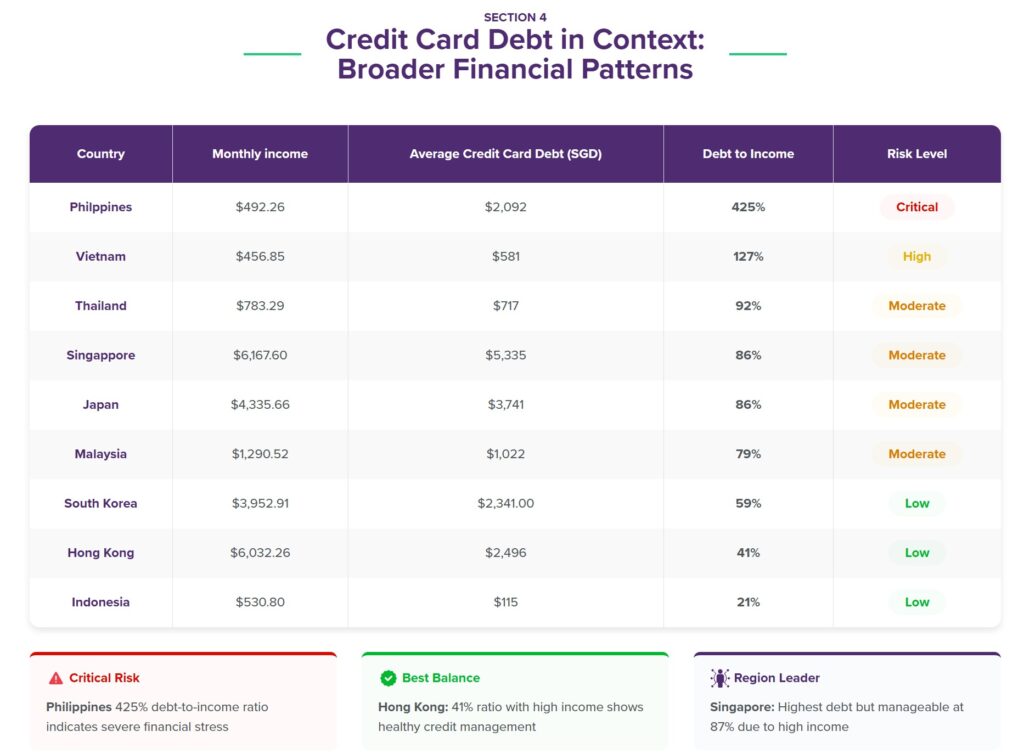
The original report stated these figures in Singapore Dollars (S$2,092 in debt and S$492 in monthly income). The peso equivalents above were converted at the SGD-PHP exchange rate as of this writing.
At the same time, according to the ASEAN+3 Macroeconomic Research Office, consumer loans in the Philippines grew by over 21% in the third quarter of 2025, with credit cards driving nearly 40% of that increase.
What makes that harder to sit with is where the borrowing is going. According to a Consumer Expectations Survey Report from BSP (Bangko Sentral ng Pilipinas), it stated that 54.2% of Filipino households are now using loans to cover basic goods like groceries, up from about 35% before the pandemic. Before the COVID19 pandemic, around 37.8% of Filipinos could set money aside. By late 2023, that number had dropped to just 29.1%.
Part of this is inflation and the revenge spending period that followed the pandemic, when credit card billings jumped 47% in a single quarter. Yet, part of it is also the culture that platforms and advertisers have built around us. It’s one that makes spending feel normal even when the budget doesn’t support it. This includes Buy Now Pay Later (BNPL), zero-interest installment plans, flash sales that create urgency where there wasn’t any, and the likes.
Most people fail to realize that credit card isn’t free money, neither is a BNPL option. Every purchase made on credit is a promise to pay in the future and consumerism is very good at convincing us that our future self will be fine.
What consumerism is doing to the planet?
This is where the numbers get harder to look at. For us in the Philippines, the story starts close to home.
1. The sachet economy
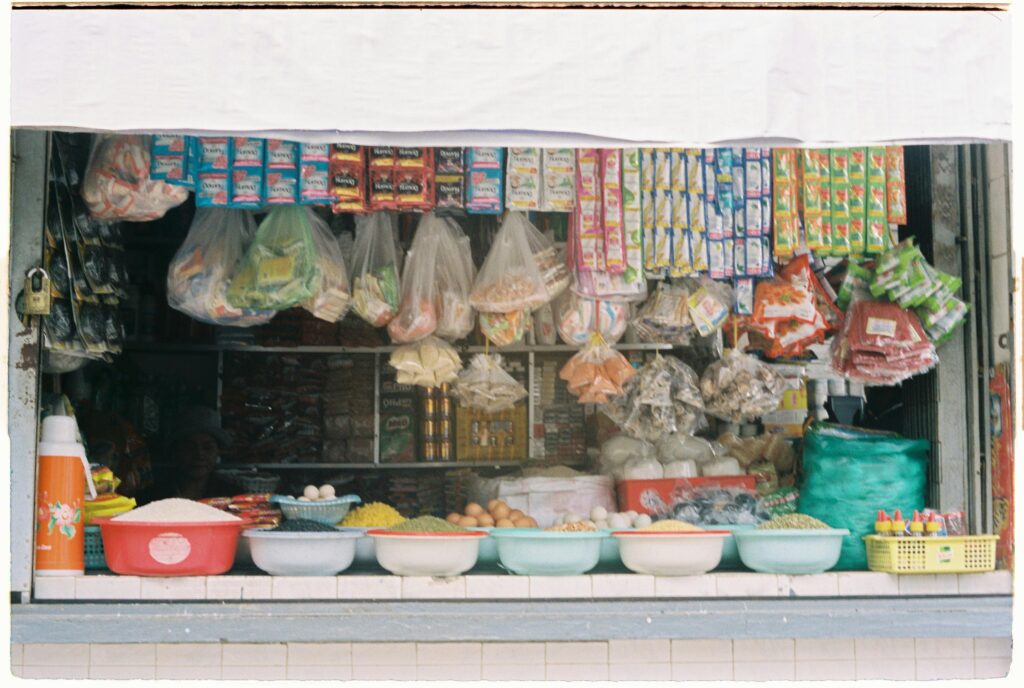
Filipinos consume an estimated 163 million sachets every day which includes shampoo, conditioner, coffee, vinegar, soy sauce, and dozens of other daily staples that are all wrapped in a single-use plastic that is used once and thrown away.
From a 2021 World Bank market study on plastics, this dependence on single-use packaging has turned the Philippines into what researchers call a sachet economy. This makes the country one of the biggest contributors to marine plastic pollution in the world. We generate around 2.7 million tons of plastic waste every year where about 20% of it ends up in the ocean.
Likewise, GAIA reports that sachets alone make up 52% of residual plastic waste in the country. More than half of the plastic we can’t recover comes from the tiny wrapper of a single serving of shampoo.
Then, what happens to all of it? A 2025 World Bank database cited by Inquirer shows the Philippines generates 14.6 million tons of municipal solid waste every year. Metro Manila alone produces around 11,000 tons of waste daily. Yet, only 30 to 40% of it actually gets collected. The rest ends up in streets, vacant lots, canals, and eventually our waterways. In 2025, lawmakers in the House described the country’s solid waste management system as the worst in the world.
Our landfills are filling up faster than new ones can be built. The Philippine Center for Investigative Journalism investigation found that the country is heading toward a catastrophic garbage crisis. This is driven by decades of policy failures and broken commitments. A 2025 PSA report found that hazardous waste grew by 13% in 2024 alone, which is faster than the government could build facilities to handle it. In 2025, an abandoned landfill in Navotas City caught fire and burned for days which blanketed northern Metro Manila in haze. Even after a landfill closes, the damage it poses to communities does not simply disappear.
I saw where all of this ends up in March 2026. My husband and I traveled to Manila through ship and witnessed the port of Tondo, I looked out at the Manila Bay and the water shocked me. It wasn’t really water anymore. It was a floating stretch of garbage, plastic bags, food wrappers, styro foam containers, and debris of every kind, that are spread out as far as I could see from where I stood. It’s one thing to read the statistics mentioned above, but it’s another to stand there and realize that what you’re looking at is the physical result of what we consume and how little thought we give to where it all goes.
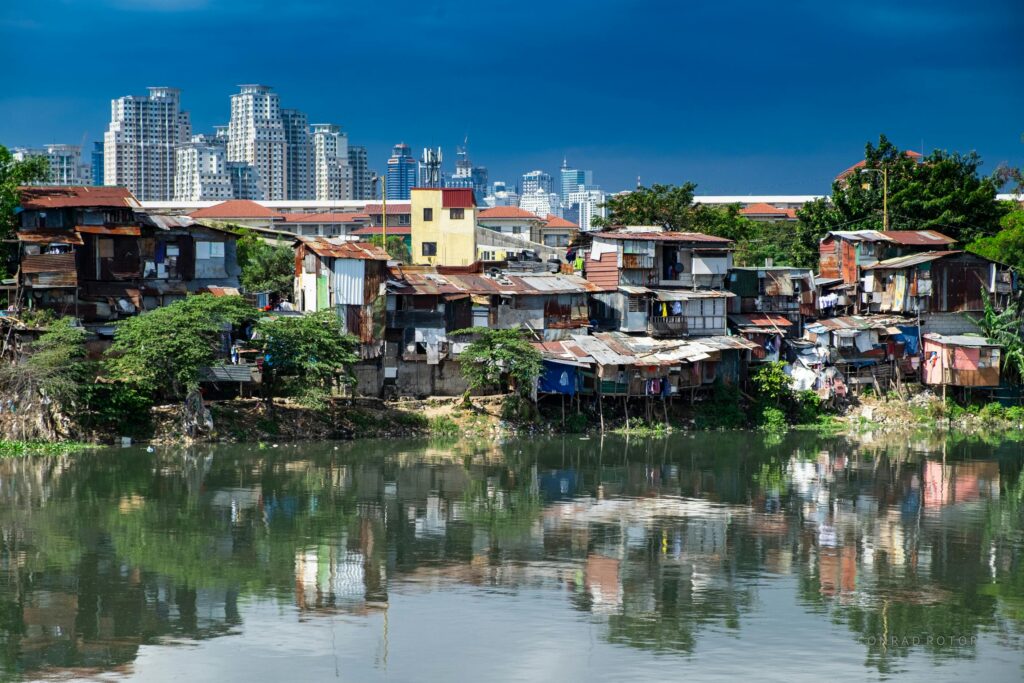
Photo by Conrad Rotor
What I saw that day isn’t surprising once you know the data. A 2024 marine litter monitoring survey by EcoWaste Coalition found that 91% of waste collected in Manila Bay is plastic. The bay is connected to seven major rivers draining 26 catchment basins that are all carrying waste from communities across Metro Manila. Tondo, where we passed through, sits in one of the documented hotspots for plastic accumulation along the bay.
Earlier this year, a global nonprofit, The Ocean Cleanup, announced it would deploy plastic interceptors in the waterways feeding into Manila Bay in 2026. They’re joining cities like Los Angeles and Mumbai in a program targeting the world’s most plastic-burdened coastal areas.
It’s a painful irony in all of this in our country. The tingi system (Buying or selling in small quantities of what you need) used to be sustainable. You’d bring a container to the sari-sari store and fill it up. Somewhere along the way, corporations found a cheaper solution and called it convenience which is through plastic containers. Greenpeace Philippines has been working to reverse this through its Kuha sa Tingi project which encourages its consumers to return to refillable containers. This project has been implemented starting in Quezon City and San Juan. It’s a small start, but it points to a way of living we used to already know.
2. Fast fashion
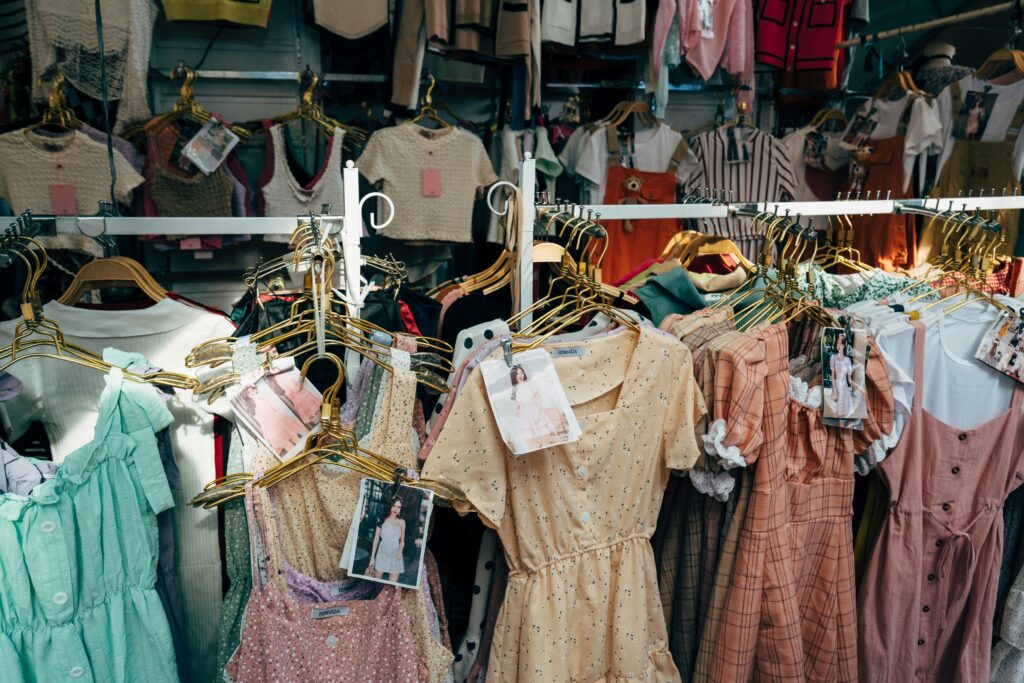
Fast fashion is the practice of producing large volumes of clothing quickly and cheaply. They’re designed to follow the latest trends and replaced by the next trend. It is the reason why a new style can go from a design sketch to a store rack in just a few weeks. It is also why most of what we buy ends up forgotten at the back of our closets or in a landfill.
The fashion industry’s impact on the planet is harder to see in our daily lives, but just as serious. According to the United Nations Environment Programme, the industry produces around 92 million tons of textile waste every year. That number is on track to reach 134 million tons by 2030. Many clothes are worn fewer than ten times before being thrown away and only about 12% of textile materials are ever recycled.
Earth.Org mentioned that fashion is responsible for around 10% of global carbon emissions annually. This is more than international flights and maritime shipping combined.
Even doing laundry carries a cost. The European Parliament reports that a single load of synthetic clothing can release up to 700,000 microplastic fibers into the water. Eventually, these fibers make their way into the ocean and into the food chain.
The Philippines isn’t a major fast fashion producer, but we are consumers of it. Every Shein haul, every Zalora checkout, and every online shopping spree for clothes we saw on social media adds to the demand that keeps this cycle running.
The ukay-ukay culture (buying and selling of second-hand clothes) is one of the more honest responses to this. However, even our thrift ecosystem ends up absorbing the overflow from wealthier countries which are clothing that has already been discarded once before it reaches our shores.
3. E-waste
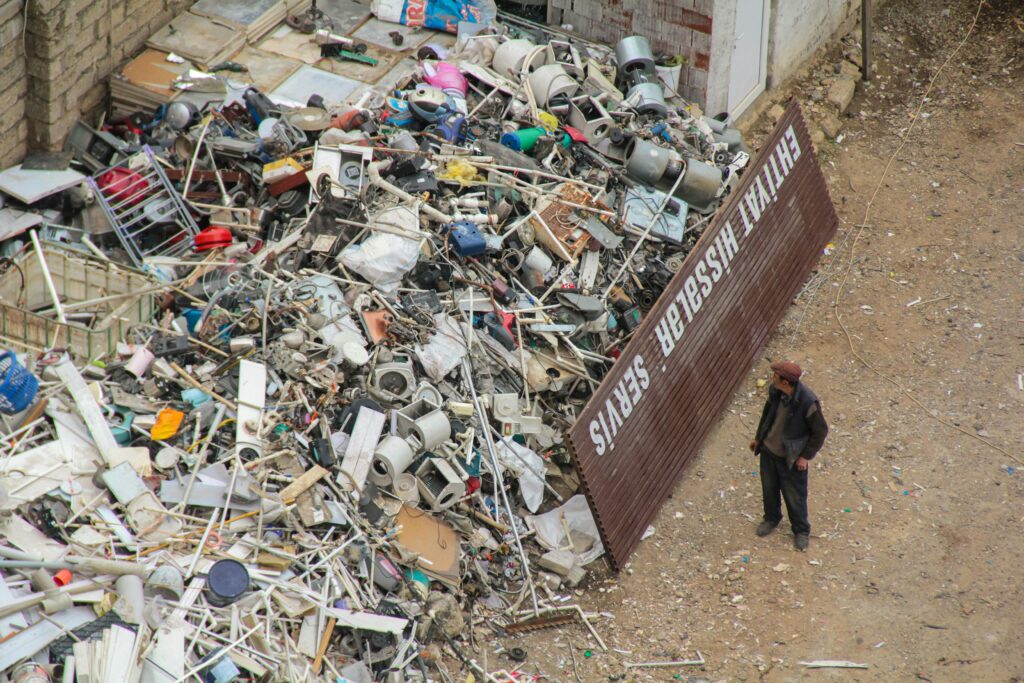
E-waste or electronic waste is any device with a plug or a battery that gets thrown away. This can be your old phone, a busted laptop, a broken electric fan, earphones that stopped working, and even disposable vapes. Once these things leave your hands and don’t get properly recycled, they become e-waste. The volume of it globally is staggering.
The UN Global E-waste Monitor 2024 reported that the world generated 62 million tons of electronic waste in 2022 which is an 82% increase from 2010. That figure is projected to reach 82 million tons by 2030. The e-waste produced in 2022 alone is said to fill enough trucks to form a bumper-to-bumper line around the entire equator. Only 22.3% of it was formally collected and recycled. The rest was burned, buried, or shipped to poorer countries for informal processing which is exposing communities to hazardous materials including mercury and lead.
In the Philippines, the phone upgrade cycle is speeding up. Home Credit Philippines financed around Php10 billion worth of iPhones in 2024 which is a number expected to double by the end of 2025. Honestly, I’m still using the same phone I bought in 2019, not because I can’t upgrade, but because it still works and I’d rather not add to the pile. Every upgrade means an older device somewhere. Yet, the question of where it goes rarely follows the excitement of unboxing the new one.
What consumerism is doing to our mental health?
The financial and environmental costs of consumerism are visible with the statistics, even if we look away from them. The psychological ones are hidden are harder to face because they live inside us.
Research consistently finds that people who place a high value on wealth, status, and possessions report more anxiety, more depression, and weaker connections with the people around them.
A study published by the Association for Psychological Science found that even briefly exposing people to images of luxury goods or materialistic values was enough to make them feel more depressed and less interested in spending time with others.
A more recent 2025 meta-analysis in the Journal of Consumer Behaviour, which pooled 72 studies and more than 44,000 participants, confirmed the broader pattern. Materialism erodes social well-being and weakened social well-being in turn fuels more materialism. The effect held across genders and cultures and was strongest in children and adolescents. The mere presence of consumer culture in our minds shifts how we feel about ourselves and the world around us.
Social media makes this worse. A 2024 study by psychologist Dr. Phillip Ozimek, surveyed over 1,200 people who spent an average of two hours a day on social media. It found that exposure to materialistic content is directly linked to lower life satisfaction.
We scroll through other people’s hauls, their new gadgets, their aesthetically arranged shopping finds, and something in us decides that what we have isn’t enough. The purchase we were happy with last week suddenly looks ordinary. So, we look for the next one.
Similarly, a 2024 study in the British Journal of Social Psychology also found that placing money and possessions at the center of your identity doesn’t just affect how you feel. It affects how you treat other people. The research found that materialism actively damages our relationships by pulling our emotional energy away from connection and toward acquisition.
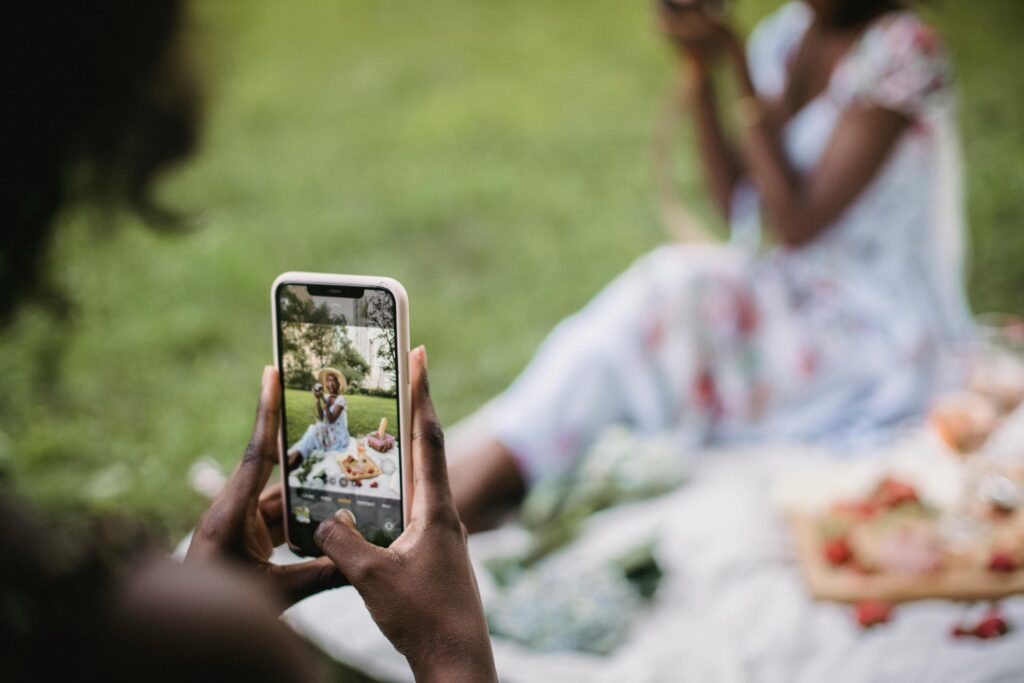
Here in the Philippines, this plays out in a specific way. A 2024 study by Fourth Wall found that Filipino Gen Z shoppers are driven by what researchers called a sayang (missed opportunity) mindset. Daily struggles and deprivation push them to seize any rewarding opportunity, often in the form of a purchase, out of FOMO (fear of missing out) on something they consider as good. This isn’t a character flaw, but a survival response inside a system that has monetized our small joys and turned them into spending triggers.
The cycle is hard to break because it feels like it’s working. The purchase brings a brief lift, but then it fades. Then, the feed shows you something else. Because the the euphoria is there, even if it was short, we go back for it again.
Why it’s so hard to stop
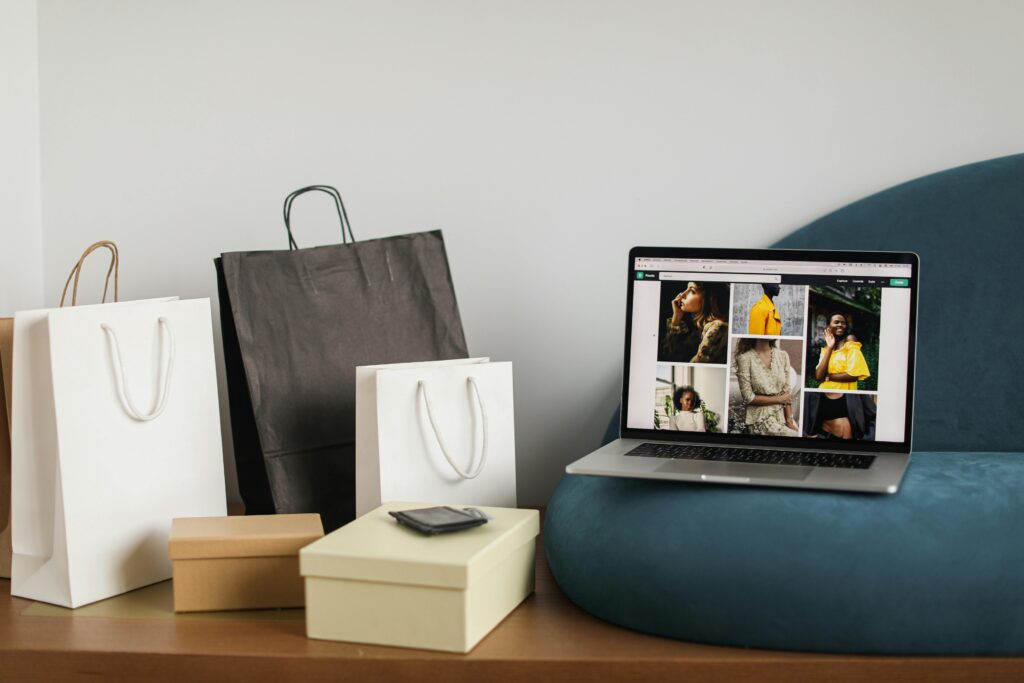
If you have read this far and felt guilty about your own habits, that is understandable. However, the difficulty of stepping away from consumerism is not a personal failure, but it’s by design.
The platforms we use regularly are built to keep us buying. Shopee, Lazada, Shein, TikTok Shop and the likes don’t just sell products. They study our behavior, serve us what we are likely to click on, and create a shopping environment so frictionless that a purchase can happen in a short span of time.
Flash sales and countdown timers create urgency where there wasn’t any such as the 11.11 mega sale, the 12.12 year-end sale, or the payday sale that arrives conveniently every fifteenth and thirtieth of the month. None of these dates are accidental. They are scheduled around the exact moment the payday money lands in our accounts.
Beyond the mechanics, marketing has moved from selling products to selling identity. For example, we don’t necessarily buy a Stanley tumbler, but we buy the version of ourselves that carries one. We don’t buy a skincare set, but we buy the skin we were told we deserved.
Consumerism is so deeply rooted in our modern lives that choosing differently requires conscious and active effort and not just good intentions. The odds are not exactly stacked in our favor, but knowing that is the first step towards doing something about it.
Where I am with all of these
Consumerism doesn’t leave us with two options of buying everything or buying nothing. That false choice is actually part of the problem. It lets people dismiss the conversation entirely because full abstinence feels impossible and extreme minimalism isn’t realistic for most of us. The more honest middle ground is intention.
I want to be honest before I close. I am not writing this from the other side. My habits are not perfect. There are things I have bought that I somehow regret and a few choices I still make that add to the problem. I use delivery apps. I order online when I need something.
With this, I am trying and making a conscious effort to only buy what I actually need, to think twice before adding something to a cart, and to make small choices every day that help reduce my carbon footprint, even if those choices are not always consistent. Some days I get it right, some days I don’t. Yet, the awareness is there now and it has changed the way I move through the world as a consumer.

Leave a Reply