Photo by Kimy Moto
The flood control scandal in the Philippines is not just a big news in 2025, but a country’s worth of stolen safety. Trillions of pesos that’s supposed to protect the Filipinos from floods and calamaties ended up funding a fleet of luxury cars and lifestyles instead. 40 of these cars are owned by one contractor family, the Discayas. While for an ordinary Filipino like me, all I want is a brand new Toyota Avanza car that I can drive and utilize for the next decade or so.
Now that the PAG-ASA has declared the start of the rainy season, the rest of us ordinary Filipinos are checking the weather, watching the rivers rise, and wondering which area will flood next.
I have been thinking about this ever since my consciousness came because I am somehow fed up with it. What I keep coming back to is the lifestyle behind these people. They have the inability to stop accumulating wealth long after any reasonable person would have said enough. When will their wealth be enough and their greed be overridden by common sense? It made me wonder what this country would actually look like if the people in power lived a minimalist and intentional life, not as a campaign image, but as a lifestyle and daily practice.
This blog post is not a corruption roundup. There are many more government officials, past and present, whose names could appear here. I am only including the ones whose stories are relevant to the question I am asking, which is what would change if our officials lived a minimalist and intentional life.
A mayor who won’t replace his phone.
While the Discayas were collecting BMWs and GMCs, the man who would later become their political rival was holding on to an old Oppo phone.
Vico Sotto is the mayor of Pasig, the same city where the Discayas built their construction empire and where Sarah Discaya ran against him in the 2025 elections. They’re in the same city, but have two opposite philosophies of public life. Gladly, the voters chose the one with the old phone.
The mayor’s phone has become a legend in the public not because he made it one, but because he just refused to replace it. Even though Tech Partner PH offered him a free iPhone 16 Pro Max after he won the 2025 elections, he seemed not interested despite the satire giveaway.
Republic Act 6713 prohibits public officials from accepting any gift or favor from any individual or company. His own father, actor and comedian Vic Sotto, once explained it best and said that as long as the mayor’s phone has not exploded, he will not replace it. That is how this mayor stands his ground.
Mayor Vico could have accepted the iPhone because it was just a phone. However, that is exactly the kind of small acceptance that opens the door to bigger ones. He understood that the size of the gift does not matter. The act of accepting does.

I will be honest. There are times I am tempted to buy the latest Samsung Galaxy S26 Ultra, which starts at Php86,990 and goes up to Php121,990 for the 1TB version. The phone’s features are good. Yet, every time the urge comes, I am reminded of two people. Mayor Vico Sotto and another person.
My husband still uses a keypad phone, even though his work at GSD Films & Stills runs on high-end photography and videography equipment. He understands the difference between what the work needs and what the ego wants. The cameras, the drone, the lenses are tools that earn. An Php100,000 phone is not a tool if not utilized for its purpose.
Moreover, the way Mayor Vico lives shows up in the way he governs. TIME magazine named him to TIME100 Next 2025, describing how at 29, he toppled a 27-year family dynasty in Pasig without machinery or money. There’s radical transparency, a 24/7 information and complaints hotline, public procurement that is livestreamed, and project costs slashed by eliminating kickbacks. During COVID, mobile kitchens fed front liners efficiently, zero-emission buses moved workers without inflated contracts, and aid reached families based on need rather than political loyalty.
This is what I mean by minimalism in office. The cheap phone or the simple clothes are just the visible parts. The real minimalism is the absence of greed in the work itself and the willingness to strip out the inflated contracts, the ghost projects, the kickbacks, and the favoritism. It’s a government that does not need to be padded with extras because the people running it do not need those either.
I do not know Mayor Vico Sotto personally. I am only observing with what he shows in public. What he shows is consistent like the phone I mentioned, the simple clothes he’s seen, the refusal to accept gifts, the way he speaks with integrity, and how he runs his city.
This is the part I want to sit with for a moment because the rest of this post is going to look at a few individuals who chose the opposite. One of the first things you will notice about them is how much effort it takes to maintain the lavish lifestyle
The lavish life and what it actually costs the Filipinos.
I have written before regarding the luxury poverty trap about how people on social media curate a life that looks rich while quietly drowning in debt and financial instability behind the camera. That post was about regular Filipinos who are performing wealth they do not actually have and funding a feed instead of a future.
However, there is another version of this happening at the top and it is louder than anything happening at our level.
Heart Evangelista is the wife of Senator Chiz Escudero. She is an actress, a fashion influencer, and by her own account, someone who has been working since she was 13 and has earned every luxury item she owns through hard work. Her defenders point out that she comes from the wealthy Ongpauco clan, owners of a popular restaurant chain, long before she became an Escudero. I am not here to dispute any of that. I take her at her word that what she has, she earned.
@lme85 Started at 13 and now 40 years old 🥹🤍 27 years of hard work 🤍 thank you to all my fans 🙂 this video may not show everything but I am so so grateful for all 🤍 Ps Jen , my heartworld member since bata pa Tayo thank you for this 🤍
♬ angels forever forever angels – JUDY®
Yet, Senator Escudero’s 2024 SALN lists his net worth at 18.84 million pesos, which technically makes him the poorest senator on paper. Meanwhile, his wife is openly photographed at Paris, Milan, and New York Fashion Weeks, where she’s carrying handbags worth more than most Filipinos will earn in a lifetime. At one point, the actress received a Paraiba tourmaline ring from her husband that, by some estimates, costs multiples of his entire declared net worth.
While I thank Senator Escudero for surprisingly appearing in the senate last week for a quorum, he still needs to be accountable. He’s still under public scrutiny in connection with the trillion peso flood control corruption scandal, which is the same scandal that produced the Discaya luxury car fleet I opened this post with.
I am not making a legal accusation. I am only making an observation about they show in public.
AFTER CHIZ: Si Heart Evangelista, nakatikim lang ng Paris at Fashion Week AFTER meeting Sen. Chiz Escudero
by u/darealcrazyrichasian in Philippines
When you choose to run for office, your family’s visible spending becomes part of the public conversation. That is every Filipino’s right as their salaries are funded by every citizen’s taxes. You accept a fiduciary duty to people who may not eat three meals a day. In exchange, you accept a baseline of restraint, especially when a corruption scandal involving your own office is unfolding.
Similarly, this is where the nepo baby problem comes in. The flood control scandal prompted the public to look more closely at the lifestyles of officials’ and contractors’ children and spouses, many of whom flaunt lavish lifestyles on social media. The defense is always the same as Heart Evangelista: it is my own money, it is sponsored, or it is hard-earned. When the parent is a sitting official under investigation or a contractor cornering billions in government projects, every Hermes flat-lay and every business class boarding pass becomes part of a larger question: where did this come from? Who actually paid for it? Whose money built this lifestyle?
It’s not that anyone is forbidding to own these things, but because a minimalist and intentional public life means understanding that the optics of restraint matter for government officials and their family, especially when people are pulling themselves and their belongings out of floodwater.
There are costs to this kind of life aside from the taxpayers being charged 1st world tax rates and being provided with 3rd world kind of services. One of this is the carbon footprint of frequent international travel, private jets, and fashion week circuits is not zero. It is significant and it is borne disproportionately by the same poor coastal and agricultural communities that get wiped out by the floods and typhoons that climate change makes worse. The luxury life of a few is environmentally subsidized by the survival of many.
Then, there is the conflict of interest that no one dares to address directly. A government official’s job is to serve. It is not a part-time gig you do between private business meetings. It is not a platform for expanding your family enterprise. The Discayas are the prime example of how dangerous it gets when the line between public office and private business blurs. Sarah Discaya admitted to owning at least nine companies that secured government deals, with approximately 400 DPWH projects between 2022 and 2025. When the same family is on both sides of the contract, the contract is no longer a legally binding agreement, but a transfer.
This principles holds at regardless of any level of position in the government. Take Atty. Jesus Falcis, a public-interest lawyer and a sitting barangay kagawad, has been vocal about the same idea, that an elected official, even at the barangay level, should not be running a private business at the same time. The conflict is structural. It does not need bad intent to do harm. The mere coexistence of public power and private profit creates a gravity that bends decisions, even small ones, toward the government official’s own interests. It is about whether public power and private profit can sit inside the same body without one corrupting the other. The answer, historically and globally, is that they cannot.
The performed simple life
Rodrigo Duterte built an entire political brand on being the poor man’s child. He consistently said in speeches that he identified with the communist rebels because he grew up poor in Davao City. It worked so well that millions of Filipinos believed they were voting for one of their own.
The Illusion of Simplicity: Duterte’s Hidden Estate Empire
by u/pinayinswitzerland in ChikaPH
Then, when Senator Antonio Trillanes alleged that he had unlawfully amassed 2 billion pesos in transactions across three bank branches as mayor of Davao City, Duterte’s tone shifted. He told Trillanes in Filipino, “If your family is starving then or now, don’t involve us. We are not as unfortunate as your family. We are not poor. My father was a governor. He left us inheritance”. The poor man’s child was, in fact, a governor’s son with inheritance.
On top of bank accounts that had accumulated transactions amounting to 2.4 billion pesos, Trillanes also listed 41 properties supposedly owned by Duterte across the country.
Today, the contradiction continues. House Deputy Speaker Paolo Ortega has asked publicly where the Duterte family is getting the money to fund Rodrigo Duterte’s ICC defense, given that the family has long claimed a modest lifestyle and Vice President Sara Duterte’s latest declared net worth was pegged at 88 million pesos. Simple lives do not fund ICC defense teams. Inheritance, undeclared wealth, or someone else’s money does.
As someone who knows the Dutertes personally, I can personally say that they were never poor
by u/hyunbinlookalike in Philippines
This is the deepest problem with performed simplicity as it is louder than actual luxury. At least for Heart at Paris Fashion Week, she’s honest about what is being displayed. On the other hand, Duterte saying he is a poor man’s child while sitting on alleged billions is something else entirely. It is a costume worn for political gain, which insults both the actually poor and the actually frugal at the same time.
A minimalist and intentional life is quiet by design. It does not need a hashtag, a speech, a photo op in a karenderya visit during campaign season.
Vico Sotto does not give interviews about his old phone. The phone simply is what it is. His father had to explain it to the public because Vico himself never would.
When will it be enough? That is the question I keep returning to. At what point does a person stop and ask whether the next ring, branded bag, European escapade, brand new luxury car, state-of-the-art house, campaign donation, or government contract, actually adds anything real to their life.
A minimalist and intentional life answers that question early. It says how enough is something you decide on, not something the market or the office decides for you. It says the most powerful flex is the one you choose not to perform and that the people we trust with public office should be the first to choose this, not the last.
A minimalist and intentional life for government officials is not a utopia.
A pushback for a minimalist and intentional life in public office is that it’s a fantasy. No real politician anywhere on earth, aside from Mayor Vico Sotto, actually lives this way because power and simplicity are a contradiction in terms.
However, there is a real example I found and it is not a single leader. It is an entire country whose culture expects modesty from the people in public life.
It’s The Netherlands. I know what you might be thinking. It’s the same country where the International Criminal Court is located at The Hague and where the first former Asian head of state is currently detained.
I am not bringing up The Netherlands to be cute about that. I am bringing it up because the culture that holds powerful people accountable is the same culture that holds its own officials to a a life of simplicity.
I will be transparent about my own bias here since The Netherlands is one of the countries in Europe I would love to visit one day. It’s fascinating to see the bicycles, the canals, the infrastructure design, the slower pace, and the way the country seems to have figured out how to live well without living loud. I have read and seen about it for years and the more I learn, the more it pulls me to go there.
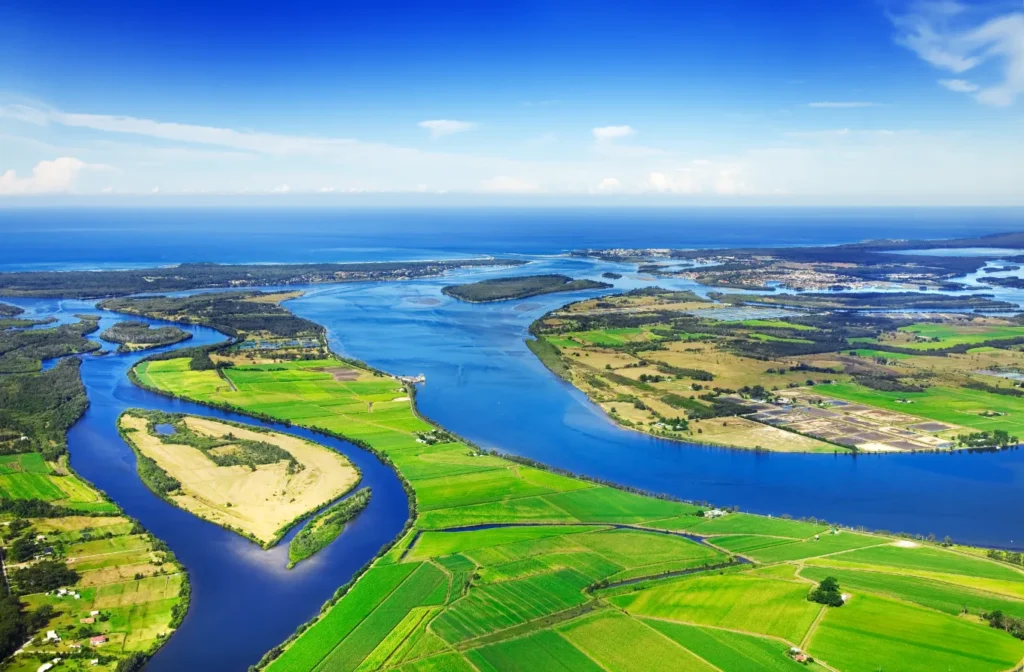
Moreover, The Netherlands hits close to home for any Filipino watching the floods rise every year. By global consensus, The Dutch are the best in the world at flood control. Roughly, a quarter of the country sits below sea level and about two thirds is vulnerable to flooding, which means flooding is not a political talking point there.
The result was the Delta Works, a massive network of storm surge barriers, dams, dikes, sluices, locks, and levees that took four decades to complete. Dutch engineers sealed off estuaries, pioneered new movable flood defenses, and transformed a jagged 700-kilometer coast into an 80-kilometer line of defense against the North Sea. The system is on a scale unmatched anywhere else in the world.
Then, decades later, when climate change made river flooding the new threat, they built a second system. The Room for the River program, a 3 billion dollar project launched in 2006, involved 40 different infrastructure projects along Dutch rivers. Instead of just building higher dikes (Hello DWPH!), the program gave rivers more space to flood safely by widening riverbeds, lowering floodplains, and creating bypass channels. Other countries around the world now turn to the Dutch for help with water management. In fact, their water management has grown into a 5.5 billion dollar export industry!
On the other hand, the Philippines have had decades to build a working flood control system. We have had hundreds of billions of pesos allocated to it, but what do we have to show for it? Approximately 400 DPWH flood control projects awarded to one contractor family in three years and a fleet of luxury cars in their garage instead of sustainable flood control infrastructures in our rivers.
The Philippines did not lack the money nor the technology. What we lacked was the kind of public service that strategizes for the long-term, but the flood control budget became a buffet for contractors and unscrupulous politicians.
Additionally, The Netherlands is interesting because it does not depend on one good politician being elected at the right time. The expectation is built into the culture itself.
There, public administrators are not allowed to earn more than the salary of the prime minister, which itself is not extremely high. Administrators are ordinary people who cycle to important meetings. There was once an up-and-coming minister who drove to parliament in his expensive car to stand out and it was immediately broadcasted on all channels.
Read that again. An expensive car was not a status symbol, but a scandal. The country mocked him on national television.
Their longest-serving prime minister, Mark Rutte, was known for one persistent image of riding a bicycle. Imagine a portrait of a normal guy who’s not coming in a big limousine or an expensive car with a driver opening doors. In The Netherlands, you do not need to show power through symbols of wealth. In fact, the Dutch citizens like this kind of humility. When his cabinet finally fell in 2021 over a benefit scandal, he did not summon a motorcade, a rally, or a convoy of vehicles with his supporters. He cycled to the Royal Palace of Amsterdam to formally offer the king his resignation.
Furthermore, just a disclaimer that The Netherlands is not corruption-free. The country has had its own political failures, including the very scandal that ended Rutte’s cabinet. The point is not that The Netherlands is a paradise, but the country has a culture that treats personal modesty as the default for public servants and not as an exception. An extravagant car got a politician mocked, a bicycle gets a politician trusted, a salary cap keeps the ceiling low that public office can’t be a path to extreme personal wealth, and flood control gets built because the people in power are not busy turning the budget to finance a car collection or a luxury lifestyle.
Compare that to the Philippines. Here, our rivers rise every June and we already know which barangays will be underwater again while the officials’ and contractor’s bank accounts get inflated.
The problem is not that minimalist leadership is impossible. The problem is that we, as a public, have not yet decided to expect it. We still treat extravagance as proof of success, admire the luxury lifestyle, and look up to a politician who looks rich than one who governs well.
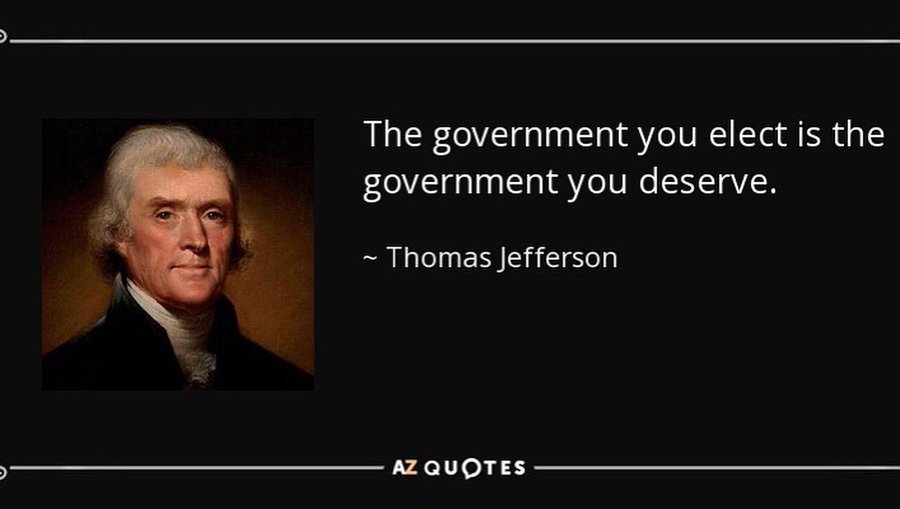
A country gets the kind of officials its culture will tolerate. As the former U.S President Thomas Jefferson said, the government you elect is the government you deserve. The Netherlands tolerates a cycling prime minister, a salary cap, and a strategy with keeping the water out of their country. On the contrary, the Philippines tolerated the extravagant life and sadly, we have gotten exactly what we have tolerated, including the floods.
A minimalist and intentional life for officials should be the bare minimum.
We do not actually have to imagine what a minimalist and intentional public official would do for a country. On a smaller scale, we have a working sample and a case study in a single city which is Mayor Vico Sotto’s good governance.
In 2019, he won because the people of Pasig wanted something different and he was that something different. One of the things he revamped was project costs slashed by eliminating kickbacks.
When a government project is bid out cleanly, without anyone needing to skim a percentage off the top, the same peso buys more for the city. It has improved roads, more educational institutions, a resilient flood control, and a reliable healthcare system.
The math is not that complicated. Every kickback is a subtraction from what citizens actually and should receive. Mayor Vico’s administration did the boring and unglamorous work of just not stealing, and the people of Pasig City got more in return.
Because of this, I’ll say that minimalism in public office is a bare minimum.
With a minimalist public official, he or she is not distracted by what they could be skimming off each project, not maintaining a luxury lifestyle, not managing a family business that competes for government contracts, or not curating an image of wealth because they have not built one.
The lessons of Pasig City is not just that good public officials exist, but also that the public when given a real choice, is capable of choosing them. Mayor Vico Sotto won because the people of that city were tired of being robbed and someone finally showed up who was not interested in stealing. Yet, somehow, in this country, clearing it makes you a national hero when it shouldn’t. This should be the bare minimum.
In 2028, choose well and demand for the best.
The most important thing any Filipino can do for the future of this country is to vote for deserving public officials.
To choose well, we have to ask the unflattering questions about the people asking for our votes. Where does the money come from? How does the family afford the lifestyle on the declared income? Who are the contractors or donor’s in the candidate’s orbit? What businesses does the candidate or their immediate family run? Who stands to benefit from their election that the rest of us will pay for? These are only a few of the questions we should ask.
This is the standard we should be using when we vote, not whether the person is likable nor if they gave your barangay a basketball court before the election. The real question is whether their life would still make sense if you took the office away from them. If the answer is no, then the office is what they are after, not public service.
This is the difficult work as Filipino politics rewards name recall, dynastic recognition, and showmanship. The voters who want clean governance (Kaway-kaway) are often the same voters who feel exhausted by the choices on the ballot. This sounds harsh, but voters who choose the deserving ones get dragged by those who choose the trapos (traditional politicians) and this will be it’s own topic about the educational crisis in the country. I understand that exhaustion, but the lesson from Pasig City is that when one good candidate shows up and the public is paying attention, that candidate can win, even against a 27-year dynasty.
If we do that part, the officials will follow because nothing changes a political class faster than the realization that the old playbook does not win elections anymore.
I know I’m imagining a utopia.
I am imagining a utopia in a country where every government official’s lifestyle would match their SALN, majority of them would live the simple life they campaigned on, no contractor family corners majority of the government projects, no government official’s wife or children has to own collections of luxury bags and shoes, someone serves without also running a business on the side, flood control money is spent on what it should intended to be without kickbacks. The list goes on. That country does not exist and it probably never will, at least not in the lifetime of anyone reading this.
I am not naive about that. I have lived in this country long enough to know what is realistic and what is not.
However, I also want to be clear about what I am actually asking for. I am not asking our public officials to live in tin-roof houses, to give away a portion of of their salaries, to take a vow of poverty or wear cardigans and sandals to Senate sessions. That is not the standard.
What I am asking for and majority of the Filipinos is the floor.
Republic Act 6713 already exists which requires them to lead modest lives. The minimalist and intentional life I am writing about is not a radical proposal that has to be invented, but it is already the law, the code of conduct, and what every Filipino official swore to follow on the day they took office.
I am only asking them to actually do it.
The bar is not high since it is already on the ground since 1989 when RA 6713 was passed. Officials just keep stepping over it like it is not there.
Somehow, the end of this post shows that I am tired of pretending the floor is the ceiling. I am tired of treating Mayor Vico Sotto as if he is some impossible salvador del mundo (Saviour of the world) instead of recognizing that he is just a government official doing what that person is legally required to do. I am tired of being amazed that a Dutch prime minister rode a bicycle, when every official with a public salary should be able to live on that salary without needing a luxury car, a driver, or a private jet. I am tired of the government contractors being treated as outliers when the system that produced them is still in place and will produce more of them by the following years.
A minimalist and intentional life is not a personality trait we should be celebrating in officials. It is the contract we paid them to honor.
As climate change continues, calamities and disasters will keep coming. The rivers will keep on rising. The scandals will keep breaking. None of this is going to fix itself.
Yet, every election, every vote, and every conversation we have about what kind of officials we deserve and what kind we will refuse to elect again, is a small act of resistance against the corrupt system.
If enough of us start treating the bare minimum as non-negotiable, maybe, eventually and slowly, this country will start to look a little more like the one I have been imagining.





Leave a Reply