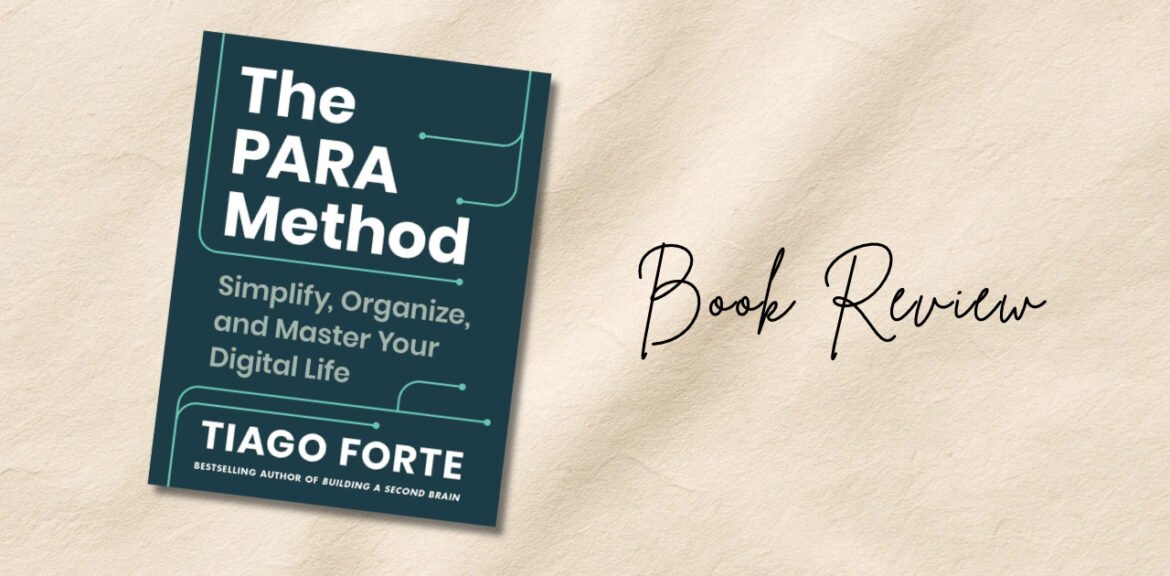
It’s easy to search for information these days through the internet. It’s just at our fingertips on our phones and personal computers. Yet, figuring out how and where to organize all this information can feel overwhelming. This is where the author, Tiago Forte, offers a solution to this problem in his book, The Para Method: Simplify, Organize and Master Your Digital Life.
I ran across this book after reading the author’s first book, Building a Second Brain, which sparked my curiosity to know more about the PARA Method. I wrote a separate review of Building a Second Brain, which you can read below.
Read my book review of Building a Second Brain
What is the PARA Method?
Building a Second Brain talks 2 methods: CODE (Capture, Organize, Distill, and Express) and PARA. PARA fits into the Organize step. In The PARA Method book, Tiago Forte discusses how PARA works and offers practical tips for using it at work and in everyday life.
The PARA method is a system for organizing digital files and notes, not by subject, but by how actionable they are.
PARA stands for Projects, Areas, Resources, and Archives which are defined below:
- Projects are short-term efforts with a specific goal.
- Areas are ongoing responsibilities that need regular attention.
- Resources are topics of interest you want to keep for future reference.
- Archives hold material from the other three categories that is no longer active.
The book can be read in a day or, if you prefer a slower pace, over the course of a week. It took me a week because I paused after some sections to put the concepts into practice. That’s what the author encourages readers to do as they go. It’s a thin book with a mix of illustrations and text.
Two tips I’ve put into practice
I like how actionable the steps are. You can use them whether you’re organizing folders on your computer or using a note-taking app. I use Notion to store my notes and information.
One tip that helped me was what to do with files and notes I already had. If you haven’t organized yours using PARA, you can put them all in a dated archive (For example: Archive – 11.08.2026). That saves you from having to sort everything manually and you can still search the archive when you need something. As the author explains, organizing should be easy and shouldn’t take up much of your time.
I didn’t come across that tip in Building a Second Brain. After reading the first book, I tried organizing all the folders on my laptop using PARA and felt overwhelmed. If I hadn’t read The PARA Method, I might have stressed myself out and given up. Knowing I could archive what I already had made it easier to keep going.
I also found the book’s advice to create a project checklist helpful. It’s a list of the outcomes you’re currently committed to achieving. It gives you one place to see what you want to accomplish or resolve.
This resonated with me because I can be all over the place. Sometimes I want to get a project done, but I’m unsure of the outcome I want to achieve or the steps I need to take. Keeping the checklist up to date is still a work in progress for me because I sometimes forget to update it.
Where the book fell short for me
Having read Building a Second Brain, I found some of the concepts in The PARA Method repetitive. Still, I understand why the author included them, especially for readers who read The PARA Method book first.
The PARA Method book could have been part of Building a Second Brain or published as an essay or a supplementary blog post. Likewise, some of the book’s illustrations came like filler to me, as though they were there to stretch the material into a full book.
As for the bonus FAQ at the end, the website page is more like a pitch for the author’s community and courses than an FAQ. Nevertheless, the FAQ is at the bottom most of you scroll all the way over. There’s also a cheat sheet, but to get it, you have to sign up with your email address and agree to join the mailing list. It’s a great marketing strategy to keep in touch with the readers, but personally I didn’t sign up. I don’t want more clutter in my inbox and in my opinion, the book gave me enough information.
Who is this book for and should you read it?
“You may think you can close your laptop and just ignore it, but a small part of your brain will continue worrying about the chaotic state of your digital environment until you put it in order.”
– Tiago Forte, The PARA Method
I recommend this book to beginners who want a simple system for organizing their notes and files at work or in their personal lives. The steps are easy to follow and can help you keep your digital life organized whether you’re a student, a knowledge worker, a founder, or a C-suite executive.
As I mentioned in my review of Building a Second Brain, this book may not be for you if you already have a system in place for organizing your notes and files. Still, you might pick up a few ideas from The PARA Method that you haven’t tried yet.
Since I’ve mentioned Building a Second Brain several times in this review, which book would I recommend reading first? If I could go back, I’d start with The PARA Method for the practical steps you can put to use right away. Then, I’d read Building a Second Brain to see how those steps fit into the bigger picture.
Overall, I recommend this book and I recommend immediately implementing the steps that apply to digital life. Apply what works for you and disregard what doesn’t.





Leave a Reply