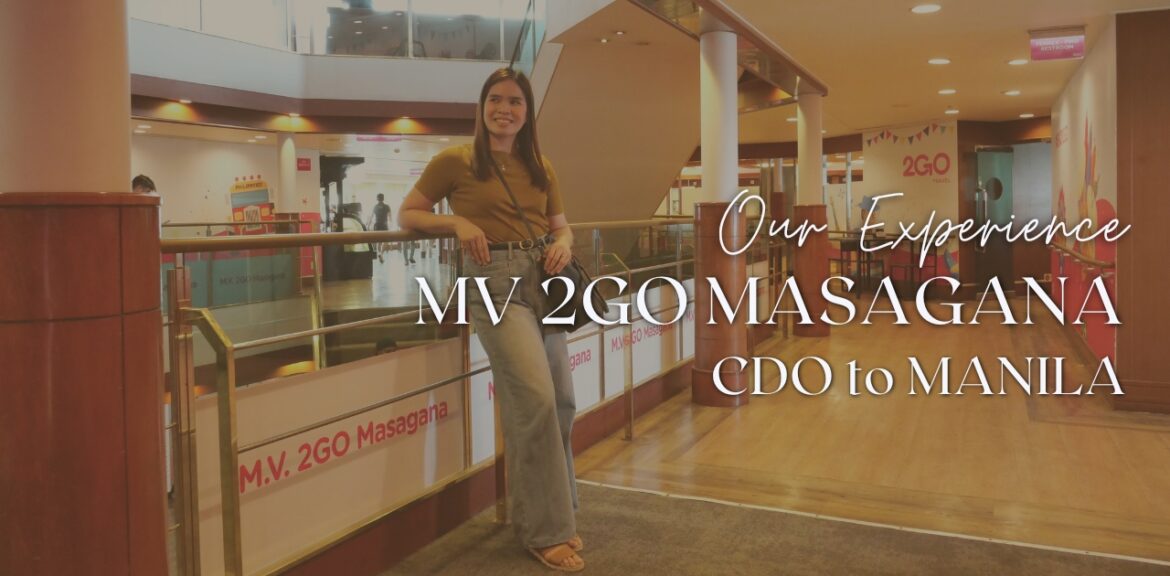
I’ve been to Metro Manila several times. Going there, I always take a plane which is about an hour and thirty minutes from Cagayan de Oro via Laguindingan Airport.
This time, my husband and I decided to travel by ship going to Manila. It was an unplanned and urgent trip related to his photography and videography business.
As for me, I had always looked forward to riding a 2GO ship. I’d seen several enticing YouTube videos, social media photos, and blog posts about it over the years. I had also experienced riding a smaller vessel to Bohol and Cebu, but those were short overnight trips which are just around eight hours. Sailing to Metro Manila is a different story since it’s a long-distance traverse that looked like an adventure. So in reality, I was excited.

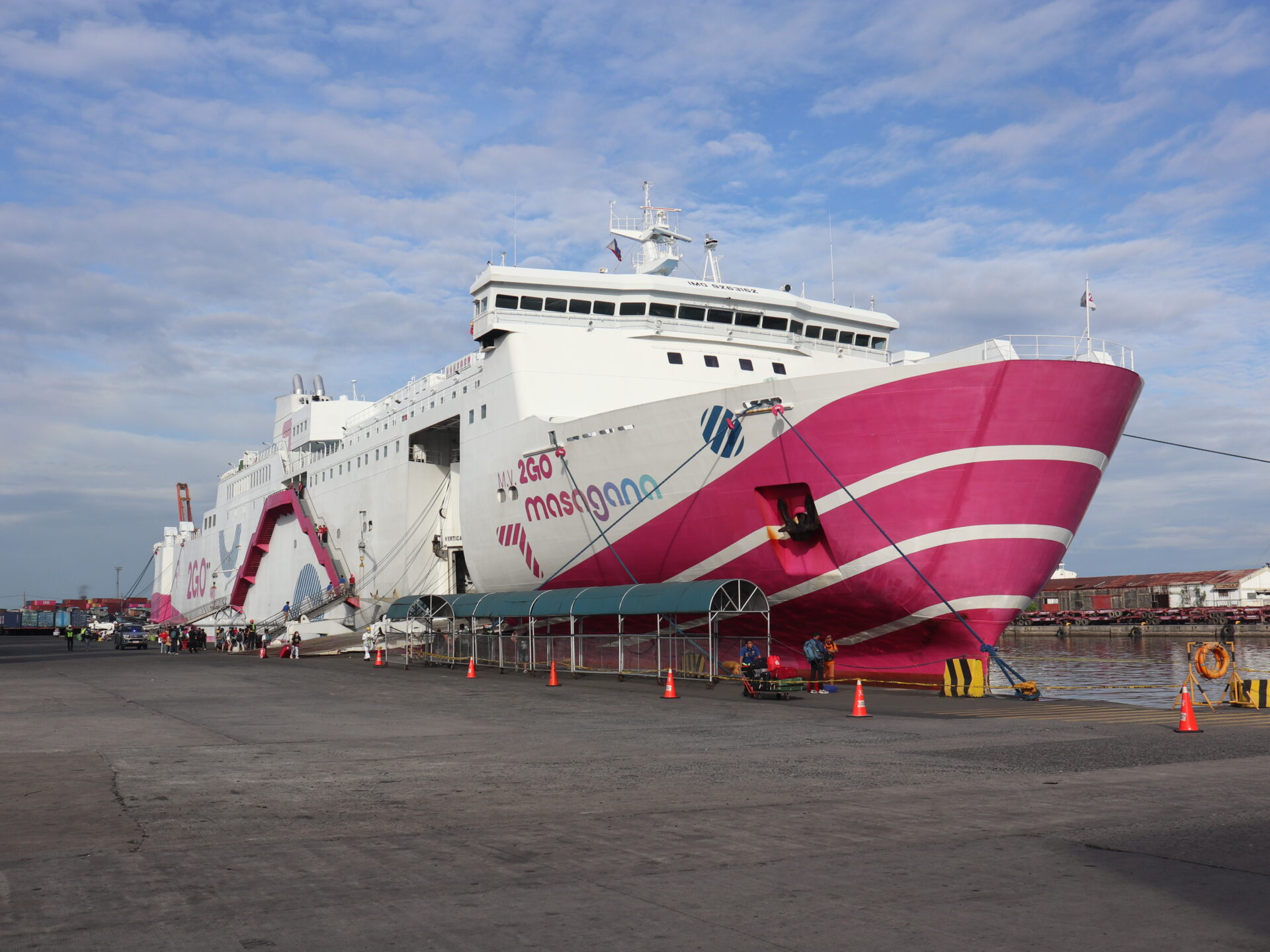
Booking
I booked a Business Class accommodation for two through the 2GO Travel website using a credit card. Since it was an urgent trip, we secured our tickets just two days before our departure.
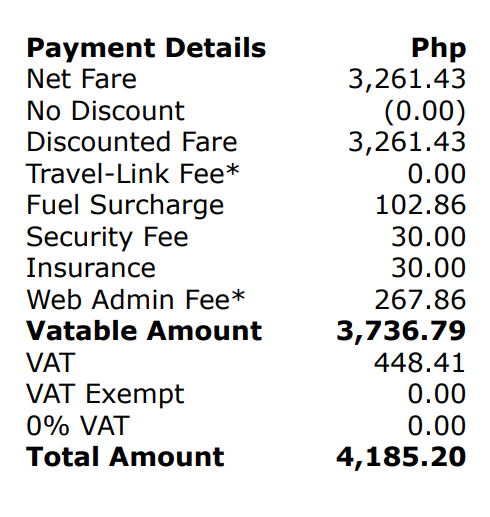
The fare is ₱4,185.20 per person, which means we paid a total of ₱8,370.40 for me and my husband. This already includes meals for the entire duration of the voyage.
Below is the breakdown of the fare as reflected on our ticket:
Travel Time:
Cagayan de Oro to Manila
- Departure time: 1:00AM
- Arrival time at Cebu for a 3-hour stop-over: 9:00AM
- Arrival time at Manila the next day: 10:00AM
Pre-Departure and Boarding in CDO
Since our ticket’s terms and conditions stated that check-in must be done at least four hours before the vessel’s departure, we arrived at Macabalan Pier in CDO at 9:30 PM.
If you’ve traveled around the Philippines, you’ll know that processes at government-run facilities aren’t always the most streamlined and this was no exception. We had to go through four checkpoints before reaching the boarding area:
- Entrance – A security guard checks your ticket and ID.
- Security Check – Bags are scanned and a body search is conducted.
- Terminal Fee Counter – You pay the terminal fee here.
- Vessel Boarding Counter – Your ticket is processed for boarding.
The entire check-in process took about 30 minutes. We seated and waited at the boarding area by 10:00 PM, then waited another hour before we could actually board the ship.
From the boarding area to the ship’s stairway, it’s a long walk. If you’re traveling light, you can manage carrying your bags on your own. However, if you’re carrying heavy luggage, I recommend hiring a porter. The stairway up to the ship is no joke.
Tip
Have your tickets printed as it’s mandatory. Staff will peel off a portion of it for the vessel and boarding records. Also, don’t forget to bring a valid ID, whether it’s a government-issued ID, school ID, or company ID, as it’s required prior to boarding.
What I wish I did was to keep a separate pouch or document bag for your tickets and IDs. Things can get a little chaotic once you’re moving through the boarding process and the last thing you want is to be digging through your bag and wallet at every checkpoint.
Accommodation on Board
One thing we weren’t informed about beforehand is that there are two types of Business Class accommodation: The upper cabin and the lower deck.
The photos featured on 2GO’s website only show the upper deck rooms. I couldn’t find any photos of the lower deck online either and unfortunately, we weren’t able to take photos ourselves due to our experience there.
We were assigned to a lower deck Business Class room, which comes with a bunk bed. What made our boarding experience stressful was discovering that my husband and I had been placed in separate rooms. We were lucky, though, that the passenger I was originally assigned to share a room with was very kind and graciously agreed to swap with my husband, so we could stay together.
When I went to 2GO’s app via phone, I had actually seen a notice on their app warning that booking for two doesn’t guarantee that you’ll be in the same room as your companion. That’s precisely why I booked through the website instead. I assumed it would be different, but it wasn’t. A staff member later advised us that booking at a physical ticketing outlet is the better option if you want to ensure you’re roomed together.
As for the room itself, there are no windows and the space is tight. It’s only comfortable for one person at a time. My husband and I had to take turns standing and sitting whenever we needed to use the lavatory or retrieve something from our bags. The room does have a mirror, a lavatory, and a chair, though the chair felt oddly out of place, almost as if a work desk had been converted into a washing area.
On the other hand, the room has an adjustable air conditioner, a TV with 10 channels, charging outlets, and an intercom speaker for meal time calls, disembarkation announcements, and other notices.
The restrooms are shared for this accommodation type. The shared comfort rooms on the fifth and sixth decks, to put it gently, have seen better days. From what I gathered online, the MV Masagana was originally a Japanese vessel, which explains why some of the toilet bowls still have Japanese texts on them.
However, they haven’t been well-maintained. Several cubicles had limited legroom. There were noticeable plumbing issues. While there was a hand dryer available, the soap dispensers were empty. I also noticed that the cabinets beneath the lavatory sinks were visibly loose and would look like they could come off at any moment.
Exploring the MV Masagana
MV Masagana is one of 2GO’s largest ship, where the other one is MV Maligaya. Both have the same length at 195 meters.
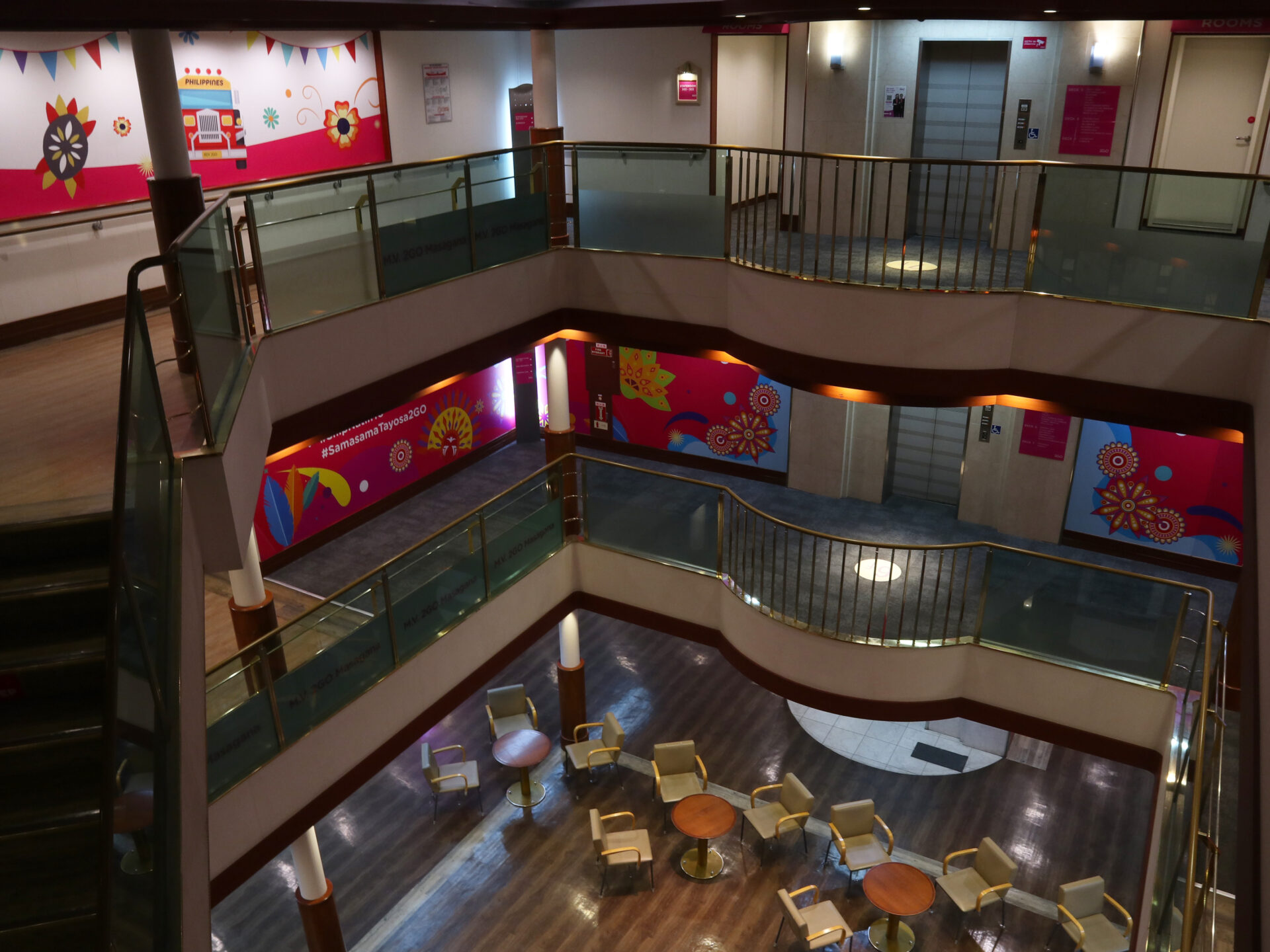
The passenger area of the ship is at the fifth to seventh deck.
Fifth Deck:
- Main Lobby
- Front Desk
- Watson’s Store
- Kultura Store
- Minisoo Store
- Salon
- Clinic
- Housekeeping for linens and blankets
- Charging station for Mega value and Tourist accommodations
- Mega value, Tourist, and Lower deck Business Class accommodations
Sixth Deck:
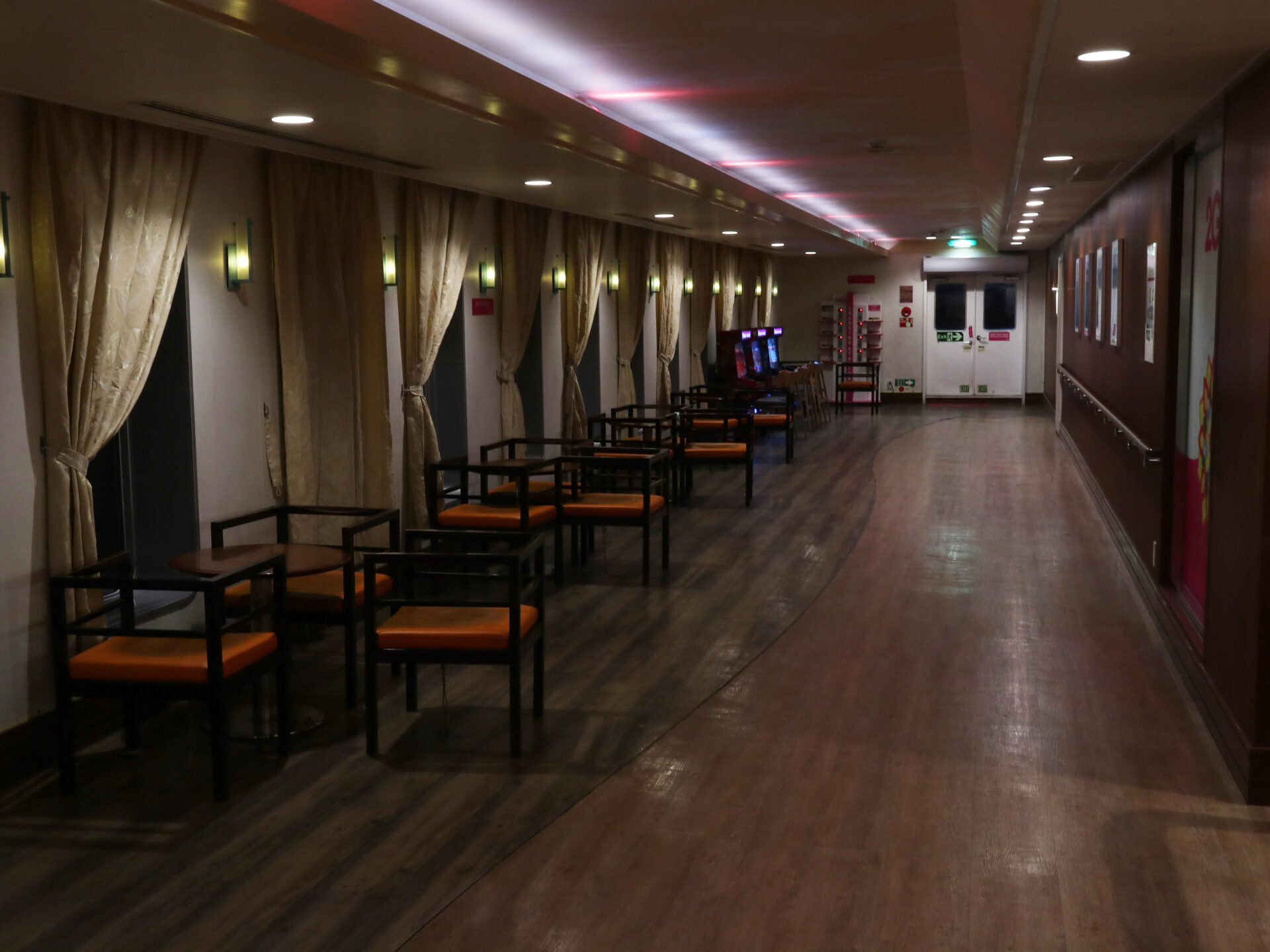
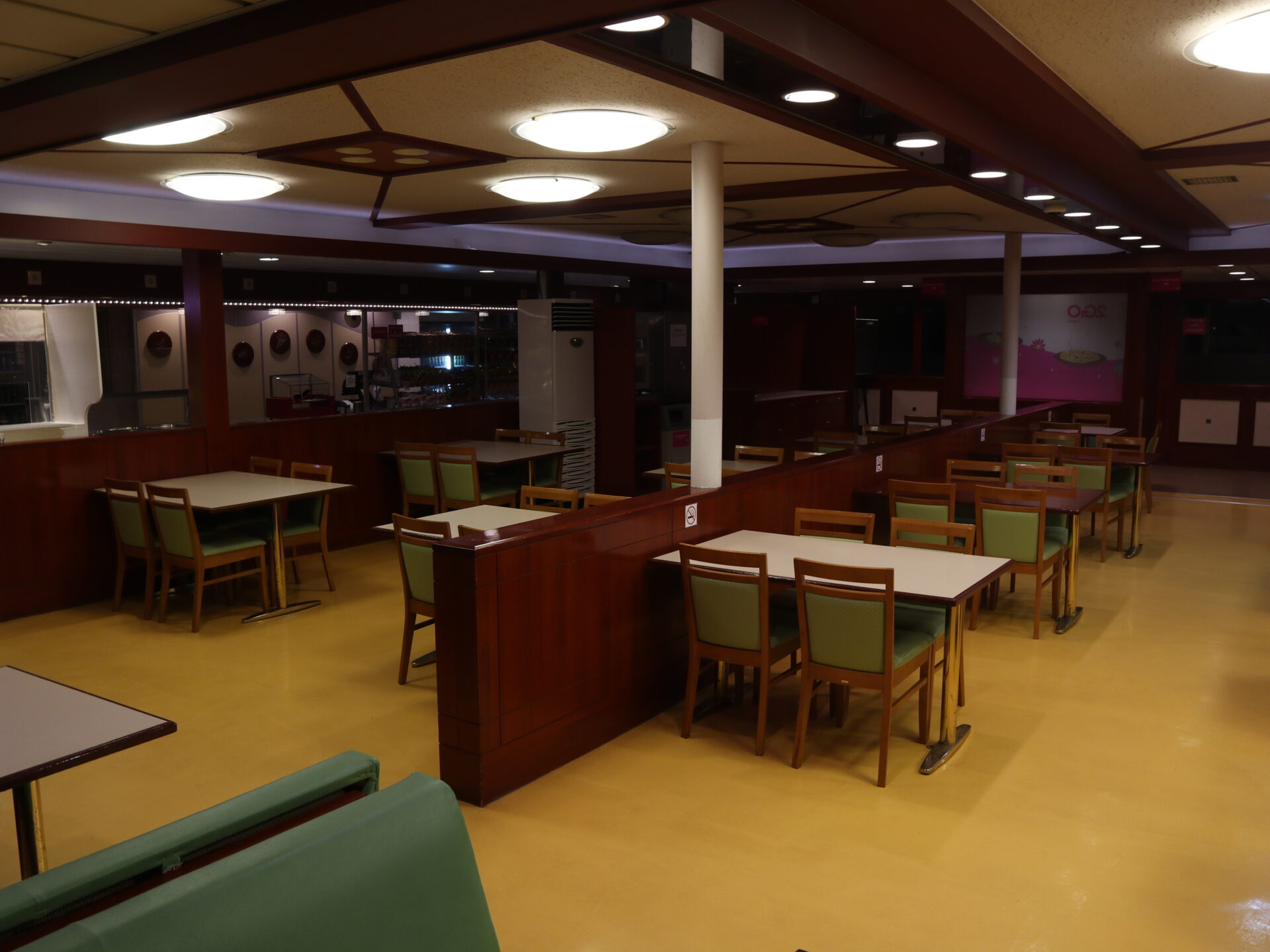
- Cafe 2GO
- Island Fiesta – Main dining area and the meal service area for tourists and mega-value passengers.
- Horizon Cafe – Meal service area for business class and stateroom passengers.
- Sea Breeze lounge area
- Smoking area outside
- KTV machine for all guests
- Upper deck Business Class cabin
- Stairs to access the sundeck viewing area
Seventh Deck:
- Interior viewing area
- Sundeck – Open for viewing from 8AM to 6PM
- Massage machines – These were not opened during our trip
- State rooms
Dining Experience
As Business Class passengers, our meals were served at the Horizon Café. Over the course of the trip, we were given a total of two breakfast meals, one lunch, and one dinner.
Here are the serving times to keep in mind:
- Breakfast: 6:00 AM – 8:00 AM
- Lunch: 11:00 AM – 1:00 PM
- Dinner: 6:00 PM – 8:00 PM
The food was worth it with the amount we paid for the trip. Breakfast typically consisted of plain rice, scrambled eggs, and one additional viand from that day’s menu. For lunch and dinner, meals have soup (either pumpkin or cream of mushroom), a protein viand, side vegetables, and a dessert such as gelatin, gulaman, or fruit salad.
I also stopped by Café 2GO to try their matcha latte which I really liked. It came with a complimentary pastry which are the three brownies
The Reality of Slow Travel
With the trip spanning a total of 33 hours, you’ll want to come prepared with ways to keep yourself entertained and ideally, activities that don’t rely too heavily on internet connection.
You might be tempted to browse the internet or scroll through social media, but don’t count on a strong connection. Even with mobile data, signal can be erratic or completely absent in certain areas along the route. Interestingly, 2Go’s mobile app mentions that onboard internet runs through Starlink, but a sign at the Horizon Café indicated that their service provider is actually Philcom.
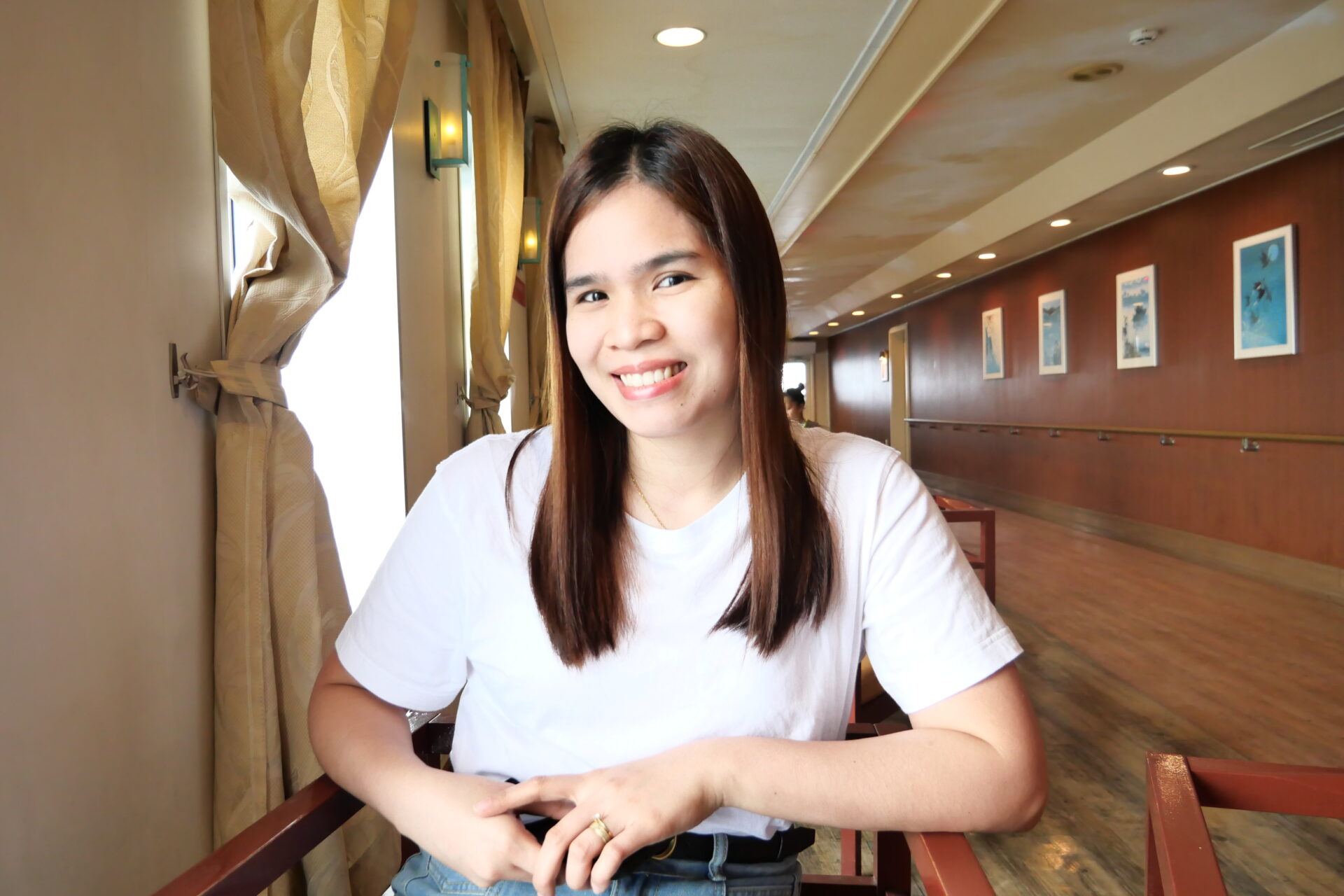
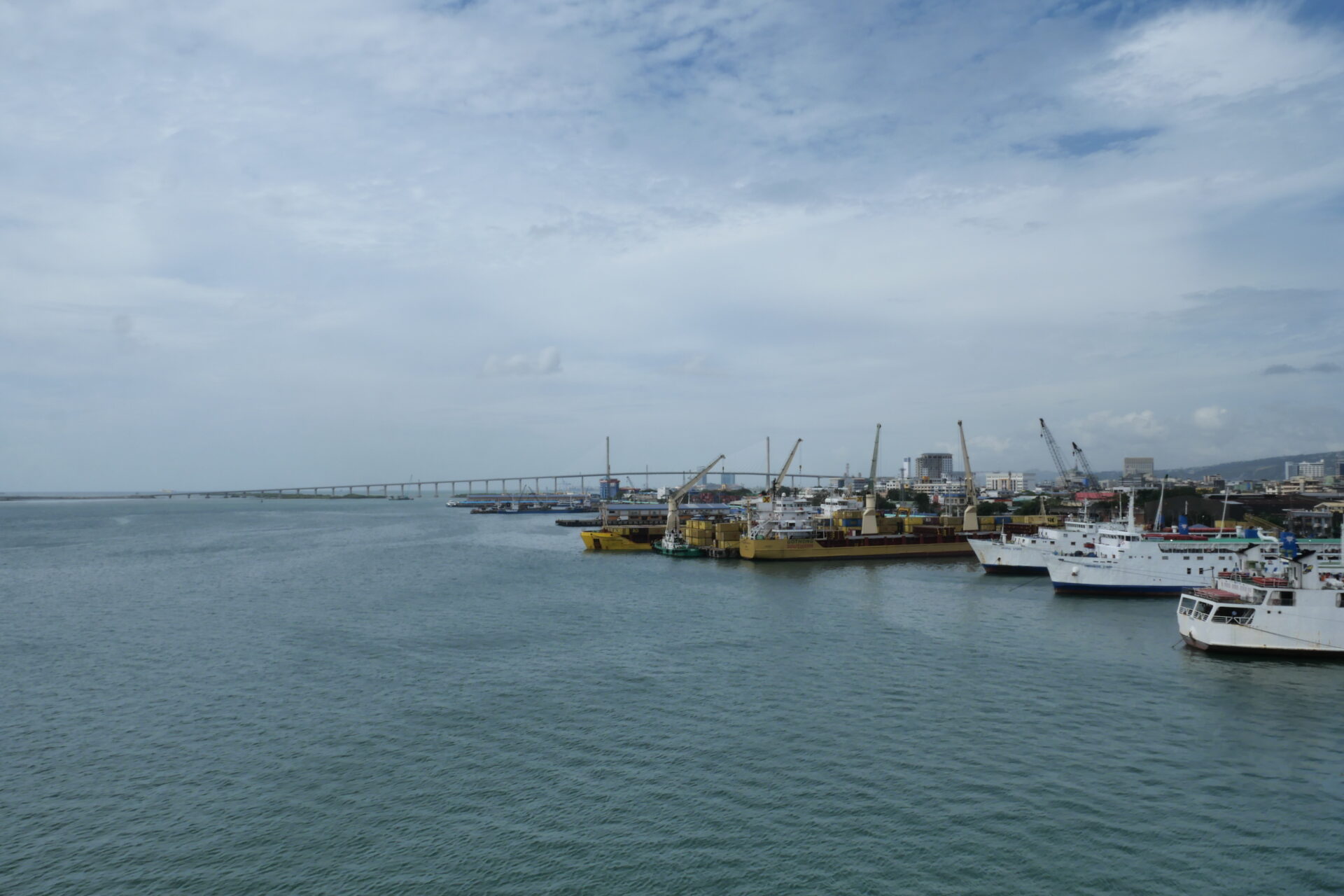
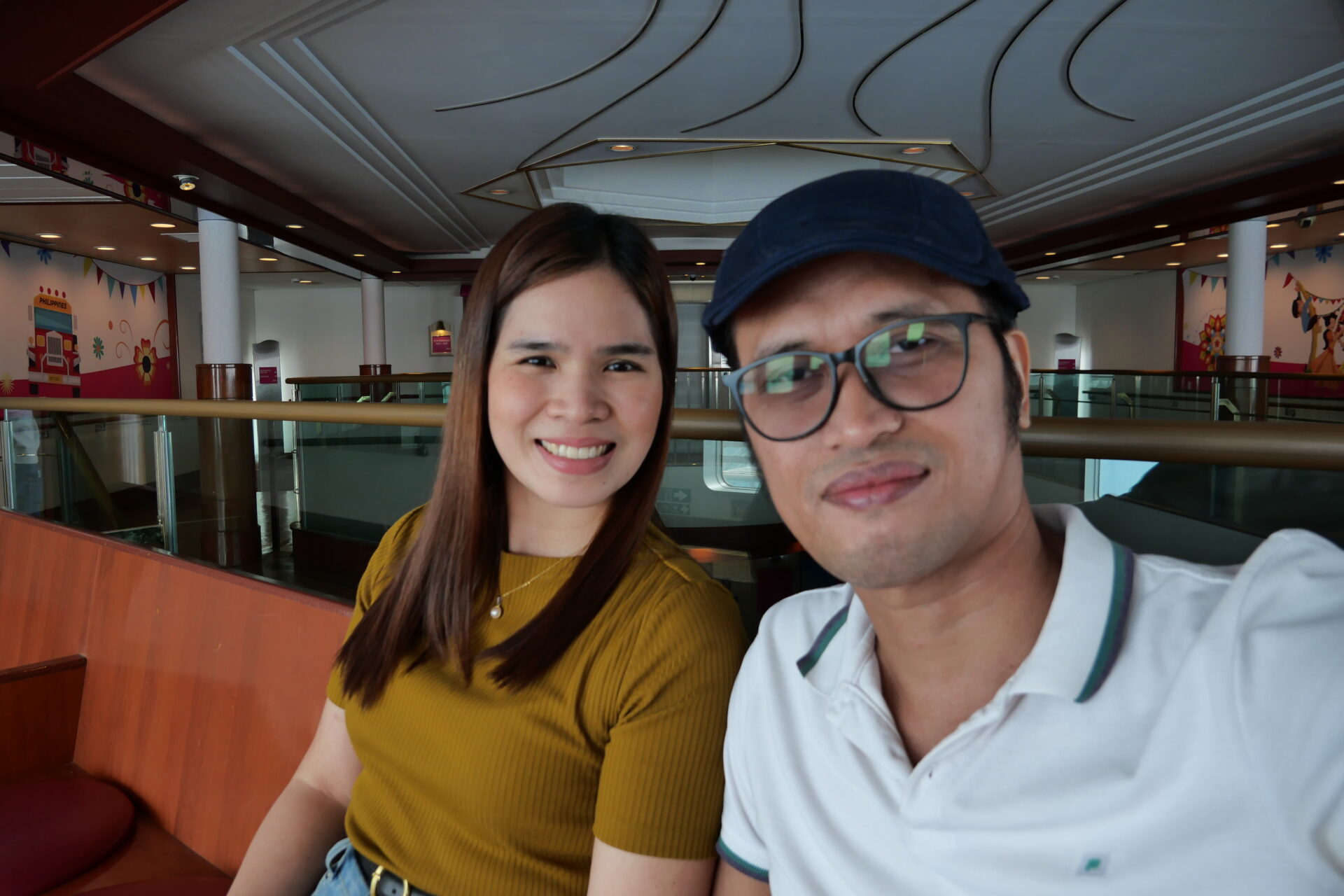
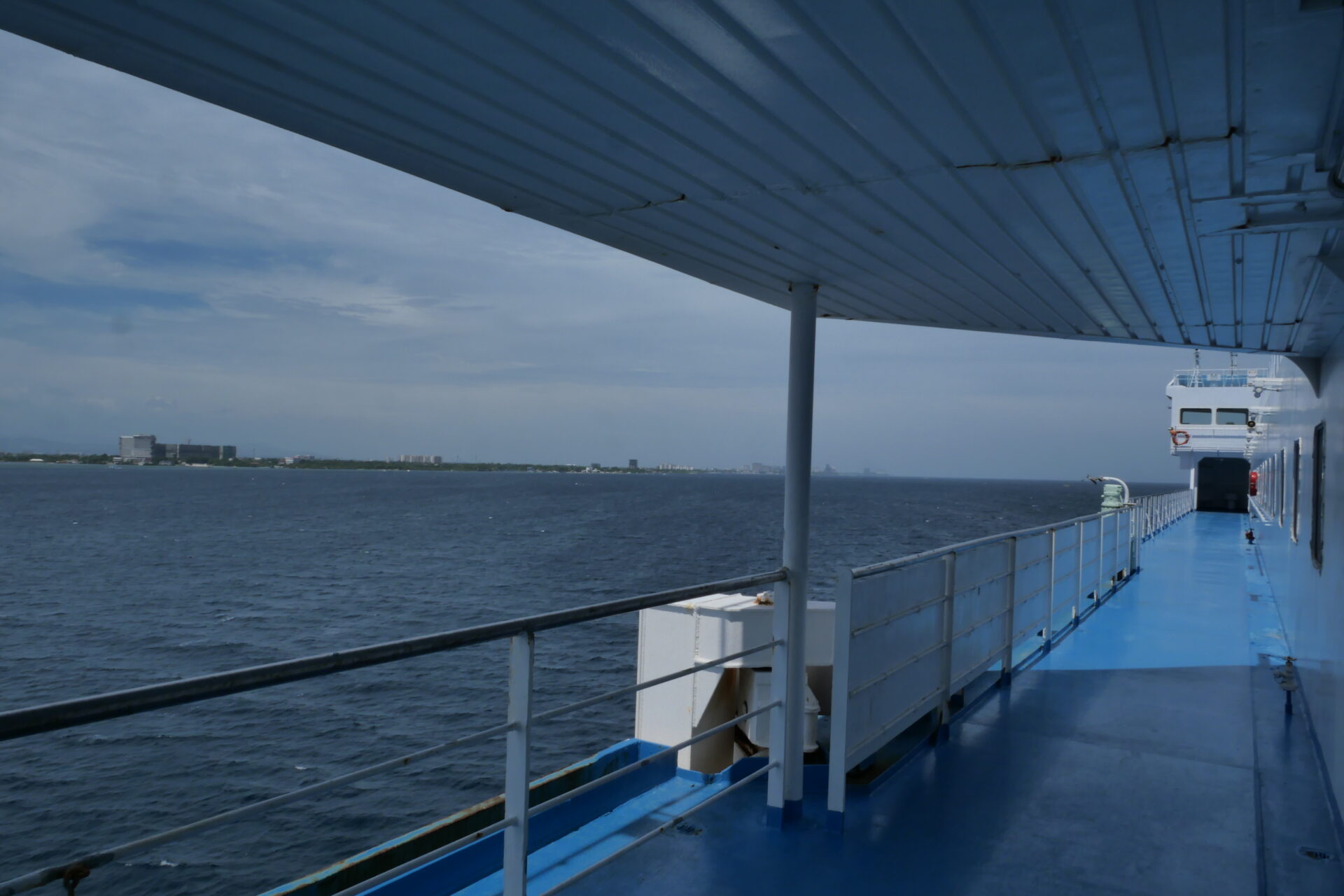
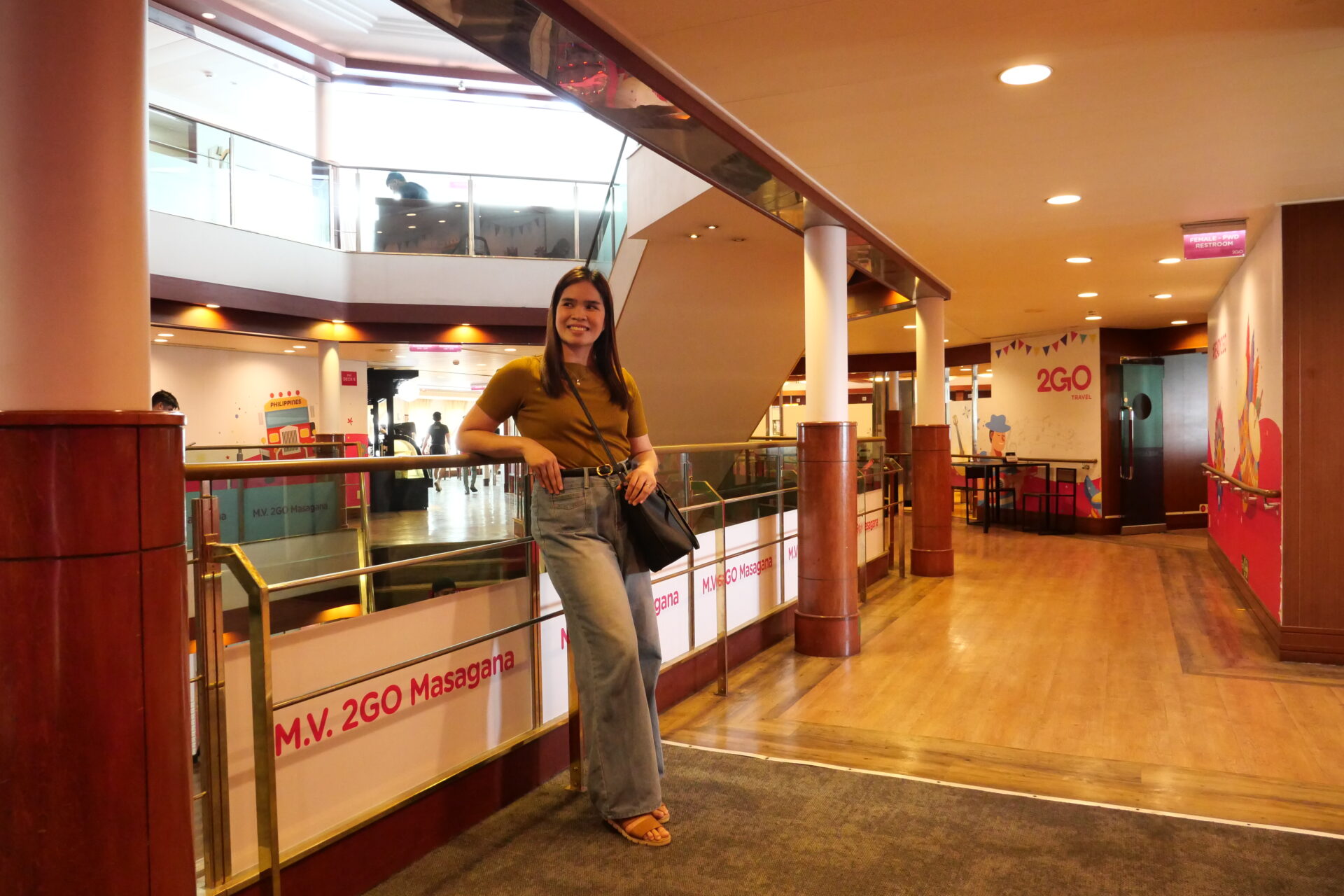
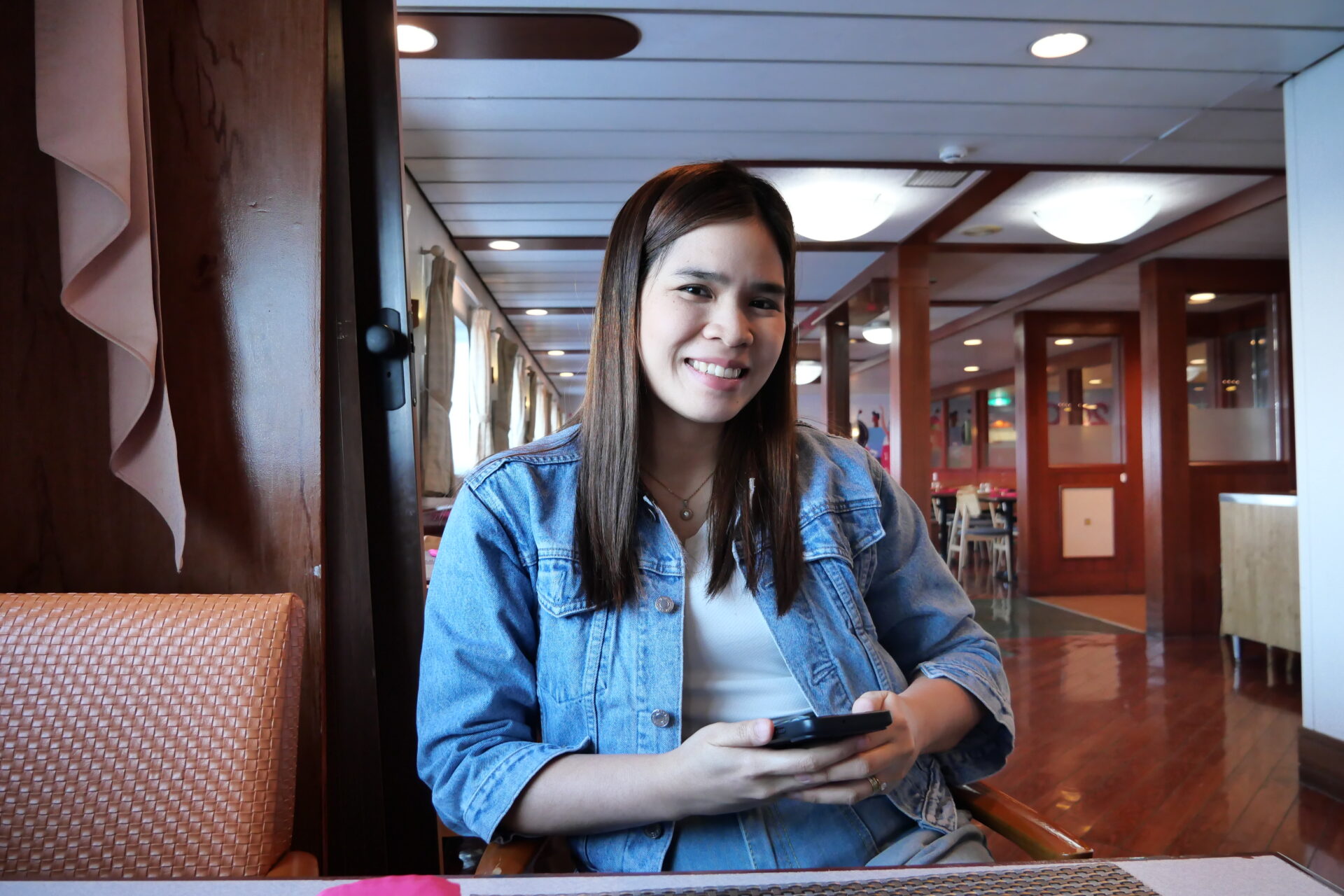
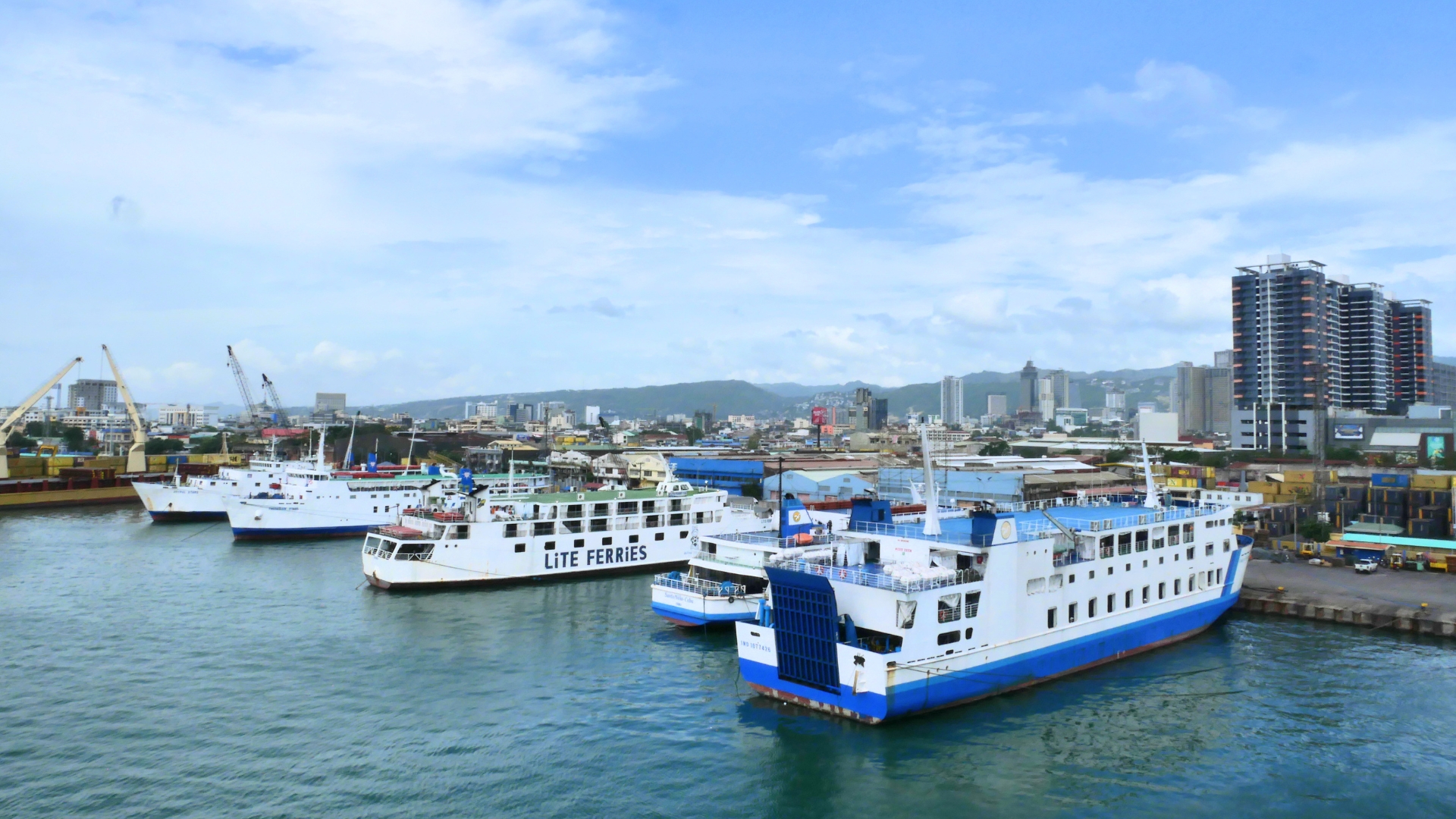
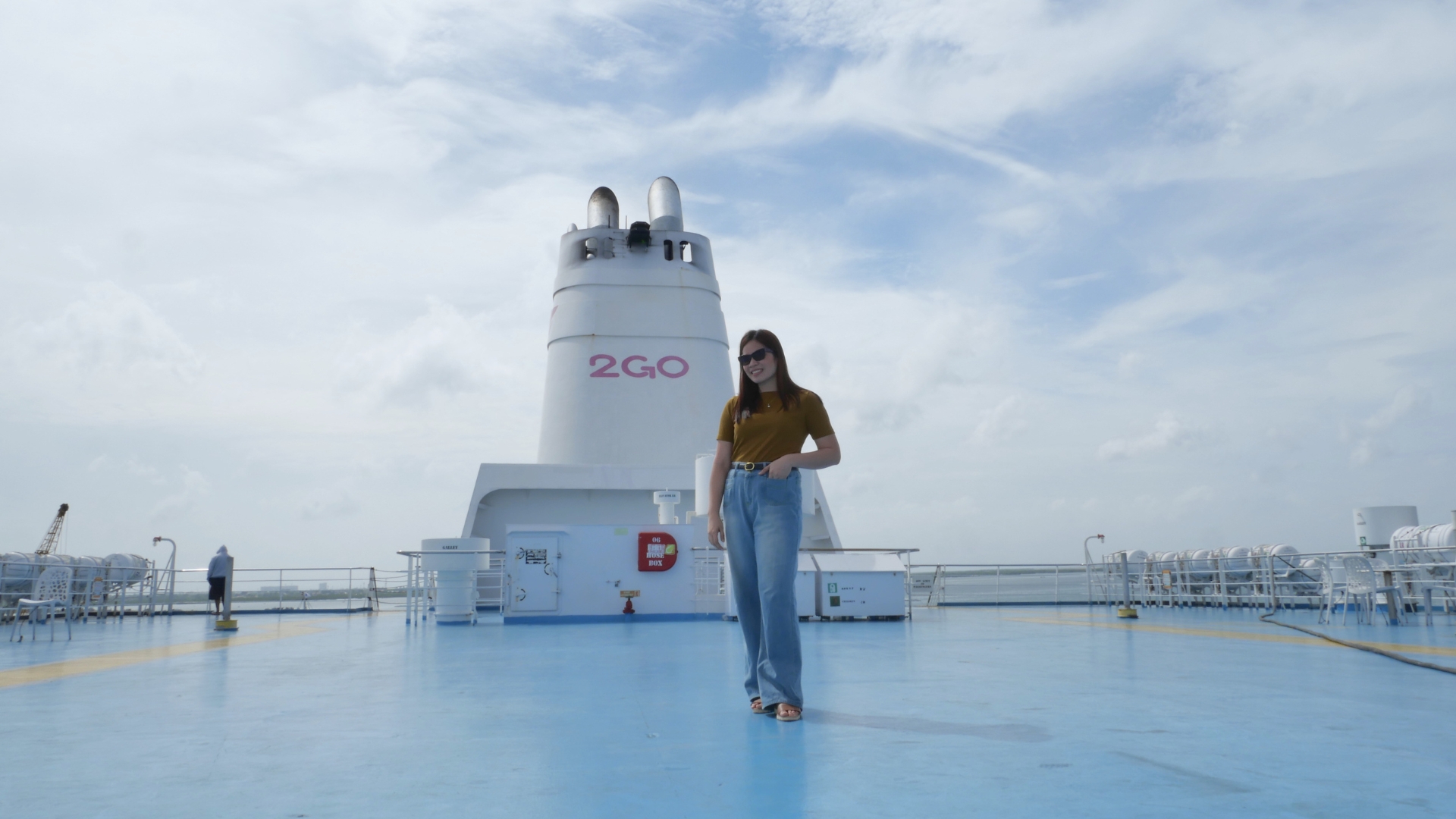
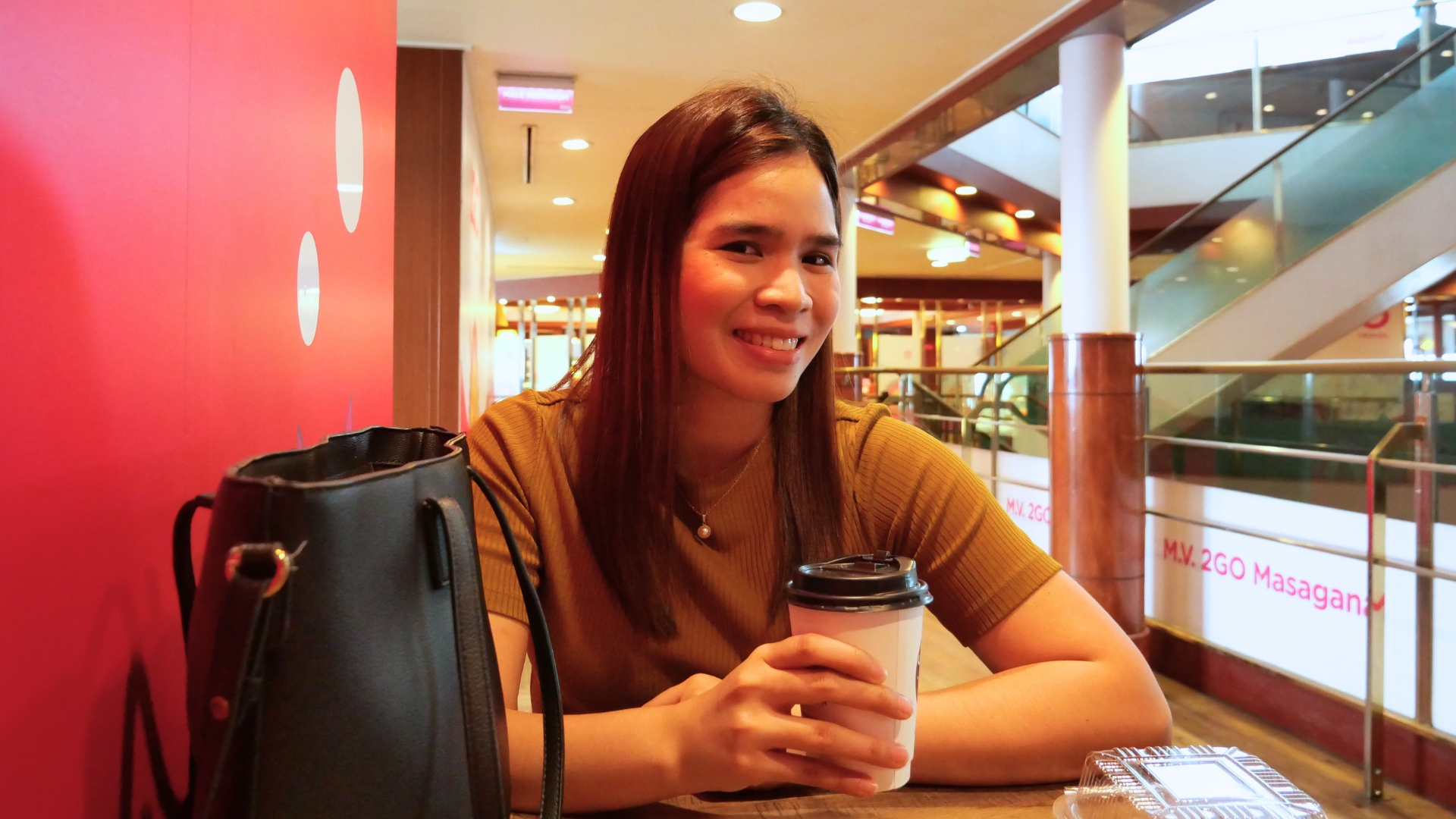
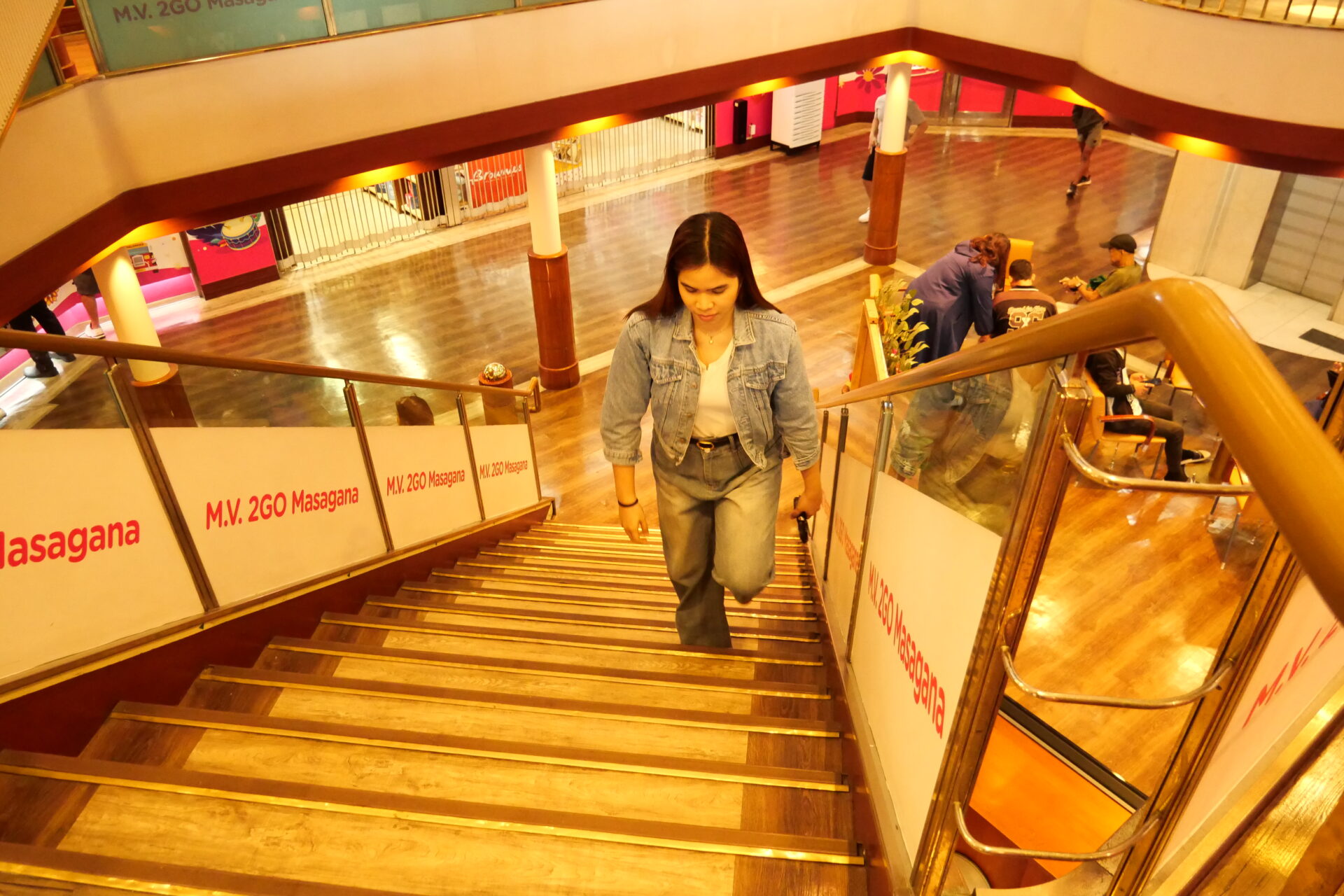
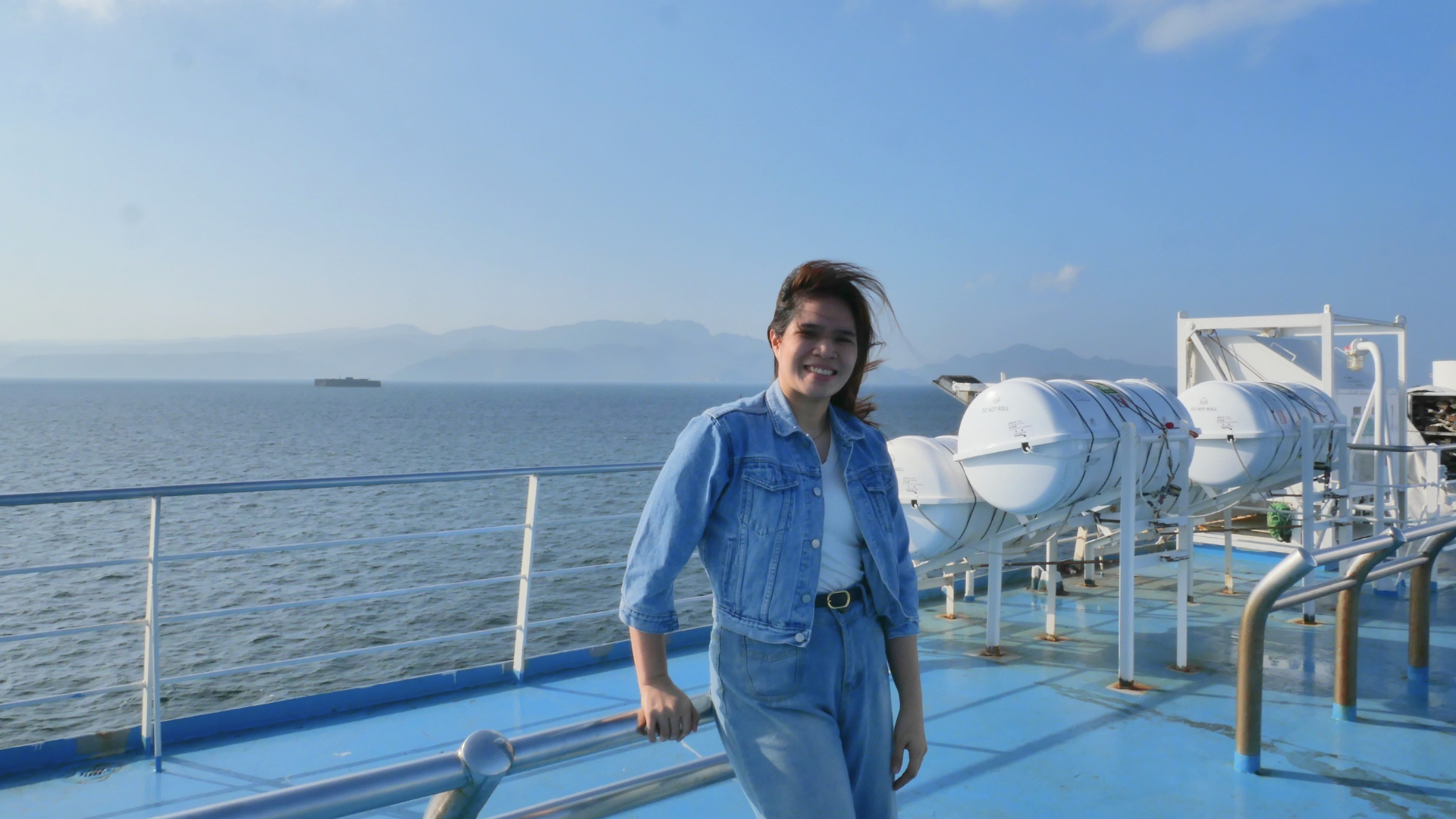
As for my husband and I, we spent most of our time outside our room partly because there were no windows inside, and partly because there was simply so much to take in.
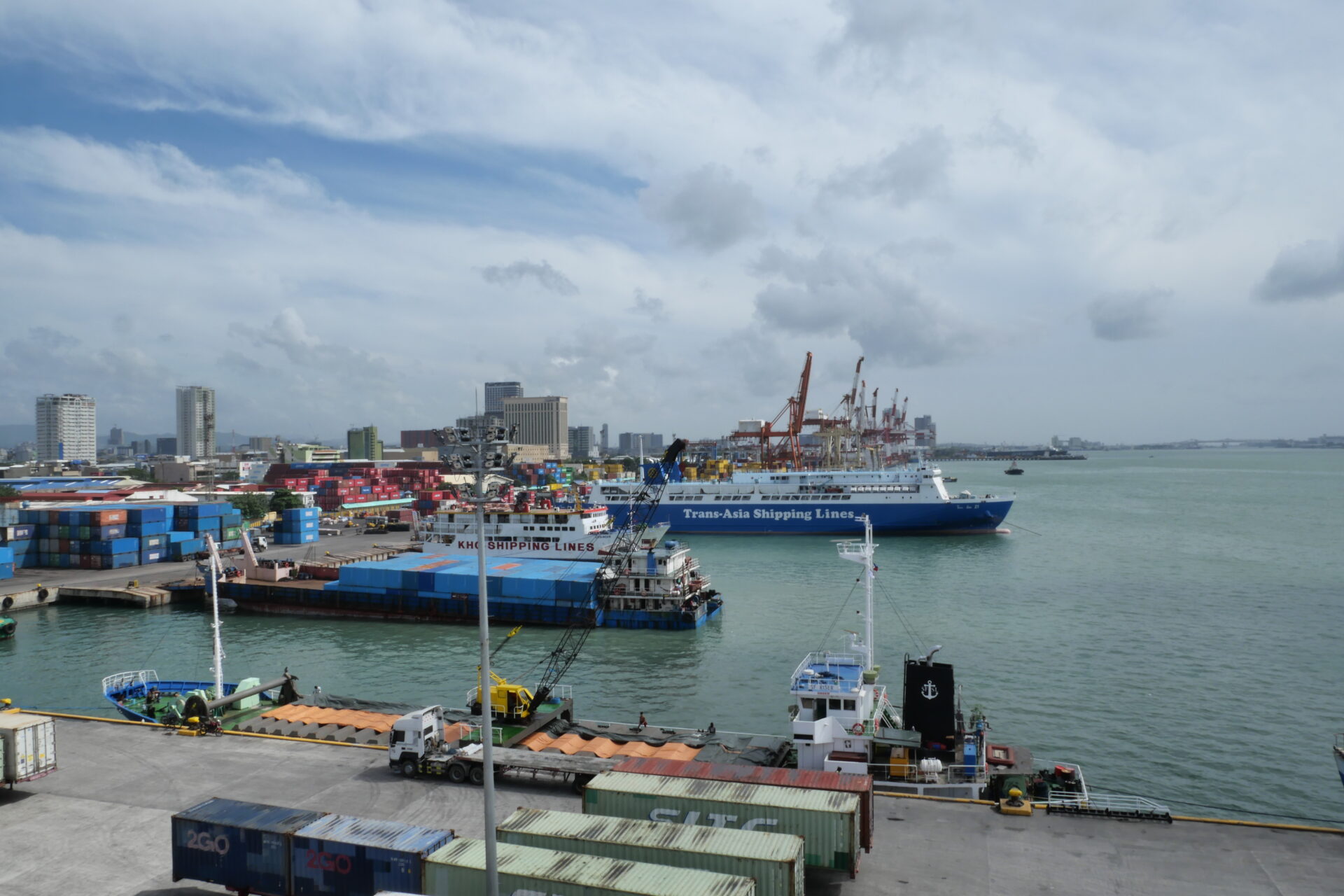
We took turns snapping photos. I also pulled up Google Maps to identify our location along the route and determine the islands we were passing by. I personally like watching the islands drift by, noticing how the sea waves shifted in character from one area to the next, and spotting other boats and ships along the way. The stopover at Cebu City was a highlight too. It was fascinating to observe other vessels docked at the port and seeing the controversial Cebu City mountains from the aftermath of Typhoon Tino in late 2025.
Since there was no workspace in our room, my husband worked at the sixth deck hallway, where there are tables and chairs near the Island Fiesta dining area, a handy spot to know about if you need to get something done. I, on the other hand, brought along a book I’d been rereading, So Good They Can’t Ignore You by Cal Newport, which was what I need for the long stretches of open sea. Whenever we felt tired, we’d head back to the room to rest and recharge, then go right back out again.
Feedback and Overall Experience
One thing that stood out about the MV Masagana and the 2GO experience as a whole was their crew members. They were polite, helpful, and accommodating which are a reflection of the values the company embeds in its ships and of Filipino hospitality. The security measures onboard were also good which gave passengers a sense of safety and peace of mind throughout the voyage.
Given that 2GO is owned by the SM Group, I believe there is plenty of room to elevate the overall customer experience. Here are my few suggestions based from my experience:
1. Comfort rooms and shower rooms
The comfort room is the area that’s in most need of attention. The current state of the toilet bowls, layout, and overall cleanliness feels inconsistent with the otherwise well-maintained aesthetic of the rest of the ship’s decks and interiors.
Some toilet bowls appear to be original fixtures from when the vessel sailed as a Japanese ship. Since shared comfort rooms are naturally high-traffic and prone to getting dirty quickly, I’d recommend assigning a dedicated cleaning staff member to maintain them throughout the day.
SM Malls are a great benchmark here as their comfort rooms are consistently clean because there is always someone actively tidying them. The same standard should apply onboard.
This goes for the shower rooms as well. During our trip, I noticed molds in some areas and several partitions were damaged and warped.
The comfort room layout also needs rethinking. Some cubicles have very limited leg room and a few toilet bowls are oddly oriented away from the door rather than facing it which makes for an uncomfortable experience. To top it off, some door locks were non-functional which requires passengers to figure out makeshift ways to keep the door from being accidentally opened by a stranger from the other side.
2. KTV and entertainment night
2GO should establish a curfew for KTV sessions and entertainment nights. Ideally, cut-off time for these should be at 9:00PM or 10:00 PM at the latest. If a curfew isn’t feasible, then at the very minimum, the KTV area and the Island Fiesta dining area where entertainment nights are held should be enclosed with soundproof barriers.
The KTV area is completely open, and the sound goes from the fifth deck all the way up to the seventh. I believe the state rooms on the seventh deck are spared given their separate location, but for lower deck Business Class passengers, the noise is very much present even when you’re inside your room. The room doors have a noticeable gap at the bottom, which does little to block sound. There is a door that separates the lower Business Class deck from the main lobby, but whenever passengers would close it, the staff would reopen it, which makes it useless as a sound barrier.
This isn’t an issue during daytime as music adds to the lively atmosphere of the voyage. However, at night, it becomes an inconvenience, particularly for passengers like me who prefer to sleep early. I ended up wearing headphones with a nature music so I can sleep at around 10:00 PM. My husband, on the other hand, stayed awake until 1:00 AM and he mentioned that the entertainment night didn’t wrap up until around midnight.
3. Business class rooms on lower deck
It’s understandable that every business finds ways to maximize its assets for their profits. I believe that’s exactly what 2GO had in mind when designing the lower deck Business Class rooms. However, in doing so, the rooms ended up being too small to comfortably accommodate two people.
The space is obviously configured for a single occupant. For two passengers traveling together, the room leaves very little room to move around, let alone store luggage. In our case, we had one medium trolley bag, one backpack, one shoulder bag, and one eco bag between us which is a fairly reasonable amount of luggage for two people. We still had to puzzle out how to fit everything inside the room without it feeling cramped and cluttered.
4. Revamp their online booking service
2GO should implement a room and bunk selection feature in their booking system, similar to how airlines allow seat selection. This would give passengers control over their arrangements and eliminate an entirely avoidable source of stress before the voyage even begins.
In relation to #3, the current online booking system falls short when it comes to accommodating two or more passengers who wish to stay in the same room. There is no option to select a specific room or bunk number during the booking process which means companions can end up being assigned to completely separate rooms without any prior warning.
This shouldn’t be the case. When people book together, the reasonable expectation is that they’ll be staying together. Separating companions, whether couples, friends, or family members, and leaving them to sort it out upon boarding is not just inconvenient. It’s poor customer experience.
We experienced this firsthand as mentioned earlier. Upon boarding, my husband and I discovered we had been placed in different rooms and had to negotiate a room swap with a stranger. We were fortunate that the passenger we approached was kind and willing to compromise, but that outcome isn’t something passengers should have to rely on luck for.
5. Security staff during onboarding
Overall, the security staff did a great job from the boarding process all the way through their rounds across the passenger decks. That part of the experience surely gave passengers peace of mind.
However, there was one incident worth flagging. During the security check at the CDO pier, one security member appeared to be showing off the K9 dog rather than conducting a focused inspection. Instead of allowing the dog to properly sniff the bags for prohibited or dangerous items, the handler was using a fetch item as a training exercise and was placing that same item on various passengers’ bags and belongings.
This is a concern for me as placing an item that has been in a dog’s mouth directly onto passengers’ personal belongings is unhygienic and inconsiderate, particularly for those who are not comfortable with it. Regardless of how well-trained or well-cared-for the dog may be, basic precautionary and hygiene measures should still be observed out of respect for the passengers.
A professional K9 inspection protocol should be enforced to ensure that security checks are considerate of passenger comfort.
Arrival in Manila
Arriving at the port in Manila was not the most welcoming sight. The area is clearly neglected. Navigating our way out of the port was also challenging. There was no designated waiting area for disembarked passengers, which meant we had to linger around with our luggage while waiting for the Grab car we had booked.
With this, would I travel to Manila via 2GO again?
Yes, I will!
If I were to do it again, I’d set my sights on booking a Suite Room and booking directly at a 2GO ticketing office. You get significantly more privacy, your own comfort room, and an experience that feels far more befitting of a long voyage. If your budget allows for it, I’d suggest you do the same.
Final Thoughts On Traveling Slow
There’s something radical about choosing to travel slowly in a world that’s always in a hurry.
In this time where a one-and-a-half-hour flight can whisk you from Cagayan de Oro to Manila, spending 33 hours on a ship seem impractical and indulgent. I understand that time is precious and not everyone has the luxury of a slower pace.
Yet, if you ever find yourself with the time and the willingness, I’d encourage you to try this kind of trip. Not because it’s the most comfortable option, or the most efficient, but because there’s a sense of richness in the unhurried.
In watching islands drift past the railing, in noticing how the sea changes color and mood from one province to the next, in reading a book for hours without guilt, and in simply being present for the in-between.
For me, slow travel is an extension of the intentional and minimalist life I try to live. It’s a reminder that the journey isn’t just a means to an end. It’s part of the experience itself. Sometimes, the best way to arrive somewhere is to take your time getting there.
Read Next: Part 2 – Manila to to Cagayan de Oro
The adventure doesn’t end here. In Part 2, I share our return voyage from Manila back to Cagayan de Oro and also aboarding a 2GO ship. Was the experience different from the first leg? Did we finally get a room together without the last-minute scramble? Find out in the next post below.



Leave a Reply