In Part 1 of this blog series, I covered our voyage from Cagayan de Oro to Manila including why my husband and I chose to travel by ship instead of taking the plane. If you haven’t read it yet, you can catch up on it by clicking the picture below.
For Part 2, we’re now heading home. After wrapping up everything we needed to do in Metro Manila for GSD Films and Stills, my husband’s photography and videography business, it was time to make the return trip back to Cagayan de Oro.
It wasn’t just the business equipment we had to bring back. By the time we were ready to leave, we had also accumulated pasalubong and personal finds from our side-trips around the metro, so needless to say, we were traveling with a bit more than we arrived with.
Yet, before we headed to the port, we spent four nights and five days exploring and eating our way around Metro Manila. You can read more about our city side-trips and the hotel we stayed in the metro.

The Baggage Reality for Ships vs. Plane
When we departed from Cagayan de Oro to Manila, my husband and I were traveling with four items: One medium trolley bag, one backpack, one shoulder bag, and one eco bag.
On the return trip, that number grew to six. We had added one large heavy shopping bag filled with pasalubong and personal finds, and one Dulepro backpack carrying his equipment gear along with the brand new equipment we had picked up for the business.
This is where traveling by ship showed a clear advantage over flying. 2GO offers a 50kg free baggage allowance which is a huge contrast to the strict weight limits airlines impose, where even a few extra kilos can mean paying additional fees on top of your already booked luggage allowance.
For a trip like ours, where we knew we’d be coming home with significantly more than we left with, that flexibility made a difference.
Pre-Departure and Boarding at North Harbor, Port of Manila

Traveling with two extra items meant that moving everything from the hotel to the port required more logistical planning. Booking a Grab Car from the hotel to the pier took care of the transportation side of things, but once we arrived at the terminal, hiring a porter was a necessity.
1. Porter Fee
We paid Php300 at the Pier 4 terminal counter, which covered both the porter fee and the terminal fee in one payment. I’ll be honest. I had reservations about the process.
There may be a kickback system in place, given that porters appear to be tied to the terminal counter rather than them operating independently. That said, we made sure to tip our porter separately after he carried our things all the way to the ship. He was hardworking and kind, and that deserved to be acknowledged.
2. Checking-In
The check-in process at Manila’s North Harbor was simpler than what we experienced in Cagayan de Oro. Here, there were only two steps to get through:
- Security Check – Bags are scanned and a body search is conducted.
- Vessel Boarding Counter – Your ticket is processed for boarding.
3. Boarding to the MV Masagana Ship
As I mentioned in Part 1, the Port of Manila is not the most welcoming sight. That impression holds true whether you’re arriving or departing.
The waters, both visually and in terms of smell, leave much to be desired. I won’t dwell on it too much here, as it’s a deeply systemic issue that our government has failed to address.
However, if you’re expecting a picturesque send-off, this isn’t it and that’s the part of the trip I find hardest to romanticize.
Accommodation on Board and What Changed
Travel Time:
Manila to Cagayan de Oro:
- Departure time: 9:00AM
- Arrival time at Cebu the next day for a 3-hour stop-over: 8:00AM
- Arrival time at Cagayan de Oro on the same day: 7:00PM
If you’ve read Part 1 of this post, you’ll know that our lower deck Business Class room on the Cagayan de Oro to Manila trip wasn’t a pleasant experience, from the tight space to being assigned separate rooms. You can read more of our experience here.
By the time we were still on our way to Manila, my husband and I had made up our minds that we were not going back in the same type of room for the return trip.
I raised this concern with the front desk during the CDO to Manila voyage and asked what our options were. The only option was to upgrade our room accommodation upon boarding the Manila to CDO vessel and head straight to the front desk once onboard to make the request and settle the payment.
However, there is one important caveat worth knowing about before you consider upgrading. The upgrade is not applied for the entire duration of the trip.
Instead, it works on a per-destination basis. In our case, that meant upgrading separately for two legs. First, from Manila to Cebu, and then again from Cebu to Cagayan de Oro.
On top of that, we were required to vacate our upgraded room upon arriving at Cebu to free it up for any passengers who may have booked it from that port.
It’s an unconventional arrangement, but knowing this ahead of time makes the process less confusing once you’re onboard.
What Happened When We Upgraded Our Accommodation
Once we boarded the MV Masagana at Manila’s North Harbor, we made our way to the front desk. We were told that we’d have to wait. The crew needed to complete the check-in process for all passengers before they could attend to any room upgrade requests. We ended up waiting at the lobby area for three hours.
It was a long wait. Honestly, it’s the part of this experience I’d caution future travelers about the most. If having a specific room is important to you, book at a physical ticketing outlet rather than online. It’s the most reliable way to secure the accommodation you actually want from the start, and it saves you from sitting in a lobby for three hours hoping for the best.
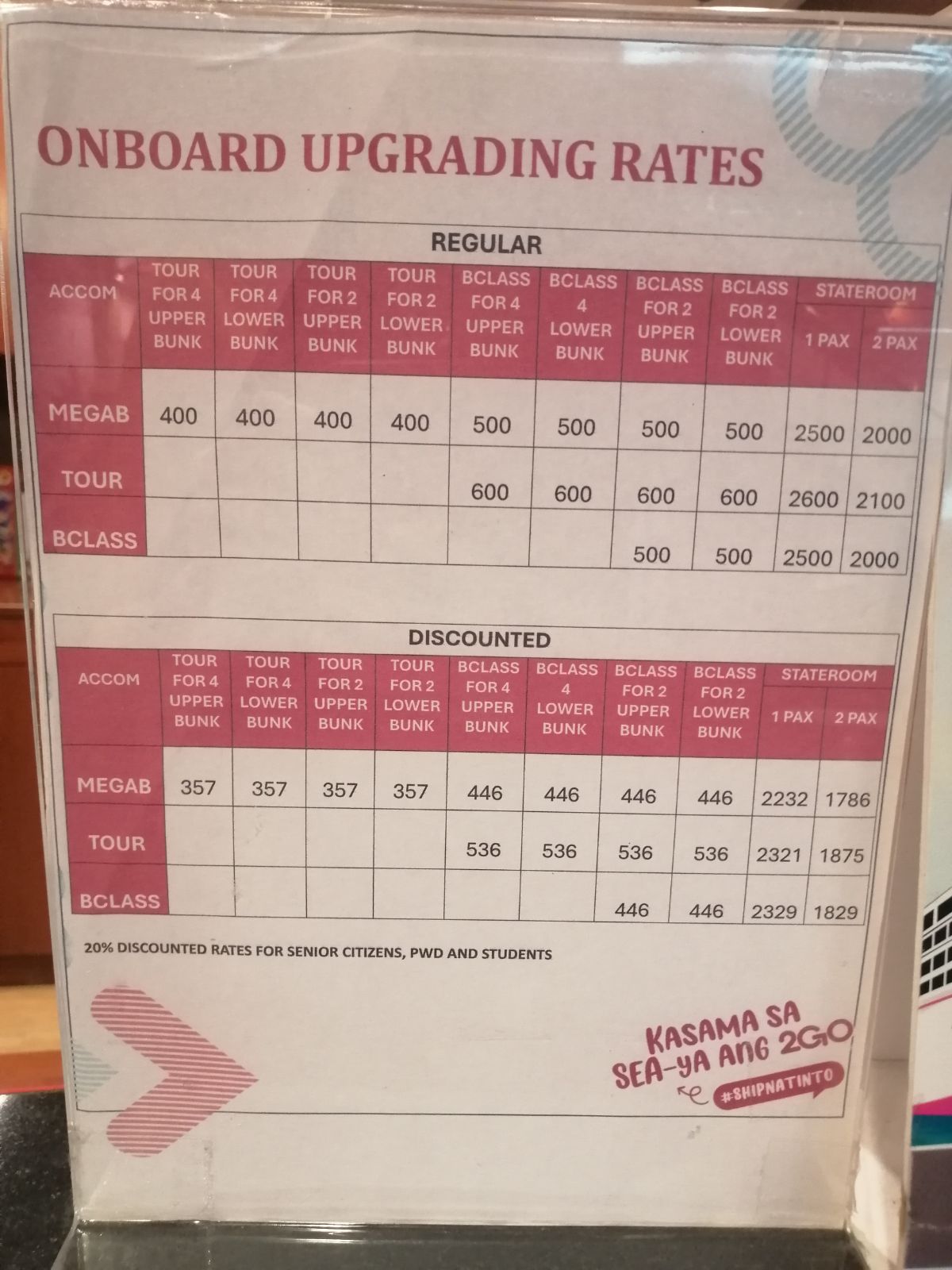
That said, the upgrade was well worth it. For our trip, the upgrade fee was Php500 per person to move from a lower bunk room to an upper bunk room which comes with windows overlooking the water. A small price to pay for natural light and a view of the sea.
Below are the upgrade fees as of March 15, 2026 for the other available room types.
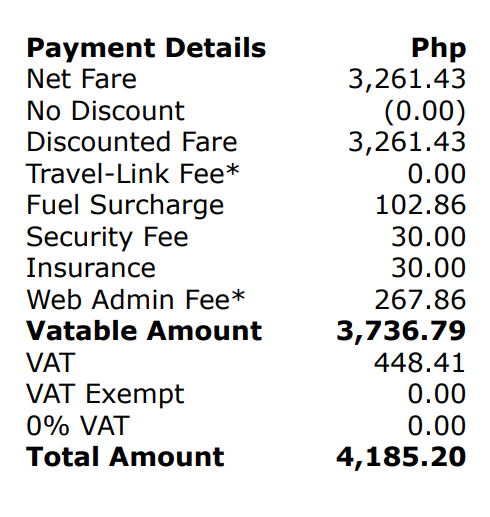
Also, since we booked a round trip fare for two through the 2GO Travel website, it costed us Php4,185.20 per person, which means we paid a total of ₱8,370.40 for both of us. This already includes meals for the entire duration of the voyage.
I’ve also shared this in Part 1, but below is the breakdown of the fare as reflected on our ticket:
What’s Inside The Upper Deck Business Class Cabin
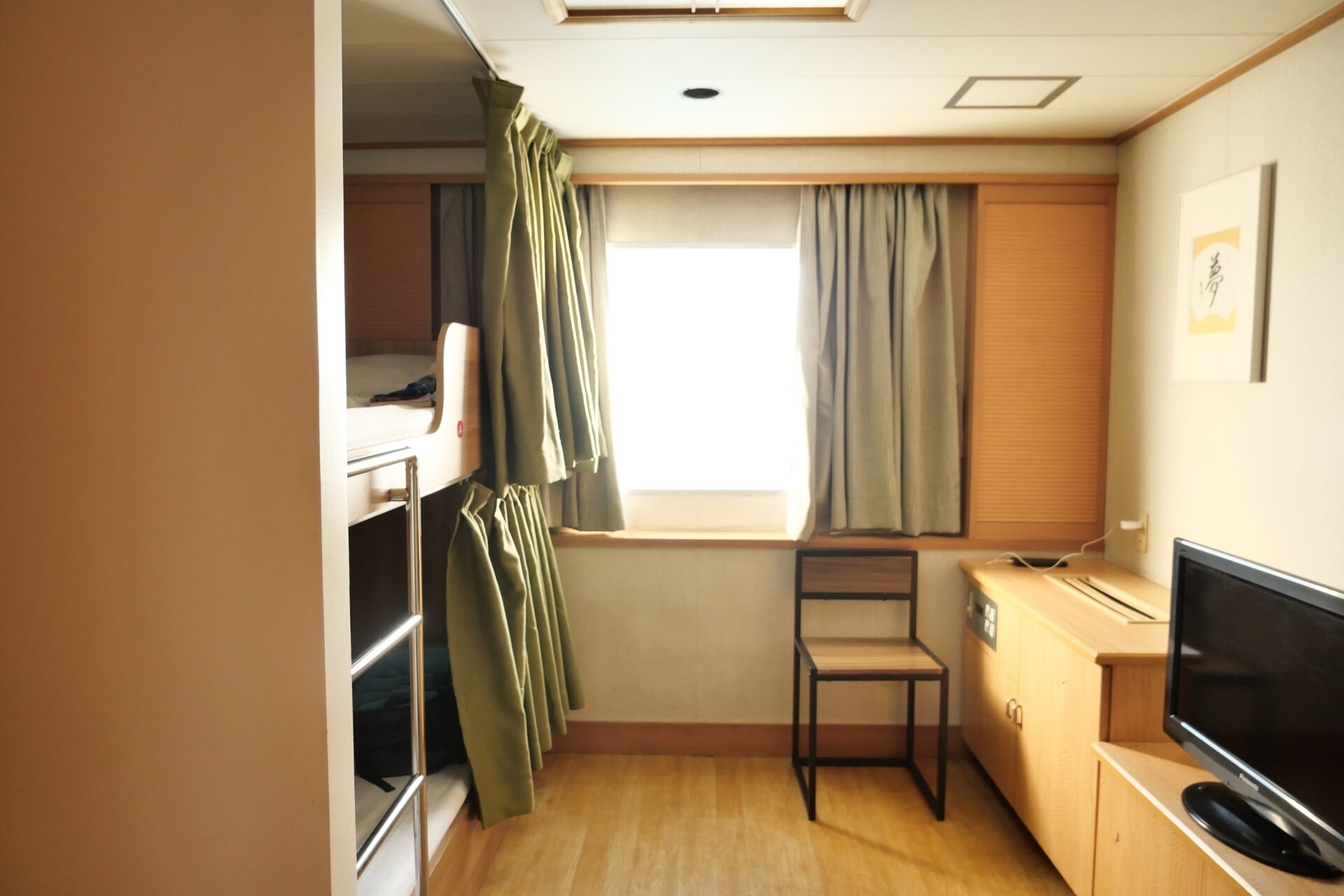
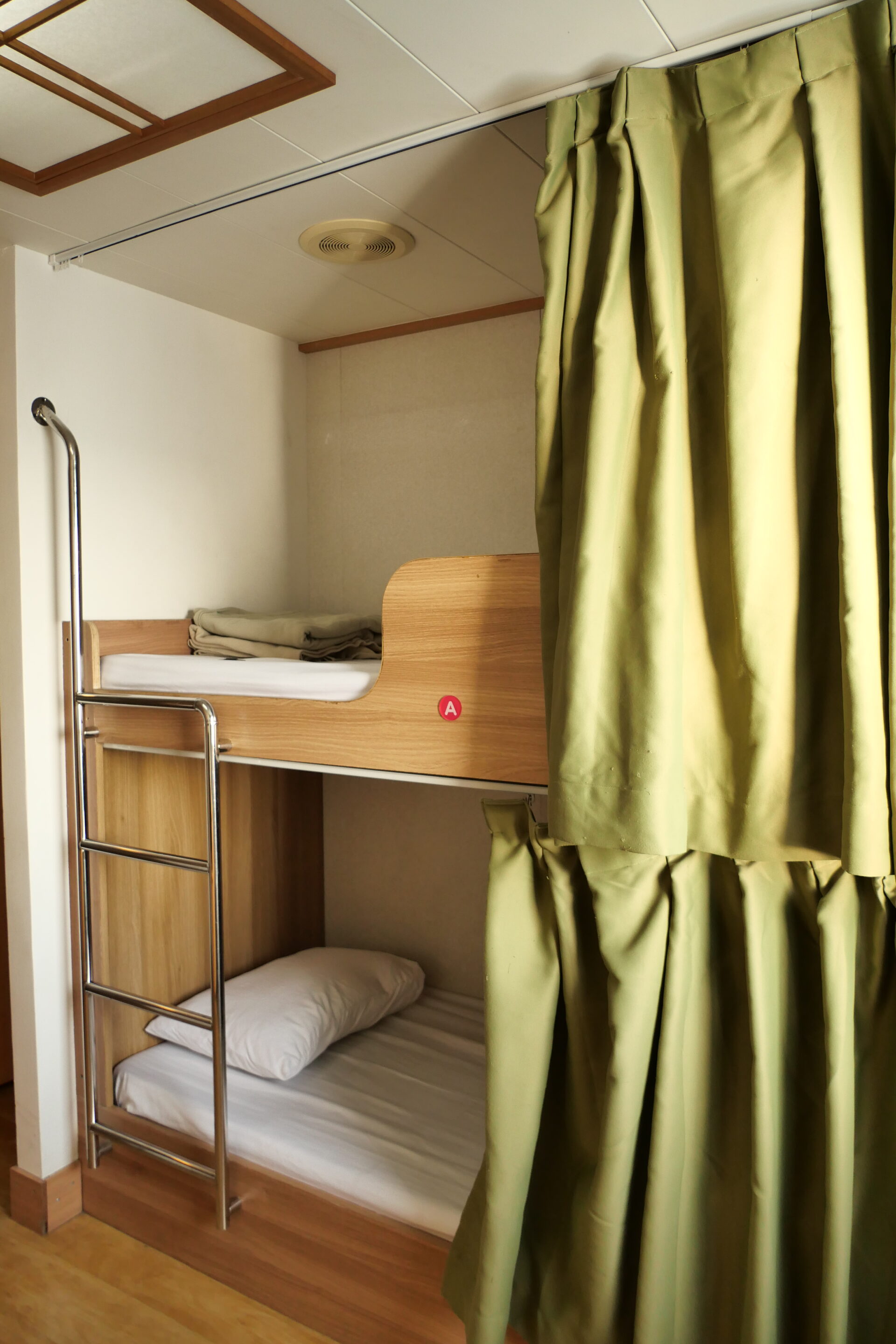
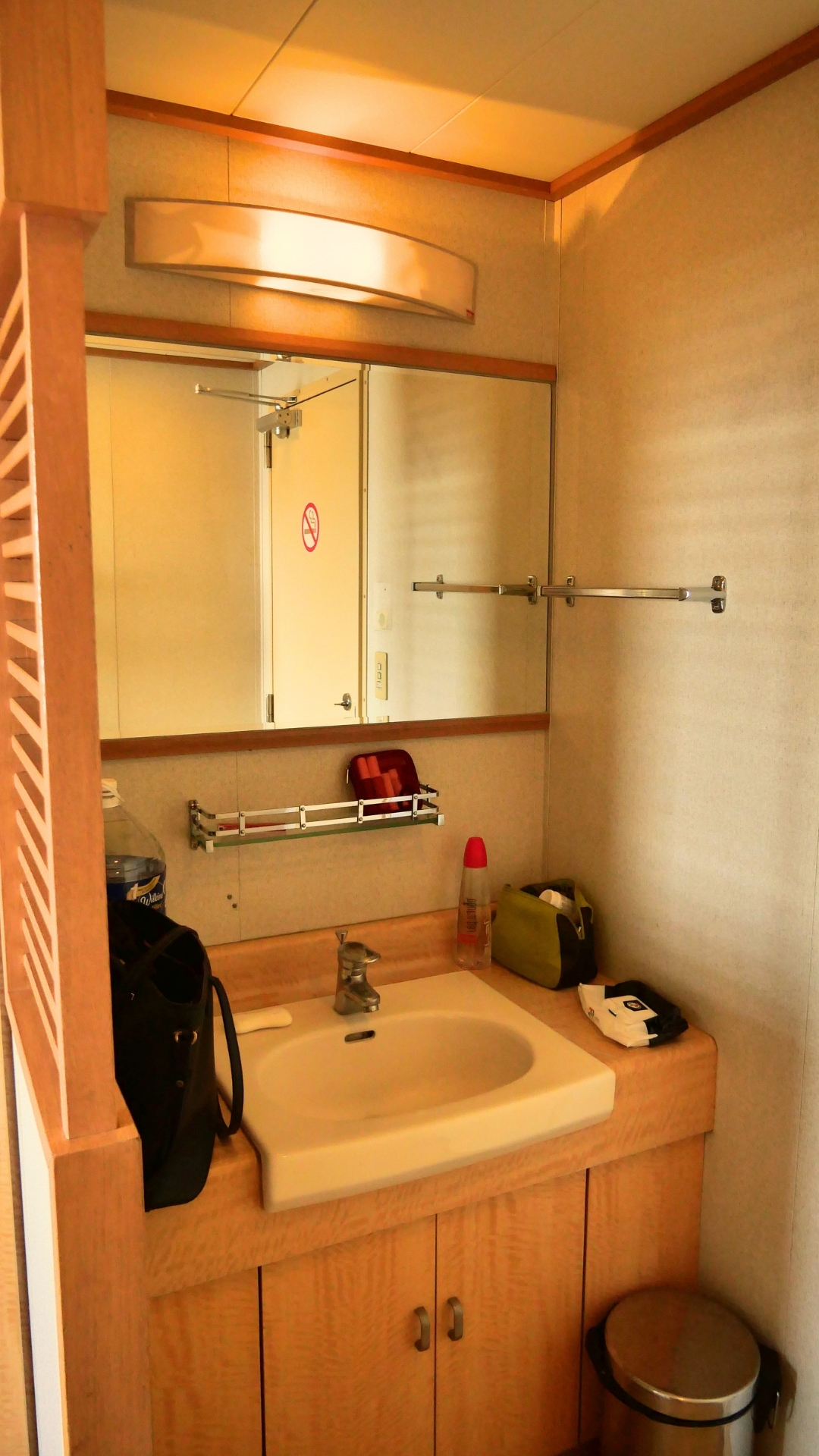
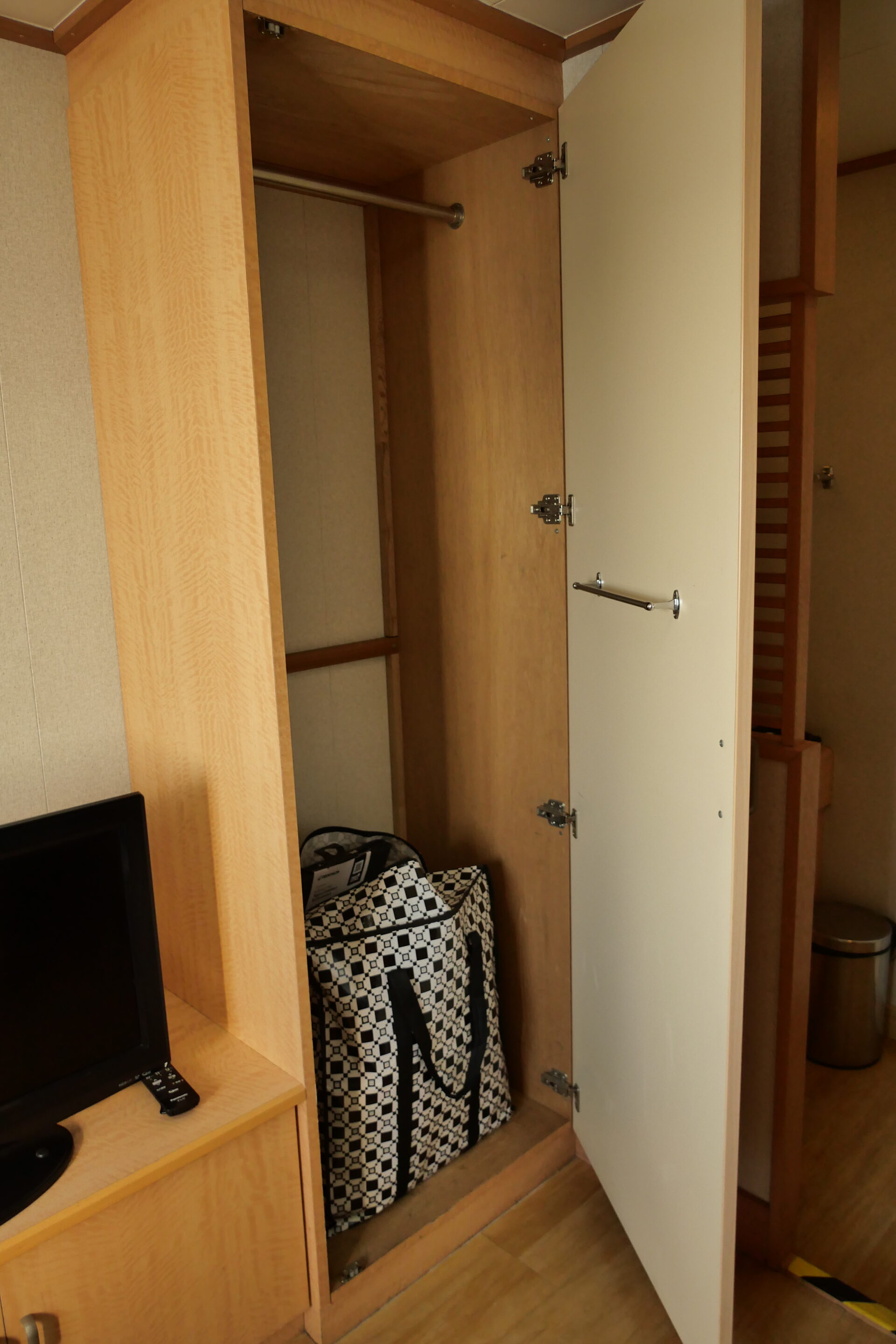
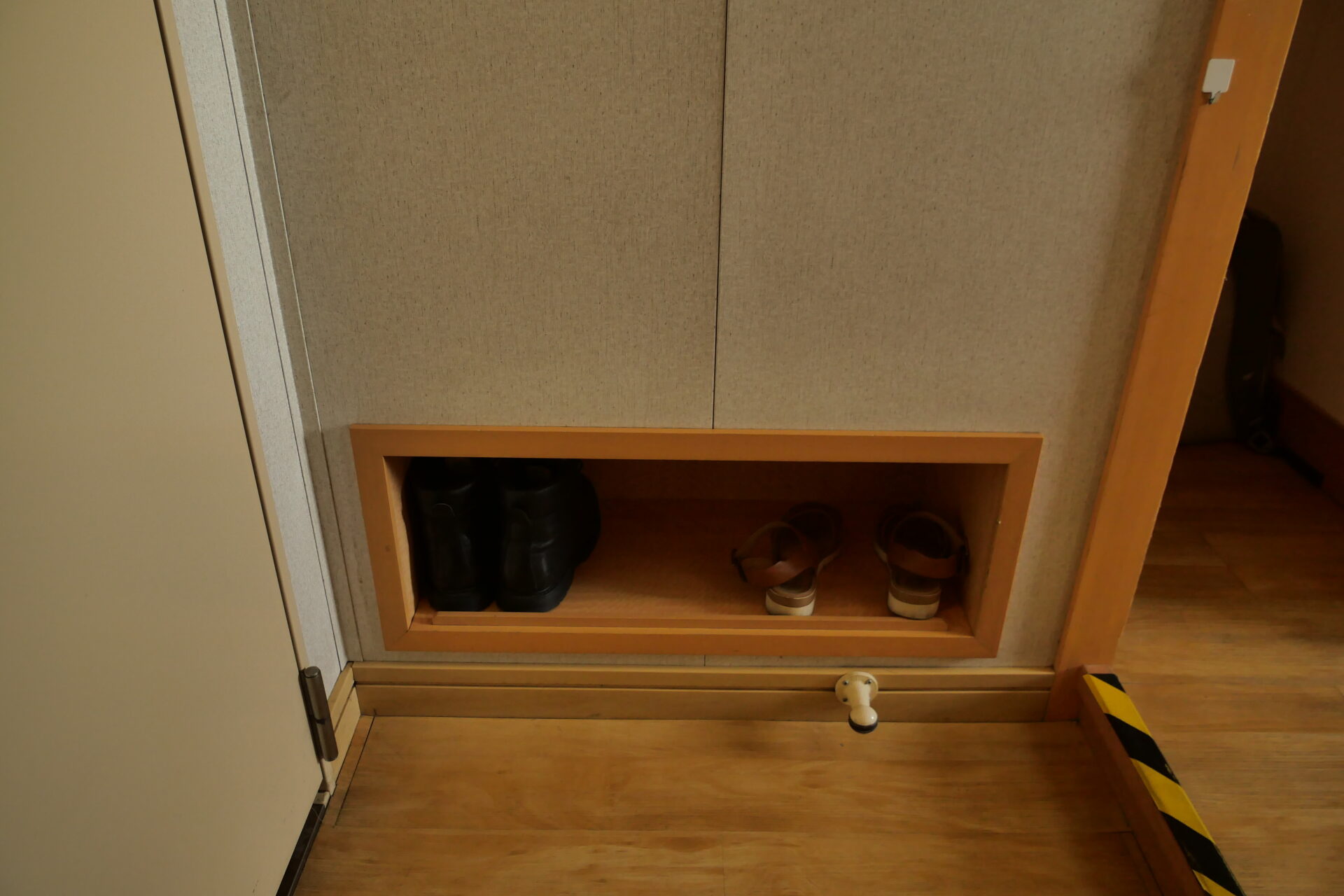
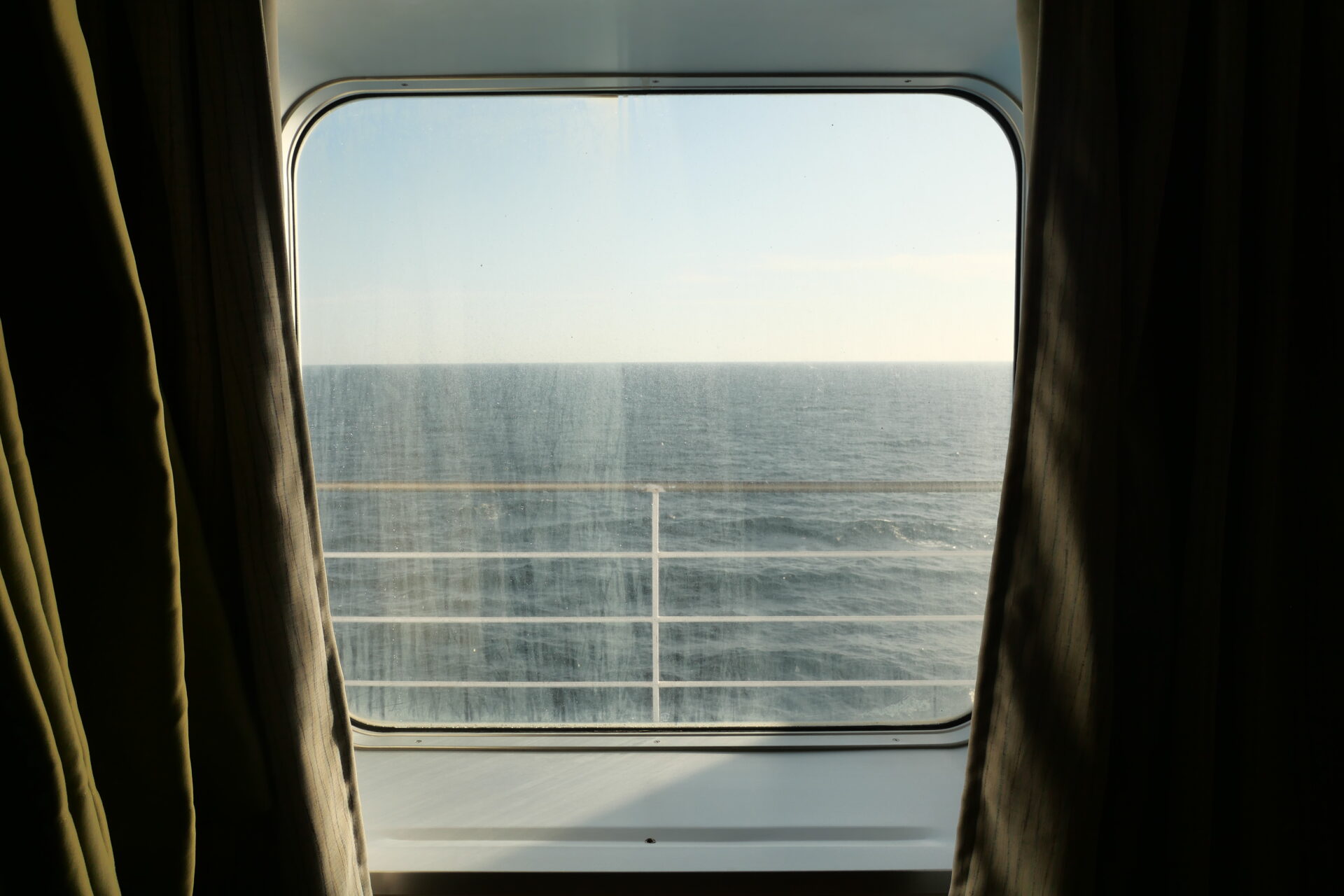
The three-hour wait at the lobby didn’t bother me as much as it might have. What mattered most to my husband and me was simply getting a room where he could work comfortably, where we had enough space to move around, a proper storage area, and a window with a view of the sea.
In the end, we got exactly that which made all the difference.
Also, the 2GO crew was genuinely accommodating throughout the process. They made us feel like a priority. One of the crew members even helped carry our luggage up to the upper cabin which is a small gesture, but still went a long way.
We went through the same process again at Cebu. It was another wait of roughly the same duration before we could be reassigned. Fortunately, no one had booked our room for the Cebu to Cagayan de Oro leg, so we were able to return to the same room without any issues.
There was an unexpected bonus too. While we had vacated the room during the stopover, the crew had to change the bed sheets and tidy everything up in our room. It was a pleasant experience that made the whole pull-out-and-wait process feel more worthwhile.
Looking back, I don’t want to be going through that experience again. The hassle of vacating the room at every stopover and waiting hours in the lobby each time is simply not worth it when there’s a better alternative available.
Again, my biggest takeaway from this entire journey is, if you want the room you want, and you want to stay with your travel companion, book at a physical 2GO ticketing outlet. Don’t leave it to chance with the online system.
While I would have preferred a private comfort room, I was good to compromise because the upper cabin Business Class room we ended up with was much better than the room we had before
The room has a lavatory and mirror, two storage cabinets, a double bunk bed, a TV with the same 10 channels, and two air conditioning sources, one of which doubled conveniently as a tabletop surface for my husband to work on. It was a modest but genuinely functional space.
The one downside was the ceiling air conditioner for that room, which was blasting at full cold and couldn’t be adjusted as the control panel was still awaiting repair. It was one of the crew member who advised us to improvise by using the bunk bed curtain to cover the ceiling vent. It was not the most elegant solution, but it did the trick. A small inconvenience in an otherwise much more comfortable room.
My husband was able to work without having to leave the room, we finally had proper storage for all our luggage, and my personal favorite, the window. Being able to look out at the sea and watch the islands drift by from the comfort of our room was everything I had hoped for from this voyage.
The rhythm of this leg of the trip was pleasantly unhurried. I slept, watched a few local television shows, gazed out the window at the passing sea and islands, and continued rereading So Good They Can’t Ignore You by Cal Newport.
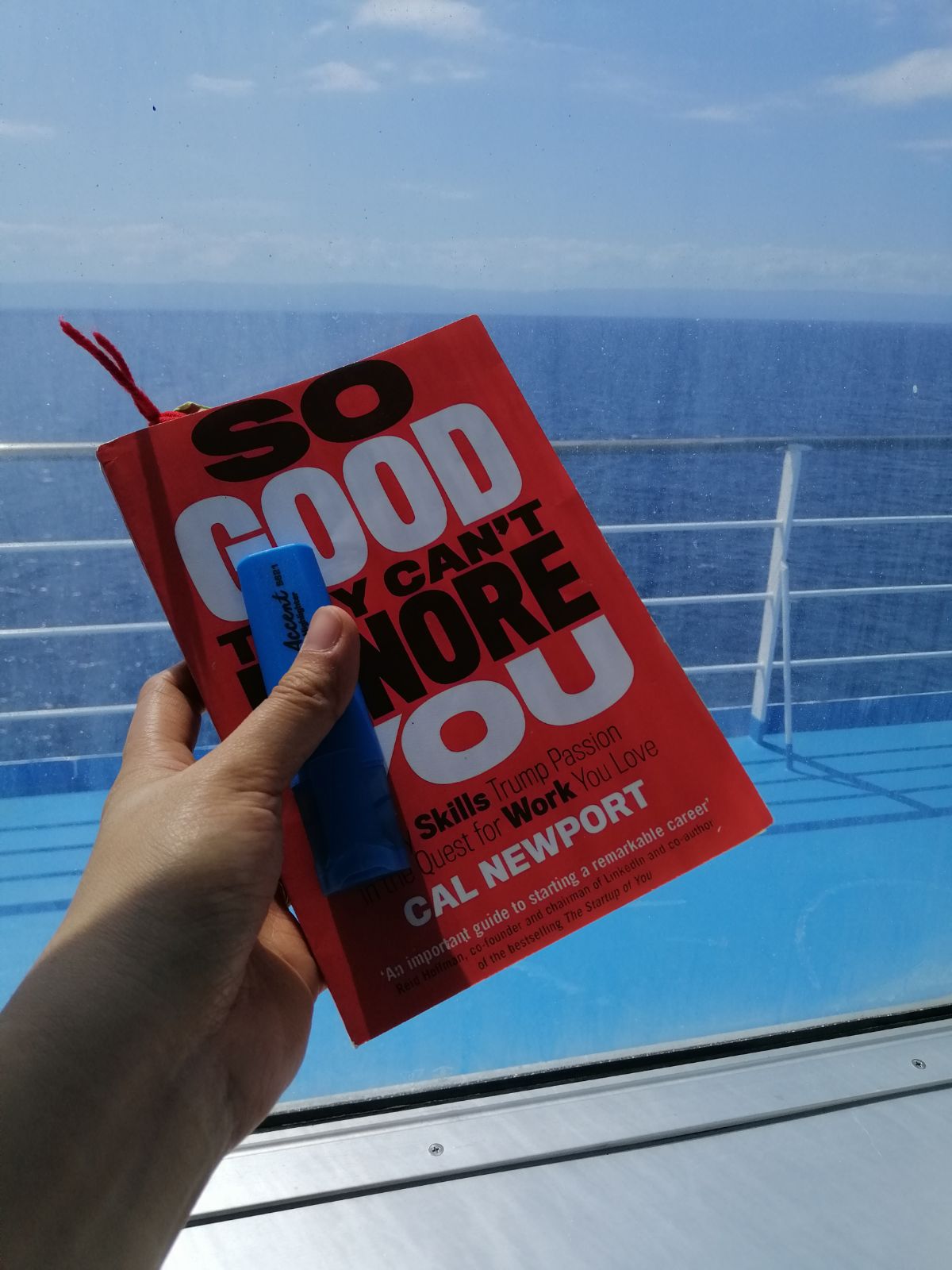
Unlike the first leg, where we were constantly stepping out just to catch a glimpse of the view, this time we only left the room for meals and comfort room breaks. It was, in the truest sense, slow travel at its most restful.
Dining Experience
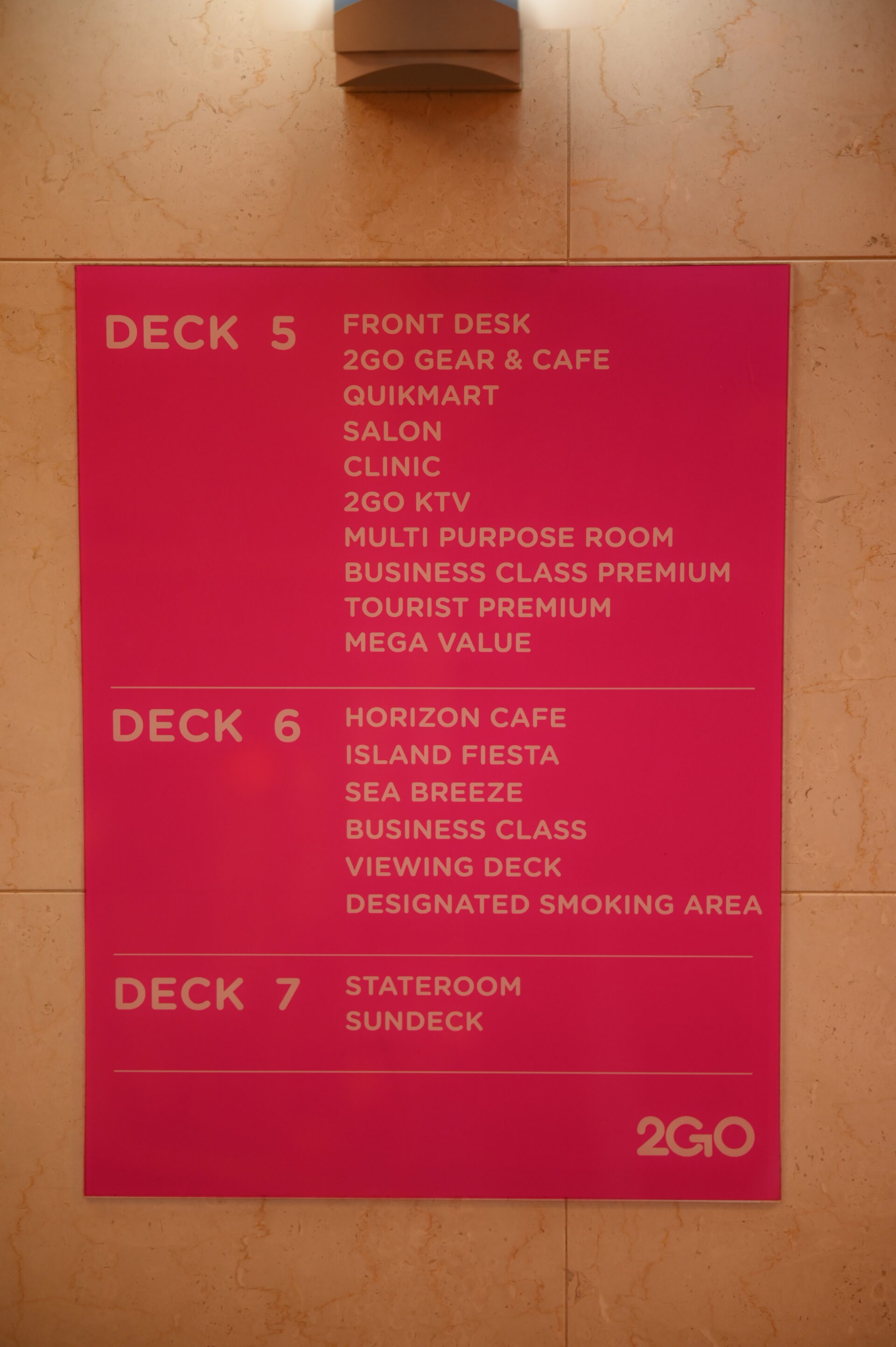
Since we were still traveling under the Business Class accommodation, meals were once again served at the Horizon Café. The meal arrangement for the return trip was different from the first leg. Over the course of the Manila to Cagayan de Oro voyage, we were served one breakfast, two lunches, and one dinner.
Here are the serving times to keep in mind:
- Breakfast: 6:00 AM – 8:00 AM
- Lunch: 11:00 AM – 1:00 PM
- Dinner: 6:00 PM – 8:00 PM
The food was worth it with the amount we paid for the trip. Breakfast typically consisted of plain rice, scrambled eggs, and one additional viand from that day’s menu. For lunch and dinner, meals have soup (either pumpkin or cream of mushroom), a protein viand, side vegetables, and a dessert such as gelatin, gulaman, or fruit salad.
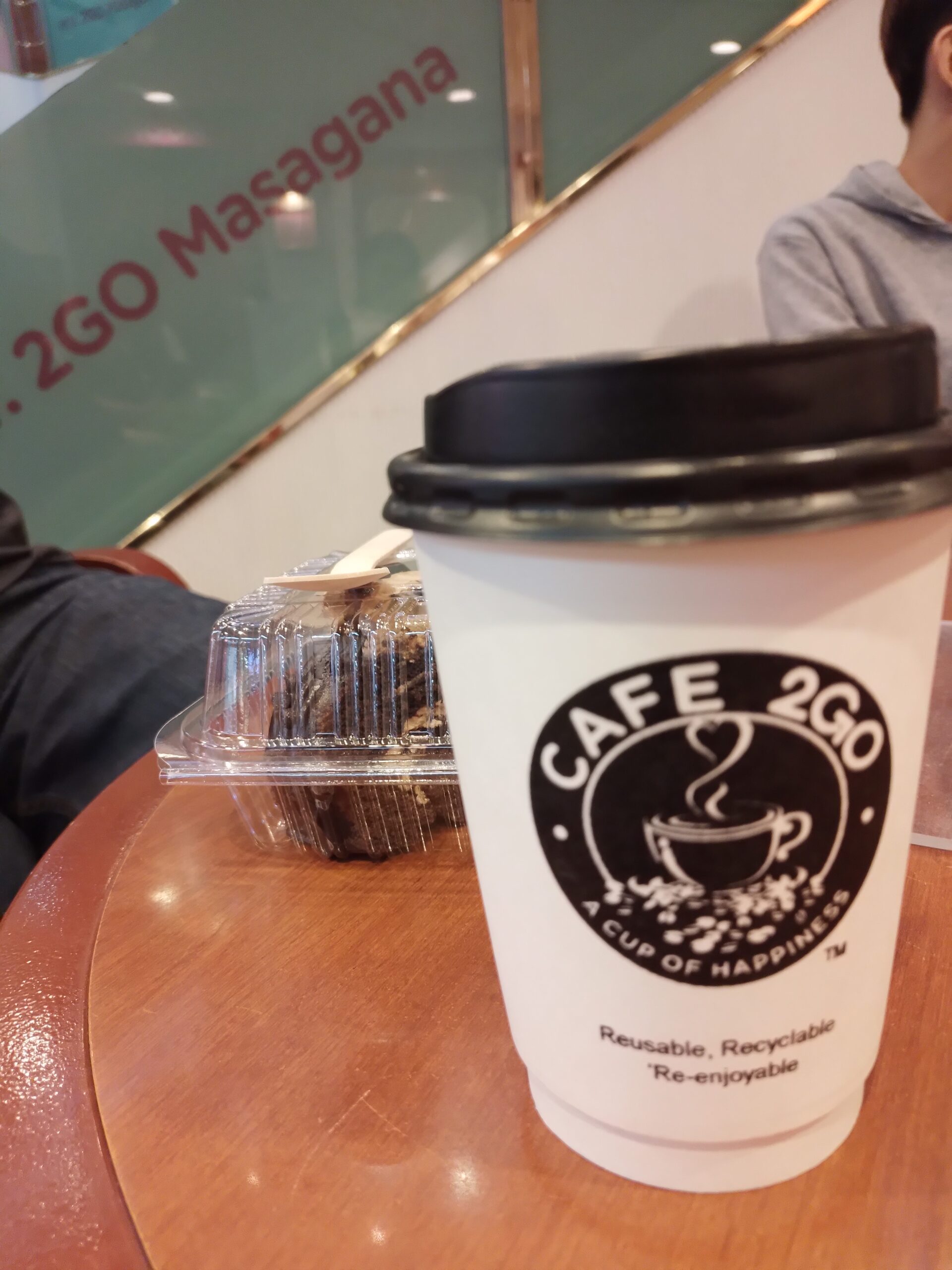
I also made another stop at Café 2GO for a matcha latte again. This time, the complimentary treat was a slice of chocolate cake, a slight upgrade from the three brownies I received on the first trip.
The Atmosphere During The Return Voyage
The overall ambiance of the ship was much the same as our first voyage. However, one notable difference on the return trip was the sheer number of passengers. The ship was noticeably more crowded this time around
This was largely due to a large group of OJT students from universities in Luzon and Cebu. By my estimate, there were at least 100 trainees onboard, which contributed to a livelier and overwhelming atmosphere in the dining areas, room lobbies, and main lobby.
I have nothing but goodwill toward these students. It’s a good program that 2GO provides this kind of hands-on learning environment and I hope the experience serves them well as these students step into their careers.
That said, having that many trainees onboard at once may be counterproductive both for the students themselves, who may not get enough meaningful work to go around, and for the passengers who want to enjoy a peaceful voyage.
There were moments when it felt like a little too much. Being greeted every time you passed through the lobby, or having someone approach you mid-meal to ask if you were finished or needed anything.
It came from a good place, but for passengers who simply want to eat in peace or wander the decks undisturbed, it could feel a bit relentless. A more balanced deployment of trainees, or clearer guidelines on when to approach passengers, would go a long way in improving the experience for everyone.
Feedback and Overall Experience Returning Home
Much of the feedback I shared in Part 1 still stands for this return voyage. However, the experience also brought a few additional observations.
Again, 2GO’s crew members are great and very approachable. They were polite, helpful, and accommodating which are a reflection of the values the company embeds in its ships, and of Filipino hospitality. The security measures onboard were also good which gave passengers a sense of safety and peace of mind throughout the voyage.
Given that 2GO is owned by the SM Group, I believe there is plenty of room to elevate the overall customer experience. Here are my few suggestions based from my experience:
1. Comfort rooms and shower rooms
The comfort rooms are the area that’s in most need of attention. The current state of the toilet bowls, layout, and overall cleanliness feels inconsistent with the otherwise well-maintained aesthetic of the rest of the ship’s decks and interiors.
Some toilet bowls appear to be original fixtures from when the vessel sailed as a Japanese ship. Since shared comfort rooms are naturally high-traffic and prone to getting dirty quickly, I’d recommend assigning a dedicated cleaning staff member to maintain them throughout the day.
SM Malls are a great benchmark here as their comfort rooms are consistently clean because there is always someone actively tidying them. The same standard should apply onboard. This goes for the shower rooms as well. During our trip, I noticed molds in some areas and several partitions were damaged and warped.
The comfort room layout also needs rethinking. Some cubicles have very limited leg room and a few toilet bowls are oddly oriented away from the door rather than facing it which makes for an uncomfortable experience. To top it off, some door locks were non-functional which requires passengers to figure out makeshift ways to keep the door from being accidentally opened by a stranger from the other side.
2. KTV and entertainment night
2GO should establish a curfew for KTV sessions and entertainment nights. Ideally, cut-off time for these should be at 9:00 PM or 10:00 PM at the latest. If a curfew isn’t feasible, then at the very minimum, the KTV area and the Island Fiesta dining area where entertainment nights are held should be enclosed with soundproof barriers.
The noise situation this time was more pronounced on the return trip than it was on the first. Since the upper deck Business Class rooms are situated closer to both the KTV area and the Island Fiesta dining area, the sound carried even more directly into the rooms. As before, the gap at the bottom of the room doors did little to muffle the noise from outside.
There is a door separating the upper Business Class deck from the sixth deck lobby, and passengers would occasionally close it to block out the sound, only for it to be reopened shortly after by staff or OJT trainees. It essentially defeated the purpose entirely which left passengers with little recourse against the noise.
This isn’t an issue during daytime as music adds to the lively atmosphere of the voyage. However, at night, it becomes an inconvenience, particularly for passengers like me who prefer to sleep early. I ended up wearing headphones with a nature music so I can sleep early.
3. Limiting the number of On-The-Job trainees
As I mentioned earlier, the return voyage was very crowded due to the 100-plus OJT students onboard. The large volume of trainees contributed to noise and overcrowding in the dining areas and lobbies. Whenever groups of students passed through the room lobbies, the noise level made it difficult to rest within our room.
I want to reiterate that the intention behind the program is good. Giving students real-world and hands-on experience is something worth supporting. However, there is a point where the number of trainees begins to work against both the learning experience itself and the comfort of the paying passengers. At that volume, the ship felt less like a voyage and more like a school field trip.
My suggestion to 2GO management would be to limit the program to one school at a time or cap the number of trainees per voyage at a more manageable figure. This way, the students get more meaningful work experience, and passengers can enjoy the trip without the overcrowding.
Arrival in Cagayan de Oro
I don’t know if this is a universal experience, but there’s something about the return of any trip that makes time feel different. When you’re heading toward your destination, anticipation makes the hours fly. When you’re heading home, the hours seem too long. Somewhere between Cebu and Cagayan de Oro, I felt that shift settle in.
By the time we were bound for home after the Cebu stopover, I found myself missing Cagayan de Oro, our home, my dogs, and my cats. There’s this kind of longing that only home can stir and the slow pace of the ship gave me plenty of time to sit with it.
Disembarkation, thankfully, was smooth and hassle-free. The Macabalan Pier in Cagayan de Oro has a parking area and waiting benches, so we were able to settle comfortably while we waited for the Grab Car we had booked towards our home.
So, Was It Worth It?
Was the 30-plus hour transit time worth it for the generous baggage allowance, the unhurried pace, and the experience as a whole?
Yes!
As I mentioned in Part 1, I would still consider traveling with 2GO again in the future and if I were to do it again, I would consider booking a Suite Room and purchase the ticket directly at a 2GO ticketing outlet.
The Suite Room offers more privacy, your own comfort room, and an experience far more befitting of a long voyage. If your budget allows for it, I’d strongly encourage you to do the same.
Final Thoughts
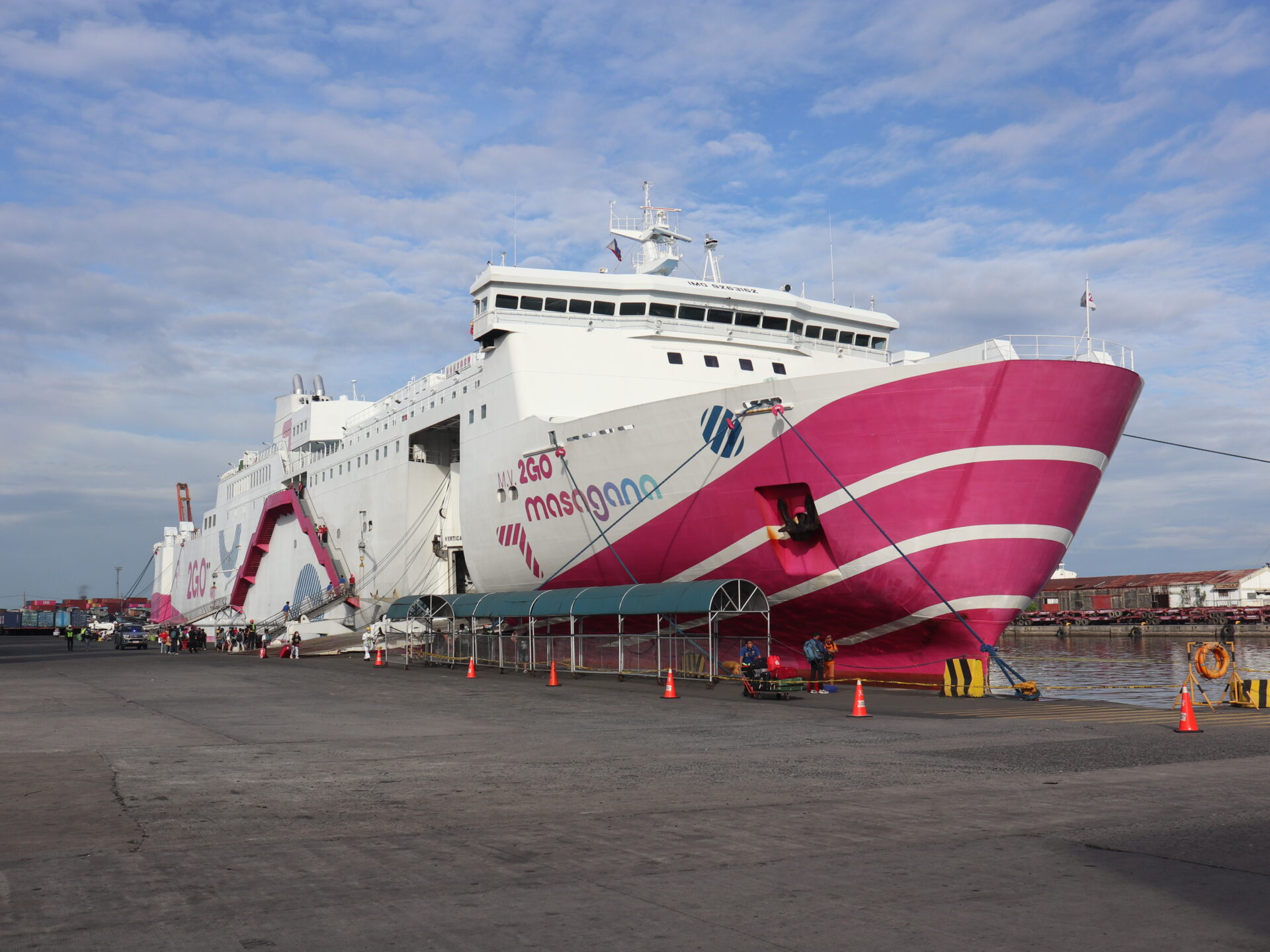
As our Grab Car pulled away from the pier, I caught one last glimpse of the MV Masagana, one of the largest ships I’ve ever had the privilege of being on, so far. It was still towering at the dock. I felt a wave of gratitude for the experience, despite how imperfect as it was.
There’s a quiet kind of wisdom in choosing to travel slowly especially when you’re eager to get back to the people and places you love.
This trip wasn’t perfect. There were uncomfortable rooms, noisy nights, and logistical hurdles that could have easily been avoided. Yet, there were also islands drifting past the railing, cups of matcha latte at sea, and long stretches of blue waters that reminded me why I believe in living and moving through the world with intention.
If you have the time and the flexibility, I hope this two-part series encourages you to give slow travel a try. It won’t always be smooth sailing, but it will always be worth the story.


Leave a Reply