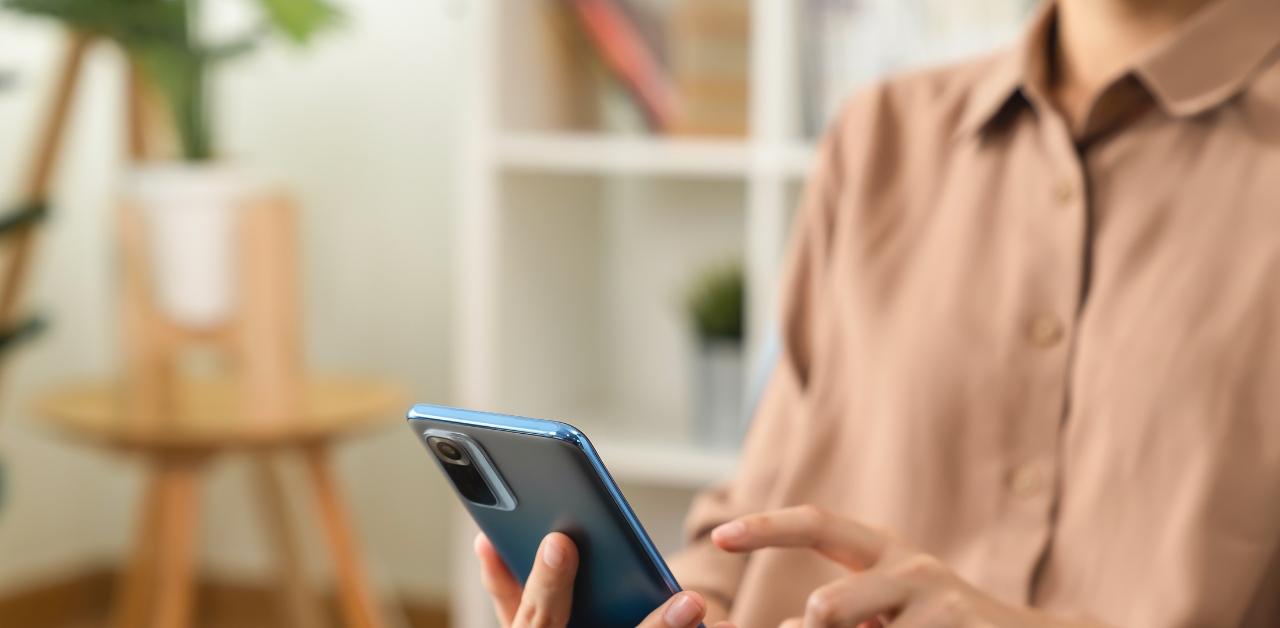
Photo by indra projects
I never announced it. There’s no goodbye post, no screenshot of a deactivated account, and no final carousel thanking everyone for the memories. I just stopped using Instagram. My account is still there if you go looking. I log in maybe once a year or never. The only time I log in is in my husband’s Instagram account for his photography and videography business. It is almost always to post photos and videos of his projects.
The Instagram app left my phone in 2023 and never came back. This is the quiet exit. It’s not a dramatic delete, but just slowly stepping away until I did not feel the pull anymore.
If you have been wanting to quit Instagram for good, but you are not ready to delete your account, this is the version that worked for me and might work for you too!
How Instagram became a habit
Instagram was already around when I was in college from 2012 to 2016, but I did not really live on it back then. That came later.
I started working in 2016. I noticed that my officemates were always talking about posting on Instagram. They posted everything, from random office days to the big milestones, and of course the Instagrammable food. Wherever they went and whatever they do, the photos looked good. It’s not the polished Pinterest look we see now. It’s more rustic and sepia toned, but nice at that time (Hello 2016 trend!).
So in early 2017, I joined the bandwagon and installed Instagram in my phone. I started posting photos and stories, and told people that I’m more active on Instagram than on Facebook. That was my routine for years until I slowly stopped posting in 2022, then fully stopped in 2023, and managed only one post in 2024 while logging in less than twice that whole year. Somewhere along the way, the habit of logging in to Instagram just ended.
Why I left Instagram
When I started working from home in January 2023, I saw how much time social media, especially Instagram, was taking from me. It is easy to miss when you are commuting and busy at an office job, but at home, the scrolling stood out.
Also, I started asking myself why I was posting at all. A lot of the reasons are shallow. In my observation and opinion, most of the time people post to show off, and honestly that is their right and their life. Yet, I did not want that to be that reason to pick up my phone anymore.
Then, there is the comparison trap. Instagram has always been about showing the best version of your life. It’s about the trips, the food, and the perfect outfits. After a while, it makes you feel like you are falling behind if you are not constantly traveling or wearing the on fleek OOTD. None of that was making my life better especially that I started to live a minimalist and intentional life. It was just making me want things I did not actually need, which also meant spending money to keep up.
Likewise, I started thinking about my privacy. People always knew where I was and what I was doing. I was leaving a digital footprint I could not take back. On top of that, the app stopped having any natural stopping point. There used to be a “You’re all caught up” sign that told you that you had seen everything and it’s like implicitly saying that you can now step out of the app and live your life. Now, that completion cue is gone. The feed never ends. The algorithm just keeps serving you things you did not ask for and hoping something catches your interest.
That is the part that finally got to me. This is how social media companies, especially Instagram, make money. Attention engineers and experts in Silicon Valley design this to keep you scrolling because your attention is what they sell. They get richer while you get poorer with money and time. Their business grows, and what you lose is your life and the hours you could have spent on something that actually mattered.
Why I kept my Instagram account instead of deleting it
Not deleting my Instagram account was on purpose. I wanted to see if I could leave it sitting there and still stay away from it. For me, that was the real test.
Deleting would have made the decision for me. Keeping it meant I had to actually build the discipline myself. Somehow, it worked for me. I log in rarely now, maybe once a year, and as mentioned in the intro, it is almost always just to post photos and videos for my husband’s photography and videography business through his Instagram account.
To make it harder to reach, the uninstalled the Instagram app on my phone, along with every other social media apps except LinkedIn, which I keep for work or professional networking and barely opening anyway.
When I do need Instagram, I log in through my laptop and log out after. That friction worked for me. Once I am there, I no longer find any meaning or usefulness in scrolling through the feed or viewing other people’s Instagram stories. There is nothing that pulls me in anymore. That is the good part of cleansing the Instagram habit from your system.
The pull I lived with from constantly being on Instagram from 2017 all the way to 2023 is simply not there anymore. Mentally, it feels like I cleaned something out of my system, and I have no urge to put it back in my life.
What changed after I stopped being constantly on Instagram
The first thing I noticed was having more time time. All those minutes and hours I used to lose to scrolling on the app went somewhere better.
I started learning new things, upskilling, and keeping up with the latest in AI and technology, which actually helps my work as a virtual assistant and freelancer.
I read more books. I picked my hobbies back up such as journaling and a little gardening.
I spend more time outdoors now such as exercising, hiking, and walking.
I’ve been sleeping early because I am not scrolling in bed before I close my eyes.
I stopped thinking about what to post next. The pressure and the constant comparing faded, and so did the spending habits that came with trying to keep up.
I am just present now, with my husband, with friends and family, with whatever I am doing, instead of stepping out of the moment to capture it for an audience.
Likewise, one of the best parts is that all that freed-up time went into writing here on this blog, sharing what I am learning, and hopefully, helping someone else who wants the same thing.
Nevertheless, I still take photos and keeping it for memories. The difference is that I take them for me now, not to flex or to tell the world I did something so I can collect the likes and the praise. The changes from posting for everyone to keeping things for myself is the whole point.
How to quit Instagram for good
The whole strategy to quit using Instagram for good is friction. The easier the app is to open, the harder it is to quit. The harder it is to open, the easier it is to stay away.
If you want to quit Instagram for good, start with the obvious move which is to uninstall the app from your phone. If you really can’t help logging in, do it through your laptop or computer and log out the moment you are done. That extra step of typing in your password and pulling up a browser is usually enough to make you ask yourself if it is worth it.
If you do most of your work on a desktop, two free Chrome extensions helped me in my experience. The News Feed Eradicator extension hides the news feed so you can log in without falling into doom scrolling. The extension replaces endless algorithmic social media scrolls with a random inspirational or productivity quote.
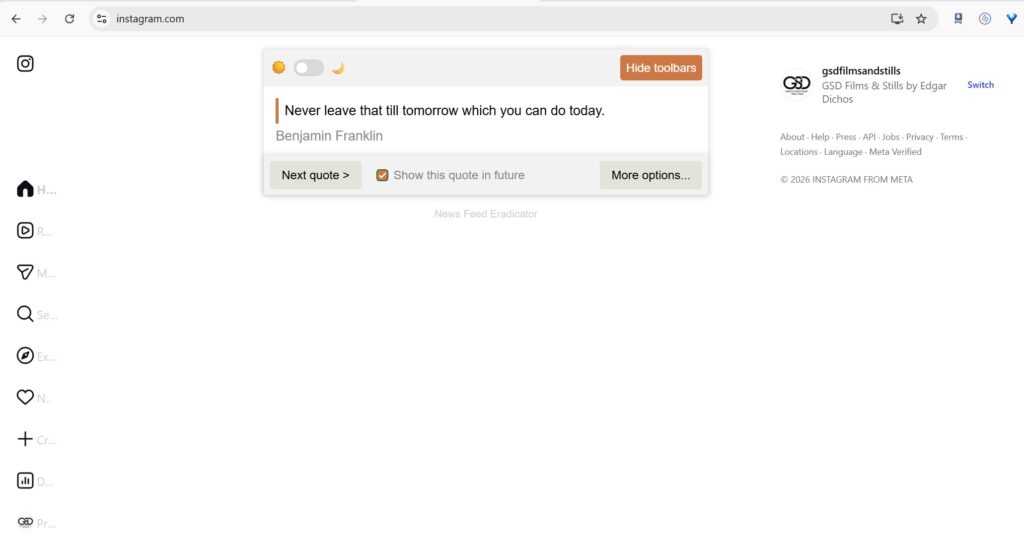
At the same time, the Social Focus extension lets you turn off other distractions like ads and other features you do not want to see. You can use either one or both, depending on how much you want to strip away. As for my case, I’ve been using both.
After that, turn off all the notifications on your phone so nothing pulls you back in. Then, comes the harder part, which is replacing the habit.
What are the things you loved doing in the past or the thing you want to do that has been sitting there in your mental to-do list, but you just kept on delaying doing it or always reason out that you don’t have enough time?
Pick up a book. Go back to a hobby. Do the things you have been putting off. Strategize your life. The hand that used to reach for the phone needs somewhere else to go, so put somewhere.
Lastly, let yourself be bored. I know this sounds boring these days, but it’s important to be bored to think through things. Look out the window, watch the trees and the birds, take a 5-minute meditation or breathing exercise, or take a walk outside. Whatever it is.
Being bored is a luxury these days and clearing your head feels peaceful once you get used to it.
Spend that time with the people in front of you instead of the people on a screen. That is what made the difference for me. That it is the part that makes quitting Instagram actually stick.
The quiet exit
You really don’t have to make a big deal out of leaving Instagram. You don’t have to announce it, delete your account, and or prove anything to anyone. You can just stop slowly and on your own terms, until one day you realize the Instagram app has not crossed your mind in weeks, months, and years.
That is what happened to me. It felt natural once I was on the other side of it. I am not going to pretend the first few months of quitting Instagram are easy because the pull to go back has been there, but the time you get back is worth every bit of productivity and boredom in between.
If you have been thinking about quitting Instagram for good, take that as your sign. Start small, build the friction, and let the quiet exit do its work.
You will not miss what you think you will. You will be surprised by how much of your life comes back to you.

Leave a Reply